How to Choose the Best Cat Scratcher Lounge
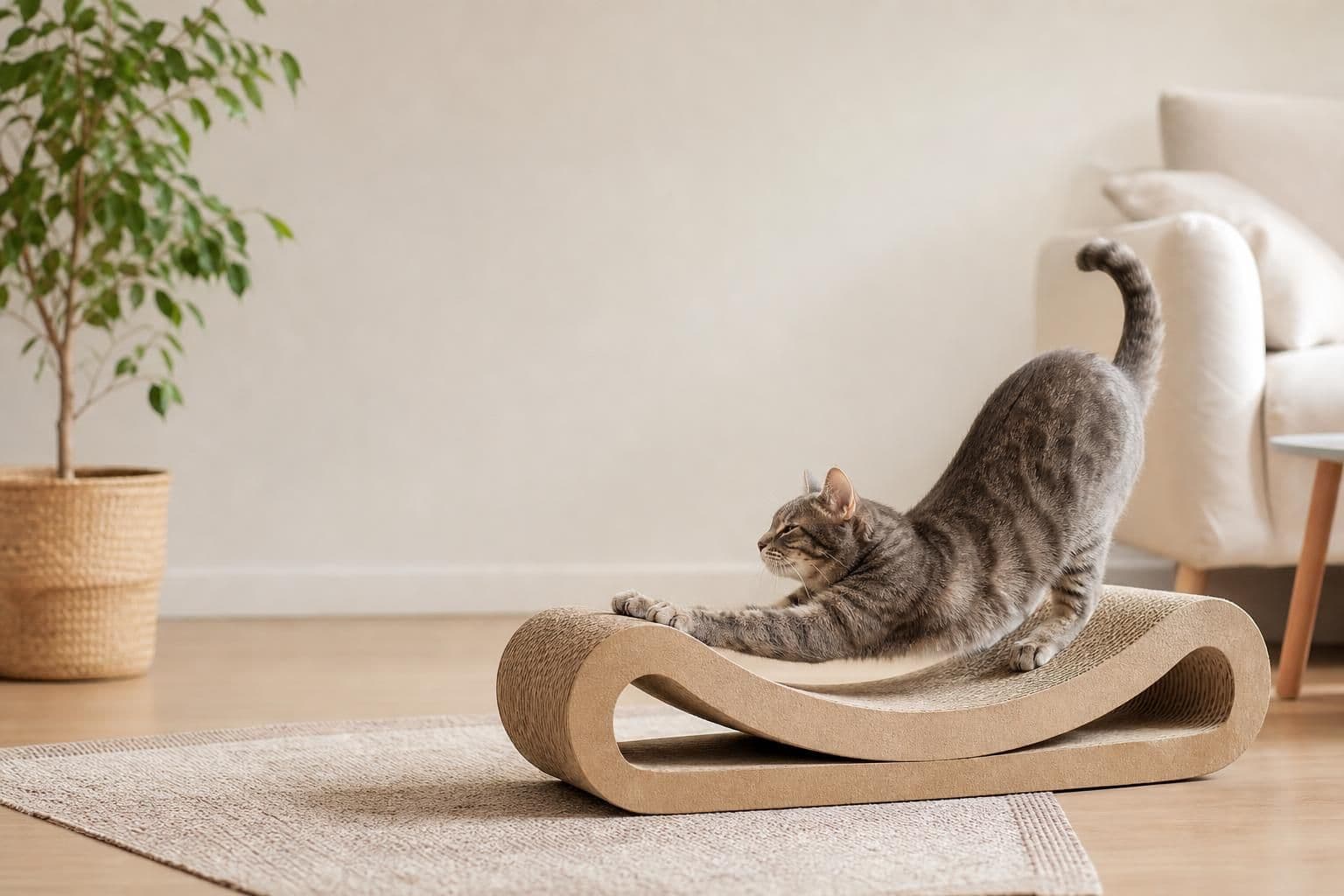
Key takeaway
The best cat scratcher lounge is a low, wide platform made of densely woven sisal or corrugated cardboard that lets a cat scratch, stretch, and lie down flat without tipping — look for a base at least 20 inches long, a weight capacity rated for your cat's size, and a replaceable scratching surface. Avoid anything flimsy enough to shift when scratched at a full stretch, since that's the main reason cats abandon a lounge after a few weeks.
Key takeaways
- Pick a lounge with a base at least 20 inches long and a non-slip bottom so it doesn't slide during use.
- Corrugated cardboard wears out faster but is cheaper to replace; sisal rope or sisal fabric lasts longer under heavy use.
- Reversible or replaceable scratch pads extend the life of the lounge by months.
What Makes a Scratcher Lounge Different From a Scratch Post
A scratcher lounge is a horizontal, low-profile design — usually cardboard or sisal-topped — meant for stretching, resting, and lounging after a scratch session, unlike vertical posts built mainly for upward stretching. Cats use scratching to mark territory with scent glands in their paws and to shed the outer layer of their claws, a normal behavior described by the American Veterinary Medical Association. A lounge works well for cats who prefer scratching at an angle or lying flat afterward rather than reaching upward.
Our own cats, Ai and Dudu, gravitate toward the lounge style over a tall post, stretching out fully across it after a scratch — a pattern common enough that most lounge designs are now built around that sprawl, with widened centers instead of narrow decorative shapes.
Materials That Hold Up to Daily Scratching
Three materials dominate the category, and each wears differently:
- Corrugated cardboard — lightweight, inexpensive, and satisfying to shred, but it compresses and needs replacing every few months with heavy daily use.
- Woven sisal fabric or rope — denser and more tear-resistant, typically lasting a year or more before fraying noticeably.
- Carpet-covered wood — durable structurally, but carpet can trap claws and doesn't shed in the same way, which some cats avoid.
If a cat is a heavy scratcher, a sisal-topped lounge or one with a reversible cardboard insert will outlast a single-sided cardboard model by a wide margin.
Size and Stability Checklist
A lounge that's too short forces a cat to scratch off the edge, which speeds up wear and makes the base more likely to tip. Before buying, check for:
- A base length of at least 20 inches so an adult cat can stretch fully.
- A non-skid underside — rubber feet or a grippy mat backing.
- A weight rating appropriate for multi-cat households if more than one cat will use it at once.
- Rounded or low edges so the lounge doubles as a resting spot, not just a scratch pad.
- A scratching surface that can be flipped or swapped without buying a whole new unit.
Comparing Common Scratcher Lounge Types
| Type | Typical Lifespan | Best For | Maintenance |
|---|---|---|---|
| Single-layer cardboard lounge | 2–4 months with daily use | Light scratchers, budget buyers | Replace insert when flattened |
| Reversible cardboard lounge | 4–8 months (flip once) | Moderate scratchers | Flip pad, vacuum debris |
| Sisal-fabric lounge | 10–18 months | Heavy scratchers, multi-cat homes | Trim loose fibers occasionally |
| Carpet-and-wood combo lounge | 2+ years | Cats that also like elevated perching | Vacuum regularly, check seams |
| Rattan or wicker-style lounge | 1–2 years | Decor-focused households | Wipe down, check for splinters |
Placement Matters as Much as the Lounge Itself
Cats scratch most near sleeping areas, entryways, and spots they pass often, so placing the lounge in a well-used room — not tucked in a closet — makes a real difference in whether it gets used instead of the couch. Keeping it near a favorite resting spot, such as a window perch, often encourages a cat to use the lounge for both scratching and lounging in the same visit. If a cat already has a preferred nap spot, placing the scratcher within a few feet of it tends to work better than choosing a location based on room aesthetics.
Signs It's Time to Replace the Lounge
A scratcher lounge has reached the end of its useful life when the surface is shredded down to a smooth backing, the base has flattened under weight, or the cat starts ignoring it in favor of furniture. At that point, patching rarely helps — a fully compressed cardboard lounge no longer gives the resistance cats scratch for. Rotating in a fresh lounge before the old one is completely worn down also helps prevent furniture scratching during the gap, a point echoed in cat-behavior guidance from the ASPCA.
Scratching Lounges and Claw Health
Routine scratching helps cats remove the outer sheath of their claws naturally, which is one reason veterinary groups generally recommend against declawing and instead suggest appropriate scratching outlets. A good lounge supplements, but doesn't replace, regular nail trims — if claws are overgrown or ingrown, a lounge alone won't fix that. For general coat and paw upkeep between scratching sessions, a soft grooming routine with a grooming glove can help you spot overgrown nails or sensitive paw pads early.
Frequently Asked Questions
Q: What size cat scratcher lounge should I buy?
Look for a base at least 20 inches long so an adult cat can stretch out fully while scratching. Larger or multiple cats benefit from a wider, higher-weight-rated lounge to avoid tipping or sagging.
Q: Is sisal or cardboard better for a scratcher lounge?
Sisal fabric or rope generally lasts longer under heavy daily scratching, often a year or more, while cardboard is cheaper but typically needs replacing every few months. Choosing between them usually comes down to how often your cat scratches and how much replacement cost you want to manage.
Q: Where should I put a cat scratcher lounge?
Place it in a room your cat uses often, ideally near a favorite resting or sleeping spot, rather than in an isolated area. Cats are more likely to use a scratcher that's part of their regular path through the home.
Q: How often does a scratcher lounge need to be replaced?
A cardboard lounge used daily often needs replacing every two to four months, while sisal or wood-based lounges can last a year or longer. Replace it once the surface flattens or frays down to the backing material, since that resistance is what cats are scratching for.
Q: Can a scratcher lounge stop a cat from scratching furniture?
A well-placed, appropriately sized lounge reduces furniture scratching by giving cats a preferred outlet, especially when positioned near where they already rest or play. It works best alongside consistent placement and replacing the lounge before it wears out completely.