Best Dog Booties for Winter: A Buyer's Guide
Key takeaway
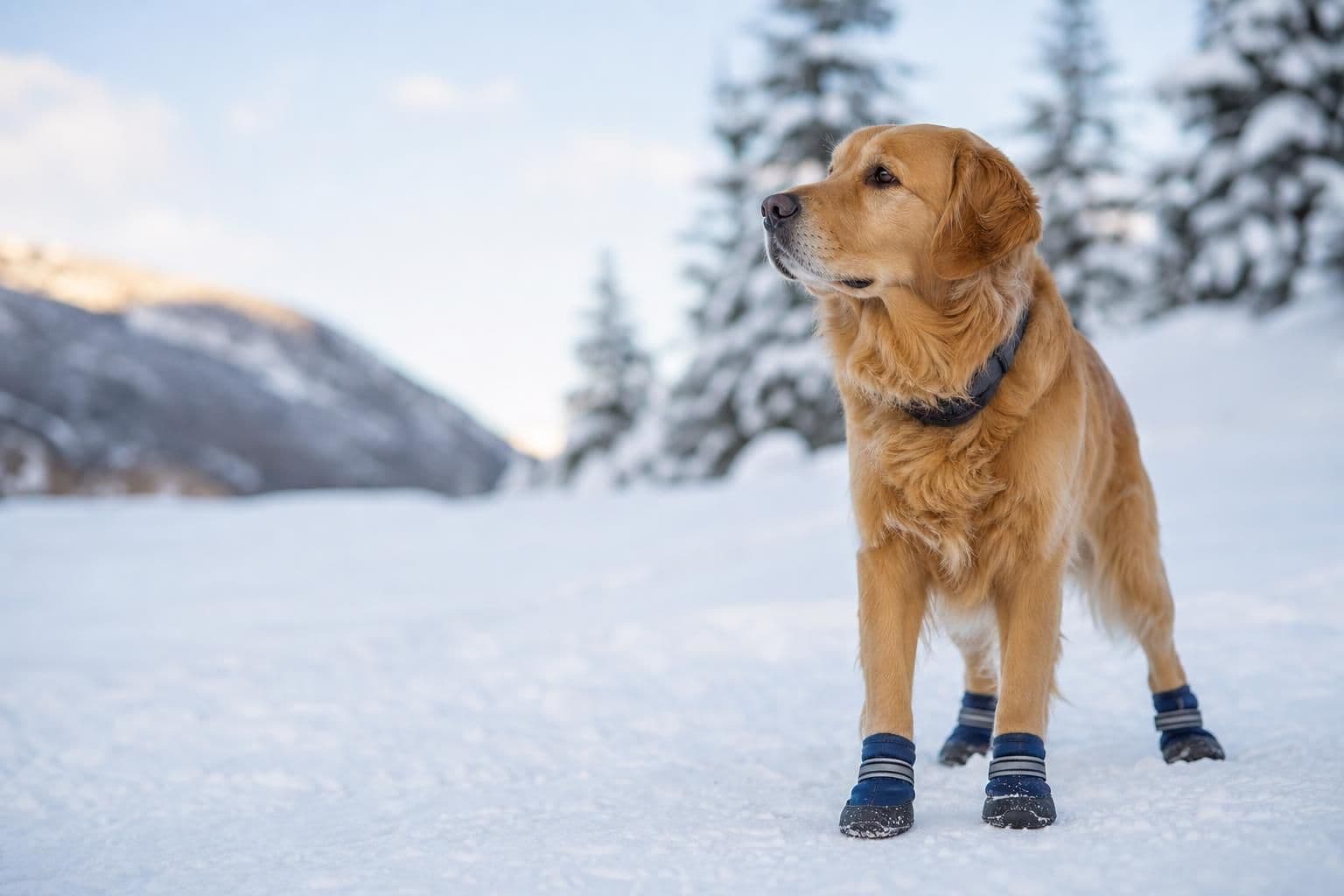
The best dog booties for winter are ones that fit snugly around the paw and lower leg without slipping, use a grippy sole rated for ice and snow, and close with an adjustable strap rather than a simple slip-on cuff. Look for water-resistant uppers, reinforced soles, and a sizing chart based on paw width and length in inches rather than vague S/M/L labels. Dogs with short hair, small paws, or past cases of frostbite or ice-ball buildup between the toes benefit the most.
Key takeaways
- Measure paw width at its widest point and the leg circumference above the dew claw before buying — don't guess from breed size alone.
- Prioritize a non-slip rubber sole and a secure strap closure over decorative designs; fit failure is the top complaint with winter booties.
- Introduce booties indoors for short sessions over several days so your dog accepts them before the first real snow walk.
Why Winter Booties Matter More Than People Think
Road salt and de-icing chemicals used on sidewalks can irritate paw pads and are harmful if licked off, which is why the ASPCA lists ice-melt products among common winter pet hazards. Snow and ice can also compact into painful ice balls between toe pads, especially on dogs with longer fur around their feet. Booties create a barrier against both problems, and they also reduce direct contact with freezing pavement, which matters most for dogs with thin coats or low body fat.
If you're unsure whether your dog is even feeling the cold enough to need gear like this, it helps to first check the signs covered in how to tell if your dog is cold, since shivering, lifting paws repeatedly, or reluctance to walk are all cues that protective footwear is overdue.
What Makes a Bootie Actually Work in Snow
A winter bootie needs to do three things at once: stay on, keep water out, and provide grip. Most failures come from the first one — a boot that looks warm but slides off after a few steps because the opening is too loose or the strap doesn't cinch tight enough.
- Sole material: Rubber or TPU soles with raised treads grip better on ice than smooth fabric bottoms.
- Closure type: A hook-and-loop strap that wraps around the ankle holds more securely than a basic elastic cuff.
- Upper material: Water-resistant nylon or neoprene keeps slush from soaking through, while mesh uppers are better suited to rain than deep snow.
- Reflective trim: Useful for early morning or evening walks when daylight is short.
Getting the Size Right
Generic small/medium/large labels are one of the most common reasons booties get returned — a "medium" from one brand can run a full size smaller than another's. The more reliable method is measuring the dog's paw directly: trace the paw on paper, measure the widest point in inches, then measure the leg circumference about an inch above the paw. Ziva Paws' clothing and accessories are sized this same way, by exact inch measurements for chest, neck, and length, rather than S/M/L, precisely because fit problems are so common with pet apparel — the same logic applies to boots and booties.
If your dog already resists wearing clothing or boots, the troubleshooting in why dogs circle before lying down isn't directly about gear, but it's a good reminder that dogs rely heavily on physical comfort cues, which is exactly why a poorly fitted bootie gets rejected faster than almost any other product.
Comparing Common Bootie Types
| Bootie Type | Best For | Grip on Ice | Water Resistance | Ease of Putting On |
|---|---|---|---|---|
| Rubber dipped fabric | Short walks, light snow | Moderate | Moderate | Easy |
| Neoprene with rubber sole | Deep snow, slush | Good | High | Moderate |
| Hard-sole trekking boot | Long hikes, rough ice | Best | High | Harder (more straps) |
| Disposable rubber bootie | One-time or emergency use | Low | Low | Very easy |
Helping Your Dog Accept Them
Most dogs freeze up or high-step awkwardly the first time boots go on — this is a normal reaction to unfamiliar sensation on the paw pads, not a sign the boots don't fit. Put them on indoors for a minute or two at a time, rewarding calm behavior, and gradually extend the duration over several days before the first outdoor use. Walking on carpet first, then a hard floor, then outside in short bursts tends to work better than a single long exposure.
Signs It's Time to Retire a Pair
Soles that have gone smooth, straps that no longer hold tension, or seams that let water through are all signs a pair has reached the end of its useful life. Because booties take more abrasion than most pet apparel, they typically wear out faster than a sweater or coat — a pattern similar to how bedding wears down with regular use, which is why it helps to periodically check how often to replace a dog's bed using the same logic of inspecting materials rather than going by a fixed calendar date.
A Few Fit and Comfort Notes From Everyday Use
Paws swell slightly in cold weather and shrink back once warmed up indoors, so a bootie that felt snug at the store can feel different on a cold morning walk. Checking strap tension before every walk, rather than assuming the first fit holds permanently, avoids most mid-walk slips. For multi-dog households, it's worth noting that paw size doesn't always track with overall body size — two similarly sized dogs can need different bootie widths, which is the same reasoning behind measuring cats individually for furniture rather than assuming one size fits a breed, as discussed in the guide to sizing a cat condo for multiple cats.
Frequently Asked Questions
Q: Do dogs actually need booties in winter?
Not every dog does, but short-haired breeds, small dogs, senior dogs, and any dog walking on salted sidewalks benefit from the protection against ice, salt, and cold pavement. Breeds with naturally thick, cold-adapted coats and tough pads may need them less.
Q: How do I measure my dog's paw for booties?
Have your dog stand on a piece of paper, trace around the paw, and measure the widest point in inches; also measure the circumference of the leg just above the paw where the strap will sit. Compare both numbers to the brand's inch-based chart rather than relying on a general size label.
Q: Why does my dog keep shaking off their boots?
This is usually a fit or introduction issue rather than a product defect — boots that are too loose at the ankle slip with every step, and dogs that weren't gradually introduced to the sensation often try to shake them off out of unfamiliarity. Shortening initial wear sessions and checking strap tightness usually resolves it within a few tries.
Q: Can I use the same booties for snow and rain?
Lighter mesh or fabric booties handle rain fine but tend to soak through in deep snow or slush, while neoprene or rubber-soled boots handle both conditions better. If you only buy one pair, a water-resistant sole with a snug ankle strap covers the widest range of winter weather.
Q: How long does it typically take for a dog to get used to wearing booties?
Most dogs adjust within a few short indoor sessions spread over several days, though some take longer depending on temperament and past experience with wearing things on their paws. Consistency in short, positive sessions matters more than the total number of days.