Best Dog Raincoat for Small Dogs: A Buyer's Guide
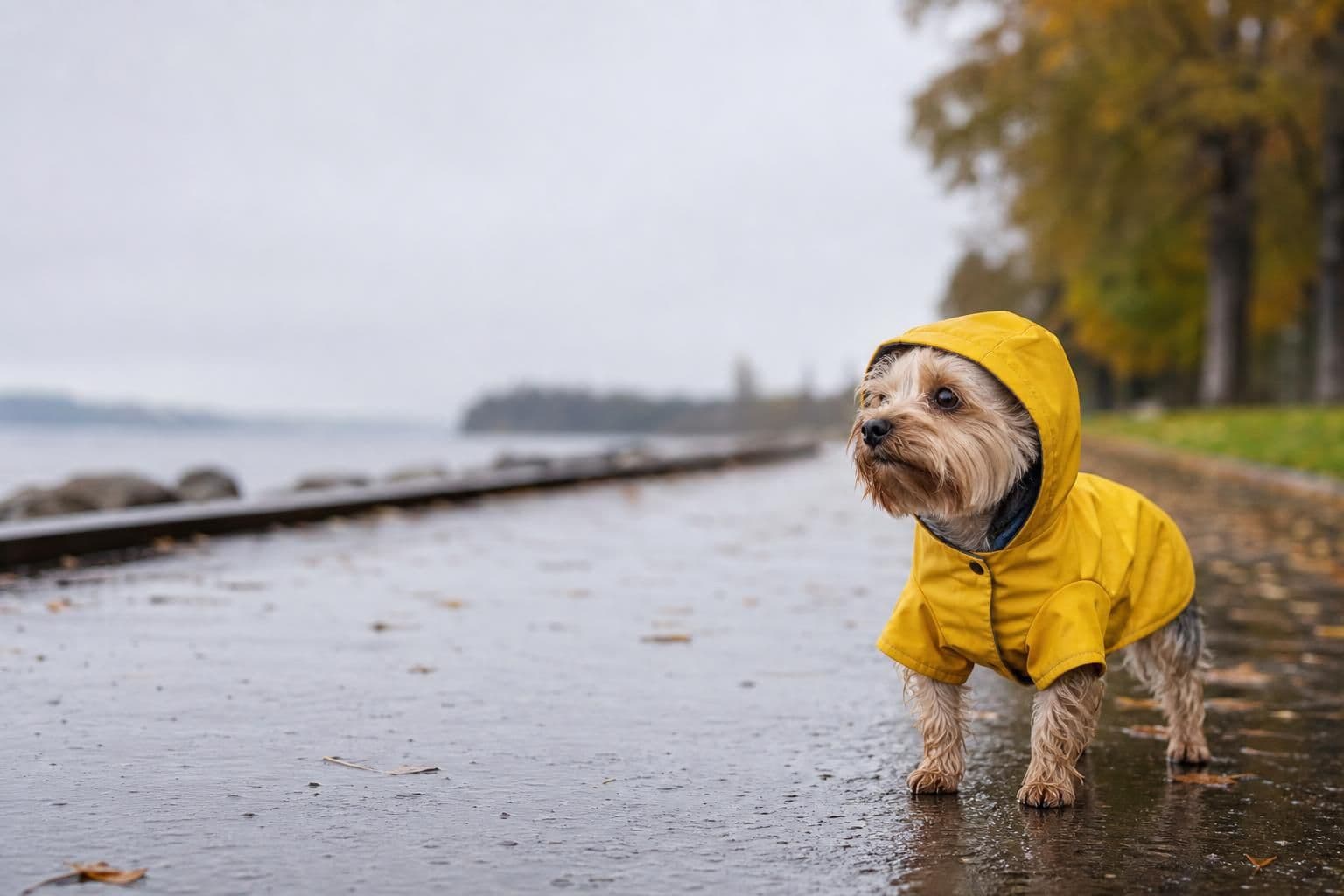
Key takeaway
The best dog raincoat for small dogs is a lightweight, fully waterproof (not just water-resistant) coat with a snug chest and neck fit measured in inches, an adjustable underbelly strap to stop it riding up, and reflective trim for low-visibility walks. Look for taped or sealed seams, a leg-free or four-leg design depending on how much coverage your dog needs, and a hem that clears the ground so it doesn't drag through puddles. Fit matters more than fabric on a small dog, because a loose coat flaps, chafes, and lets rain in anyway.
Key takeaways
- Measure chest girth, neck, and back length in inches — never rely on generic S/M/L labels, which vary wildly between brands.
- Choose a fully waterproof outer layer with taped seams over a merely water-resistant one for real rain protection.
- Prioritize a secure underbelly strap and leg openings so the coat stays put during walks instead of twisting or sliding back.
Why Small Dogs Need a Different Raincoat Than Big Dogs
Small dogs lose body heat faster because they have a higher surface-area-to-body-mass ratio than large breeds, which is part of why the American Kennel Club recommends extra protection for toy and small breeds in cold or wet weather. A soaked coat close to a small body cools the skin quickly, so a raincoat that actually blocks water — rather than just slowing it down — matters more for a 6-pound Chihuahua than a 60-pound Labrador.
Small dogs also sit lower to the ground, meaning belly and leg splash-back is a bigger issue. A coat cut for a small frame should extend a bit further down the sides and have a higher collar to keep rain off the chest and neck during walks through wet grass or puddles.
Getting the Fit Right: Why Inches Beat S/M/L
Generic size labels are the single biggest reason raincoats get returned. A "small" from one brand might fit a 10-inch chest and a "small" from another might fit 14 inches — there's no industry standard behind those letters. Measuring in real inches and matching against a brand's actual chart removes the guesswork.
Three measurements matter most:
- Chest girth — the widest part of the ribcage, just behind the front legs.
- Neck circumference — where a collar would normally sit.
- Back length — from the base of the neck to the base of the tail.
Ziva Paws lists every clothing item, including raincoats, by these exact inch measurements rather than S/M/L, and Ai and Dudu — the two resident cats who test products before they're listed — have made it clear in-house that anything loose around the belly or shoulders gets shrugged off within minutes. If you're unsure how to take these measurements accurately, this guide on how to measure a dog for clothes size chart accuracy walks through it step by step.
Fabric and Construction: What Actually Keeps Water Out
Not all "waterproof" claims mean the same thing. A coat is only as good as its seams and closures.
- Taped or sealed seams stop water seeping through needle holes, which is the most common failure point on cheaper coats.
- A ripstop or coated nylon shell resists tearing on branches and fences while staying light enough not to weigh a small dog down.
- A soft, breathable lining prevents overheating and chafing on longer walks, since small dogs often wear coats for extended periods.
- An adjustable belly strap and leg loops keep the coat from twisting when a dog runs, digs, or rolls.
Reflective piping or a small reflective strip adds a real safety margin during dawn, dusk, or heavy-rain walks when visibility for drivers and cyclists drops.
Comparing Common Raincoat Styles for Small Dogs
| Style | Coverage | Best for | Trade-off |
|---|---|---|---|
| Hooded full-body coat | Back, chest, belly, sometimes legs | Heavy, prolonged rain | Bulkier, may need practice putting on |
| Poncho-style wrap | Back and sides only | Light drizzle, quick walks | Less belly protection |
| Four-leg raincoat | Full torso plus all four legs | Dogs that hate wet paws | Takes longer to fit correctly |
| Vest-style with collar flap | Chest and neck focus | Short walks in mild rain | Minimal back-of-body coverage |
Sizing Mistakes That Lead to Returns
Two mistakes account for most raincoat returns: measuring over a thick winter coat's fur (which inflates chest girth) and skipping the neck measurement entirely. A coat that's correct at the chest but too tight at the neck will rub and may discourage a dog from wearing it at all.
If your dog is between two chart sizes, sizing up slightly and tightening the belly strap usually works better than sizing down and forcing a tight fit — a too-small raincoat restricts shoulder movement, which affects gait over time.
Seasonal and Regional Considerations
Rain gear needs shift with climate. In consistently wet regions, a fully waterproof shell with a warm liner earns its keep most of the year, while in drier climates with occasional storms, a lighter shell without heavy insulation avoids overheating. The National Weather Service publishes regional precipitation patterns that can help you judge how often a raincoat will actually get used versus sitting in a drawer.
For dogs that also struggle with damp, chilly evenings after a walk, a warm and supportive resting spot helps them recover body heat faster; see what to look for in a cozy bed for anxious dogs if drying off and settling down is part of your routine.
Quick Checklist Before You Buy
- Confirm chest, neck, and back-length measurements in inches against the specific brand's chart.
- Check for taped seams, not just a "water-resistant" label.
- Look for an adjustable belly strap and secure leg openings.
- Consider hood coverage if your dog dislikes rain on their head.
- Check reflective elements for evening or early-morning walks.
Frequently Asked Questions
Q: What size raincoat does a small dog need?
Measure chest girth, neck circumference, and back length in inches, then match those numbers to the brand's specific size chart rather than relying on S/M/L labels, which aren't standardized across brands.
Q: Is water-resistant the same as waterproof for a dog raincoat?
No. Water-resistant fabric slows water absorption but eventually soaks through, while a fully waterproof coat with taped seams blocks water completely during sustained rain.
Q: Do small dogs really need raincoats more than large dogs?
Small dogs lose body heat faster due to a higher surface-area-to-body-mass ratio, so a wet coat cools them down more quickly, making waterproof protection more valuable for smaller breeds.
Q: How do I stop my dog's raincoat from sliding backward?
Choose a coat with an adjustable underbelly strap and, ideally, leg openings, since these two features anchor the coat in place better than a coat that only fastens around the neck and back.
Q: Can I put a raincoat over my dog's regular sweater?
Yes, as long as the raincoat's chest and neck measurements account for the extra bulk of a sweater underneath; measuring over bare fur and then sizing up slightly usually leaves enough room.