Why Does My Dog Hate Wearing a Cone After Surgery?
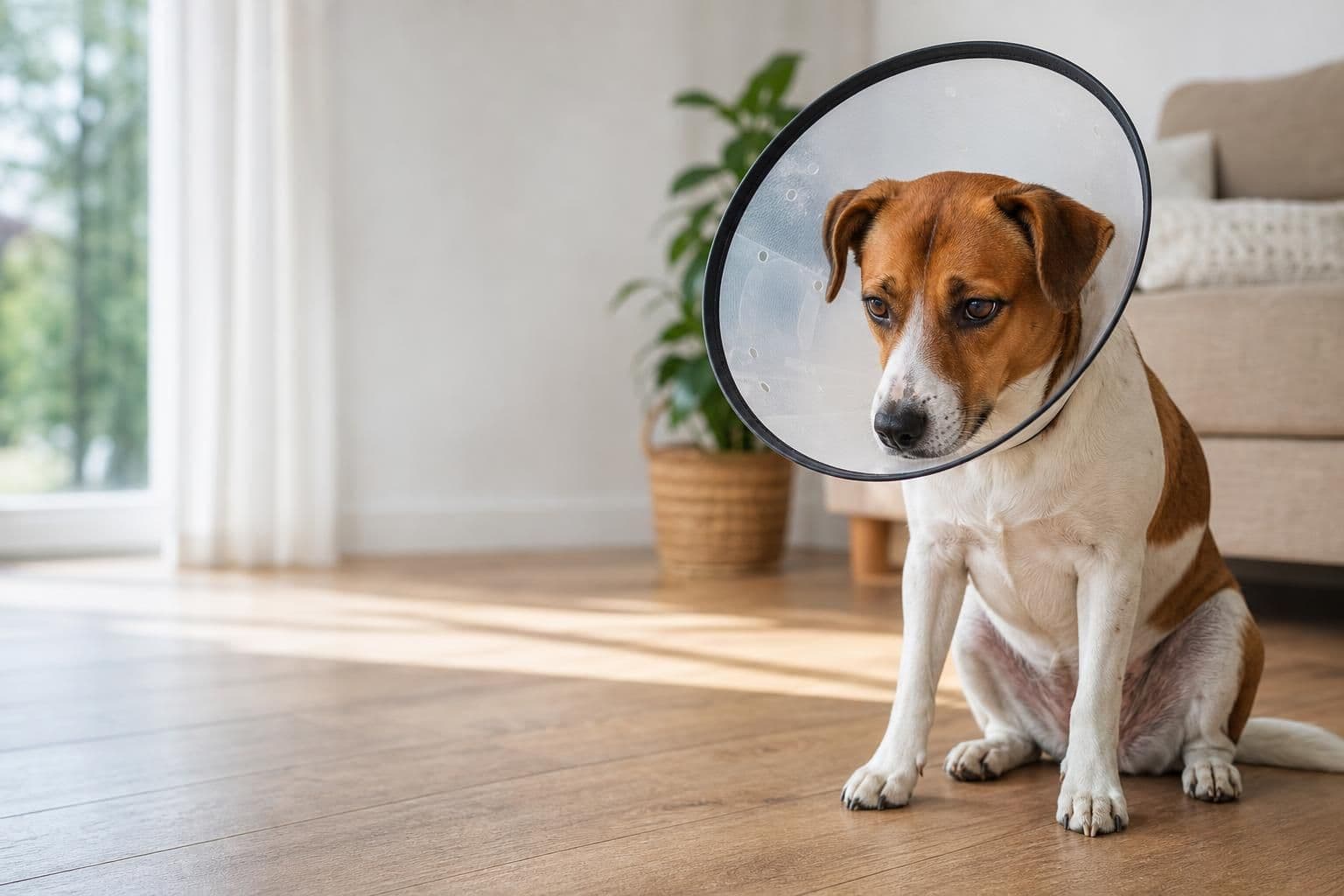
Key takeaway
Dogs hate cones mainly because the device blocks their peripheral vision, bumps into walls and furniture, muffles sound, and restricts the normal self-soothing behaviors (licking, grooming, nuzzling) they rely on to feel calm, especially while already sore or disoriented from anesthesia. The reaction is sensory overload layered on top of post-surgical stress, not stubbornness. Most dogs adjust within a few days once they learn to navigate with it and the incision starts to feel less irritated.
Key takeaways
- The cone's main problems are blocked side vision, bumping into objects, and muffled hearing — not the dog being "dramatic."
- Soft recovery collars, inflatable donuts, or a recovery suit can reduce distress for dogs who struggle with the rigid Elizabethan collar.
- A dog that paws frantically, refuses to eat or drink, or won't settle for more than a day should be checked with the vet — it may signal pain or a poor-fitting collar, not just dislike.
What actually bothers dogs about the cone
A traditional Elizabethan collar (the plastic cone) extends well past a dog's nose, which cuts off most of their side and rear vision. Dogs are used to scanning their surroundings constantly, so losing that field of view makes them cautious, clumsy, and more anxious about things approaching from the side. The cone also amplifies the dog's own breathing and footsteps while muting outside sounds, which can make a recovering dog feel more isolated and on edge.
There's a physical discomfort layer too. The rim often knocks into doorframes, food bowls, and legs, and some dogs associate that bumping with the surgery site itself, even when the collar never touches the incision. On top of that, a dog waking up from anesthesia is often nauseated, wobbly, and sensitive to touch — adding a foreign object around the neck on day one is rarely going to be welcome.
Common reactions and what they mean
Most dogs move through a predictable range of behaviors in the first 24-72 hours:
- Freezing in place — overwhelmed by the restricted sightline, waiting to get bearings.
- Walking backward into furniture — still adjusting depth perception with the collar's edge in view.
- Pawing at the cone — trying to remove it, more common in the first few hours post-anesthesia.
- Refusing to eat or drink — the cone can make reaching a bowl awkward; raising the bowl or using a wider, shallow dish usually solves it.
- Whining or pacing — can be collar-related stress or could be surgical pain, so timing matters: constant distress beyond the first day warrants a vet call.
Cone alternatives that are gentler on dogs
The rigid plastic cone is still the standard because it reliably prevents licking and chewing at an incision, which the American Veterinary Medical Association notes is important since saliva and repeated licking can introduce bacteria and delay healing or reopen sutures. But it isn't the only option, and the right choice depends on the dog and the surgery site.
- Soft fabric cones fold down and are lighter, better for dogs who are especially anxious about the rigid plastic, though they offer less protection against persistent chewers.
- Inflatable donut collars work well for neck or ear incisions but don't fully block a dog from reaching paws or belly wounds.
- Recovery suits/onesies cover torso incisions without anything near the face, which many dogs tolerate far better than a cone — this is worth discussing with your vet if the surgery site is on the abdomen or chest rather than the head or legs.
If a soft alternative is approved for your dog's specific incision, a snug, properly measured fit matters more than with everyday apparel, since a baggy suit can shift and expose the wound. This is one reason it's worth checking actual chest and back-length measurements in inches rather than guessing a size — it's the same principle behind sizing any clothing for dogs, where a true inch-based chart avoids the guesswork of generic small/medium/large labels.
Helping a dog adjust faster
A few adjustments in the first days make a real difference:
- Clear a wide path at home so the cone doesn't constantly knock into furniture legs or doorframes.
- Elevate food and water bowls slightly so the cone's rim doesn't block access.
- Keep the cone on during unsupervised time, even if you let the dog have supervised cone-free breaks to eat or rest calmly — the American Animal Hospital Association recommends keeping protective collars on for the full healing window your vet specifies, since even a few minutes of unsupervised licking can undo days of healing.
- Offer a familiar resting spot. Dogs that are stressed post-surgery often settle faster somewhere that already smells like them, which is part of why some dogs end up wanting to sleep on your clothes during recovery — a soft, low-sided bed near where the family spends time can serve a similar comforting role.
- Watch licking habits even after the cone comes off. Some dogs develop a bed-licking or self-licking habit during recovery that lingers afterward; if that happens, it's worth reading up on why dogs lick their bed to rule out anxiety versus a leftover physical habit.
When cone resistance signals something more
Occasional frustration is normal, but a few signs mean it's worth a call to the vet rather than waiting it out: the dog won't stop pawing at the incision site specifically (not just the cone), there's swelling, discharge, or a smell at the wound, the dog hasn't eaten in over 24 hours, or the distress is escalating rather than settling by day two or three. Resistance to wearing something new isn't unique to cones — some dogs show the same reluctance with other unfamiliar gear, which is a pattern covered in more general terms in why dogs refuse to wear booties. The underlying driver is often the same: an unfamiliar object touching the body, paired with a lack of control over removing it.
Frequently Asked Questions
Q: How long does a dog typically need to wear a cone after surgery?
It depends on the procedure and incision type, but most general surgeries require the cone until sutures are removed or the vet confirms the wound has closed, often around 10-14 days. Always follow the specific timeline your vet gives rather than a general rule.
Q: Can I take the cone off while I'm watching my dog?
Many vets allow supervised cone-free breaks for eating or short calm periods, as long as you can intervene immediately if the dog starts licking or chewing at the incision. Never leave the cone off during unsupervised time, including sleep.
Q: Is a soft recovery collar as effective as a hard plastic cone?
Soft cones and inflatable collars work well for many dogs and incision locations, but they offer less physical barrier against a determined chewer. Ask your vet which type suits your dog's specific surgery site before switching.
Q: Why does my dog cry only when the cone is on, not otherwise?
This is usually linked to disorientation and restricted vision rather than pain from the collar itself, especially if the crying happens when walking or navigating a room. If crying also occurs at rest or seems tied to touching the incision area, mention it to your vet to rule out surgical pain.
Q: Will my dog eventually get used to the cone?
Most dogs adapt within two to four days as they relearn spatial awareness with the collar on and the incision becomes less sensitive. If there's no improvement at all by day four or five, a different collar style or a vet check is worth considering.