How to Measure a Cat for a Sweater (Step-by-Step)
Key takeaway
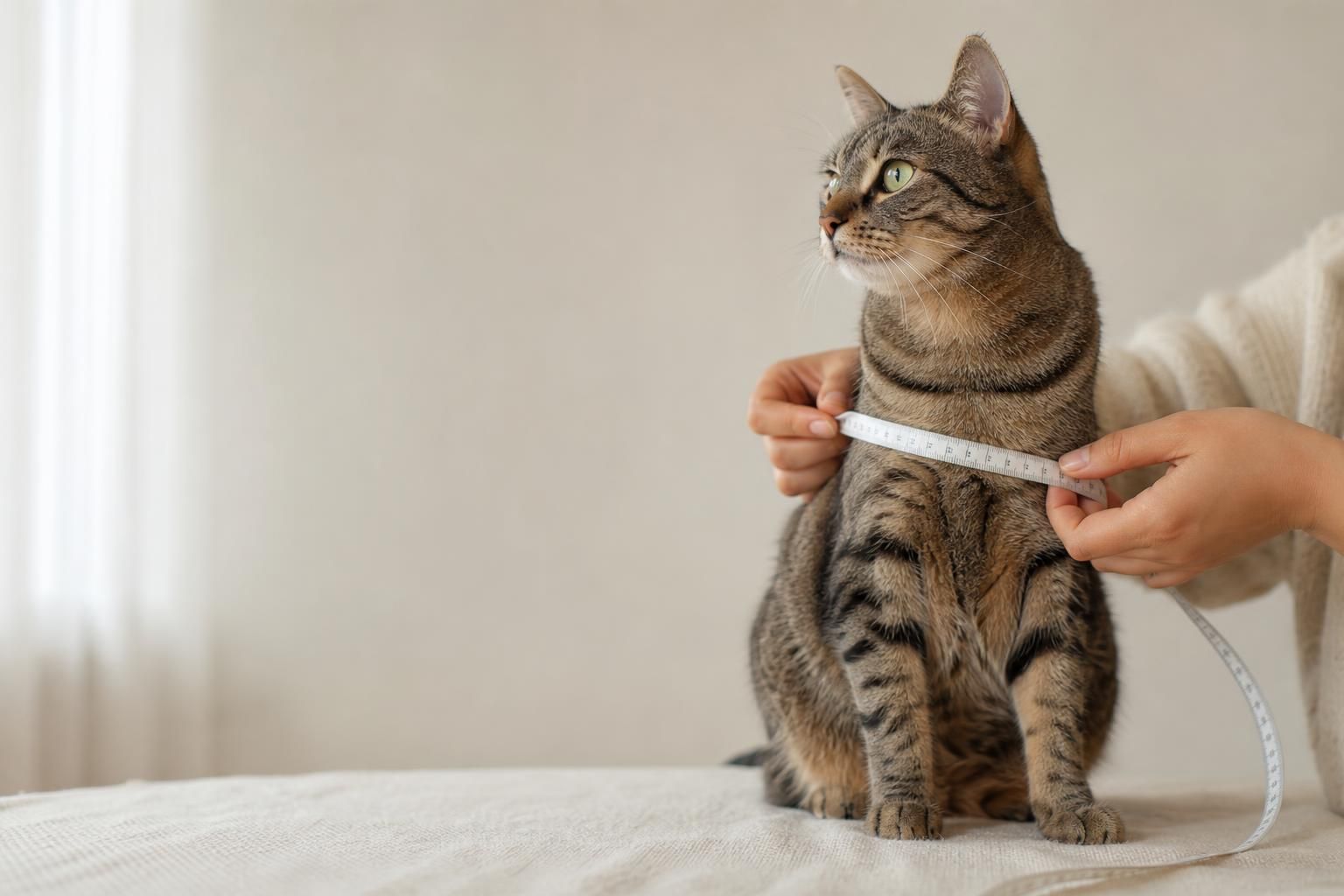
To measure a cat for a sweater, you need three numbers in inches: neck circumference, chest circumference (the widest part behind the front legs), and back length (from the base of the neck to the base of the tail). Take each measurement with a soft fabric tape while your cat is standing naturally, not stretched or crouched, and add a small allowance rather than measuring skin-tight. These three numbers matter far more than a generic "small" or "medium" label, because cat body shapes vary enormously even within the same weight range.
Key takeaways
- Measure neck, chest, and back length in inches — not just weight or a size letter.
- Keep two fingers of slack under the tape so the sweater doesn't restrict breathing or movement.
- Re-measure every few months for kittens or cats with changing weight, since fit can shift fast.
Why "Small, Medium, Large" Often Fails Cats
Cat sweater sizing labeled only S/M/L assumes a standard body shape, but cats don't follow one. A 9-pound cat with a long back and narrow chest needs a very different cut than a 9-pound cat that's short and barrel-chested. Letter sizes also vary between brands, so a "medium" from one retailer may fit like a "small" from another, leading to returns or a sweater that bunches at the shoulders and chokes at the neck.
This is why sizing charts built around actual inch measurements — chest, neck, and back length — tend to produce a better first-try fit than weight-based or letter-based charts alone. It's also the reasoning behind how Ziva Paws builds its clothing sizing charts in inches instead of S/M/L, so the three numbers you take at home map directly onto the product listing.
The Three Measurements You Need
Use a flexible fabric or sewing tape measure, not a rigid ruler. A kitchen measuring tape works in a pinch, but fabric tape conforms to the body and gives a more accurate number.
- Neck circumference — Wrap the tape around the base of the neck, where a collar would sit. Keep it loose enough to slide two fingers underneath.
- Chest circumference — Measure around the widest part of the ribcage, just behind the front legs. This is usually the largest number and the one most sweaters are built around.
- Back length — Measure from the base of the neck (where the collar sits) in a straight line along the spine to the base of the tail. This determines whether a sweater will cover the belly or ride up.
Write down all three numbers in inches, since most sizing charts — including inch-based ones — ask for all three rather than a single measurement.
How to Get an Accurate Reading
A squirming cat throws off measurements more than almost anything else, so timing and technique matter.
- Measure when calm. Right after a meal or during a grooming session tends to work better than right after play, when muscles are tensed.
- Stand, don't stretch. Measure your cat in a natural standing position. Pulling the tape while the cat is stretched out will give a number that's too small once the cat relaxes.
- Leave slack. A good rule of thumb is to slide two fingers between the tape and the body at the chest and neck. Too tight restricts movement and breathing; too loose and the sweater slips or twists.
- Measure twice. Cats shift their weight and posture constantly, so take each measurement twice and use the more consistent reading.
If your cat is a kitten or is actively gaining or losing weight, plan to re-measure every few weeks rather than relying on a measurement from months earlier.
Reading a Sizing Chart Correctly
Once you have your three numbers, match them against the chart rather than guessing based on breed or age. Most charts list a range for each measurement — for example, a chest range of 13-14 inches — and you should pick the size where all three of your numbers fall inside the range, not just one. If your cat's measurements fall between two sizes, sizing up is usually safer for a knit sweater, since a slightly loose fit is more comfortable than one that pinches at the armpits or neck.
For breeds with distinct proportions — long-backed breeds, or small breeds like Chihuahuas sized for dog apparel — the back length measurement often matters more than chest size alone, a point covered in more depth in this guide to fitting sweaters on small, narrow-chested breeds.
Signs a Sweater Doesn't Fit — Even If It "Went On"
A sweater can technically slide onto a cat and still be the wrong size. Watch for:
- Pulling at the shoulders when the cat walks, which restricts the front leg stride.
- A tight band around the chest that leaves a visible indent when removed.
- Fabric riding up over the belly within a few minutes, which usually means the back length measurement was too short for the torso.
- Excessive licking or scratching at the neck or armpit area, a common sign of chafing.
According to the American Veterinary Medical Association, owners should monitor any pet in clothing for signs of overheating or restricted movement, since cats regulate body temperature differently than humans and can overheat more quickly in snug or non-breathable fabric. If a sweater causes labored breathing, skin irritation, or visible distress, remove it immediately regardless of how well it otherwise fits.
Fabric and Design Considerations Beyond Measurements
Even a well-measured sweater can fit poorly if the fabric or design doesn't suit the cat's body. Stretchy knits forgive small measurement errors better than stiff woven fabric. Sweaters with a wider neck opening are generally easier to get on and off without a struggle, which matters for cats who resist dressing. For cats who tolerate sweaters but dislike pulling garments over the head, a design that fastens along the back or belly can reduce stress during dressing — a consideration also worth checking in pieces like cat pajamas built around chest and length measurements rather than generic sizing.
Resident testers Ai and Dudu — two cats whose measurements differ enough to represent a range of body types — have highlighted how much a half-inch difference in chest sizing changes whether a sweater sits flat or bunches at the shoulder, which is part of why inch-based charts matter more than they might seem to at first glance.
When to Skip the Sweater Altogether
Not every cat needs or tolerates clothing, and the RSPCA notes that clothing should never replace proper shelter, warmth, or a safe indoor environment for pets sensitive to cold. If your cat shows ongoing distress when dressed — freezing in place, excessive grooming, or trying to remove the garment — a heated or insulated bed may serve the same warmth goal without the fit issues, something worth considering alongside guidance on introducing a new bed to a cat who startles easily.
Frequently Asked Questions
Q: What three measurements do I need to size a cat sweater?
You need neck circumference, chest circumference (the widest part behind the front legs), and back length (base of neck to base of tail), all measured in inches with a soft fabric tape.
Q: Should I measure my cat tight or loose for a sweater?
Measure with the tape snug but not tight — leave room for about two fingers underneath at the neck and chest so the finished garment doesn't restrict breathing or movement.
Q: How often should I re-measure a kitten for clothing?
Re-measure every few weeks while a kitten is still growing, since chest and back measurements can change quickly and a sweater that fit last month may already be too small.
Q: Why do cat sweaters sized S/M/L sometimes not fit even if the weight matches?
Weight doesn't account for body shape — two cats of the same weight can have very different chest circumference and back length, which is why inch-based measurements predict fit more reliably than a size letter.
Q: Is it safe to leave a sweater on my cat all day?
It's generally safer to remove sweaters during unsupervised time, naps in warm spots, or play, and to check regularly for signs of overheating, chafing, or the fabric riding up over the belly.