How to Introduce a New Cat Bed to an Anxious Cat
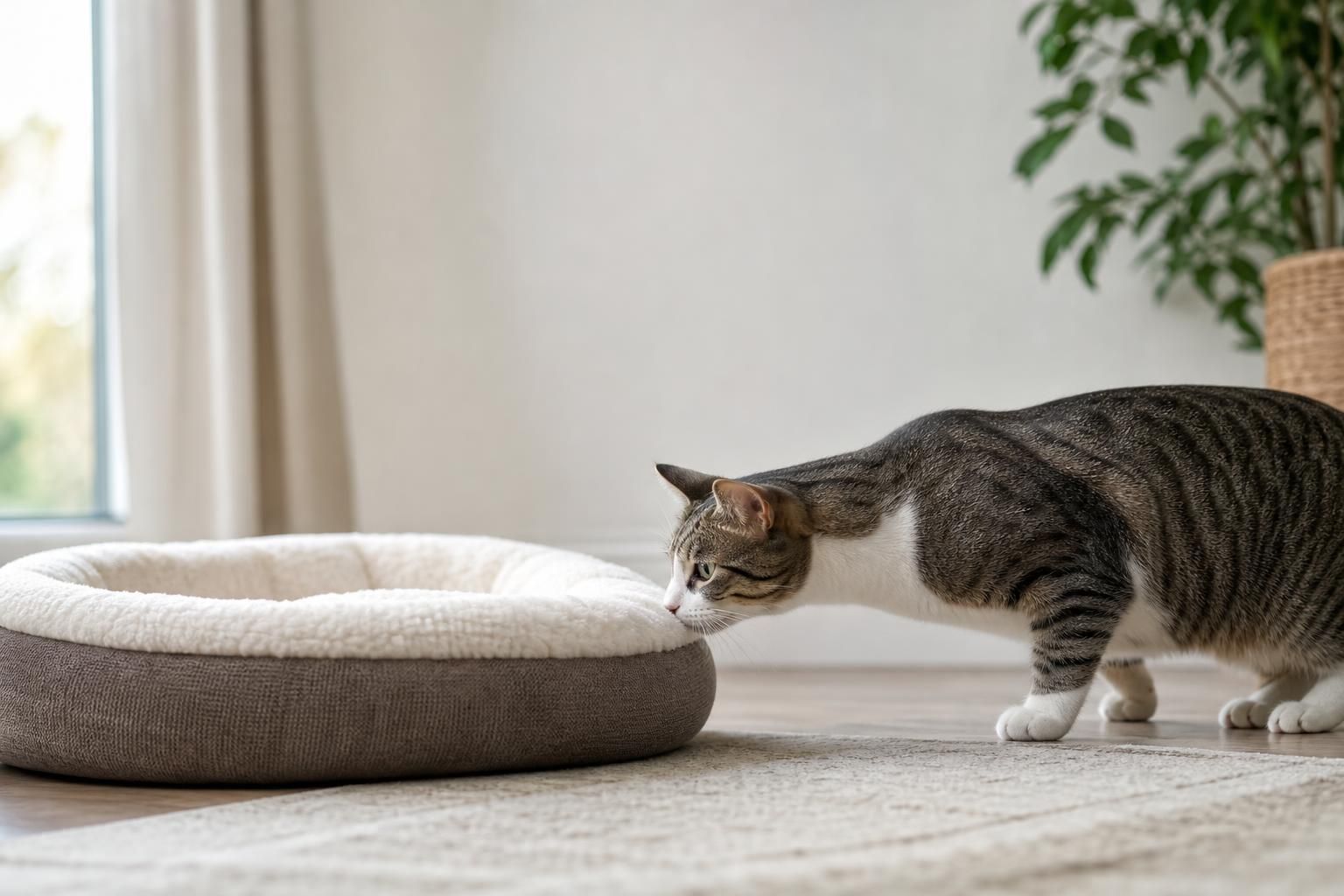
Key takeaway
To introduce a new cat bed to an anxious cat, place the bed in a low-traffic spot the cat already favors, let it absorb the cat's scent for several days before moving it, and avoid forcing the cat onto it. Most cats need repeated, pressure-free exposure — not coaxing or placement directly in their path — before they'll treat an unfamiliar object as safe.
Key takeaways
- Let the bed sit near (not inside) the cat's current favorite resting spot for 3-5 days before moving it into place.
- Rub a soft cloth on the cat's cheeks and tuck it into the bed to transfer familiar scent before first use.
- Never pick the cat up and set it in the bed — anxious cats bond with spaces they chose themselves.
Why a New Bed Can Trigger Anxiety in the First Place
Cats rely heavily on scent-marking to judge whether a space is safe. A brand-new bed smells like fabric, packaging, and warehouse — not like the cat's own facial pheromones or the pheromones left by other objects in the home. The ASPCA notes that sudden changes to a cat's environment are a common trigger for stress behaviors, including avoidance of new furniture. A new bed is, from the cat's point of view, an unidentified object sitting in otherwise familiar territory, which is reason enough to ignore or avoid it until it's been investigated on the cat's own schedule.
Anxious cats in particular — those who already startle at noises, hide from guests, or are recovering from a move or a new pet in the house — need more repetitions of safe exposure than a confident cat would. This is a timeline issue, not a product issue in most cases.
Step-by-Step: Introducing the Bed Without Pressure
- Place it near, not in, the current sleeping spot. Set the new bed a few feet from wherever the cat already naps, rather than replacing that spot immediately.
- Add familiar scent. Rub a soft cloth along the cat's cheeks and chin (where facial pheromone glands are concentrated) and rub it inside the bed, or let an unwashed blanket the cat already sleeps on sit inside the new bed for a few days.
- Leave it alone. Don't lift the cat into the bed or push its paws onto it. Let curiosity do the work.
- Reward proximity, not just use. If the cat sniffs or walks past the bed, a treat or calm praise nearby reinforces that the object is non-threatening — without creating pressure to get in.
- Move it gradually. Once the cat is sniffing or sitting near the bed regularly, shift it a few inches a day toward its intended final location rather than relocating it all at once.
This slow, incremental approach is the same logic behind gradually transitioning a cat to new food — abrupt changes trigger resistance, while small daily shifts let the cat adjust without feeling cornered.
Where to Put the New Bed
Location matters as much as scent. Cats generally prefer resting spots that are:
- Elevated or tucked against a wall, giving a view of the room without being in an open walkway
- Away from loud appliances, doorways, or anywhere foot traffic passes directly beside it
- Near (but not on top of) an existing favorite perch, scratching post, or window sill
If the household includes a dog or another cat, placing the new bed somewhere the anxious cat can retreat to without being blocked in matters more than the bed's material or shape. A bed in a quiet corner, raised slightly off the floor, tends to get used faster than one placed in the middle of a busy room, even if the latter gets more sunlight.
Reading the Signs: Progress vs. Rejection
Watch for small, early signals rather than waiting for the cat to climb in and settle:
- Early acceptance: sniffing the edges, rubbing a cheek against the rim, sitting beside it for a few minutes
- Neutral: ignoring it entirely for the first week — this is common and not a failure
- Active rejection: hissing, swatting, or consistently detouring around it
If a cat is actively avoiding or marking near the bed (scratching the floor beside it, for example), that's a signal to slow down rather than push harder. Scratching near or on bedding is often a territorial or comfort behavior in its own right, which is covered in more detail in this guide to why cats scratch their beds.
If the Cat Still Won't Use It After a Few Weeks
Some anxious cats take four to six weeks before they'll commit to a new resting spot, especially if they're naturally cautious or recently went through another change (new home, new pet, renovation). Before assuming the bed itself is the problem, check:
- Size and shape fit. A bed that's too small for the cat to curl up or stretch in comfortably will be avoided regardless of scent work. Ai and Dudu, the two cats who test products before they're listed on Ziva Paws, have shown that bed shape and depth often matter more to acceptance than fabric texture — a cat that likes to burrow may ignore a flat pad but settle immediately into a hooded or walled bed.
- Material sensitivity. Some cats dislike certain textures against their paws or fur; swapping a liner or adding a familiar blanket on top can help.
- Competing resources. If the food bowl, litter box, or scratching post is closer to the old spot, the cat may simply have no reason to move.
For cats who are drawn to enclosed, den-like spaces rather than open pads, a covered or walled bed tends to get adopted faster than a flat cushion, since it mimics the hidden, low-visibility spots cats seek out when stressed. Sizing also matters here: a bed that's genuinely too small restricts the curling position cats use to feel secure, so checking actual inch measurements — chest-to-tail length, not just "small" or "medium" labels — helps avoid a second round of trial and error.
When to Loop In a Veterinarian
Occasionally, resistance to a new bed is a symptom rather than a preference. The American Veterinary Medical Association lists changes in resting behavior — including avoiding previously comfortable spots — as one of several signs worth mentioning to a vet, particularly if paired with hiding, appetite changes, or reduced grooming. If an anxious cat suddenly avoids all resting spots, not just the new bed, it's worth ruling out pain or illness before assuming it's purely behavioral.
Frequently Asked Questions
Q: How long does it take an anxious cat to accept a new bed?
Many cats take one to three weeks of gradual, no-pressure exposure; more cautious cats can take four to six weeks. Progress is measured in small signals like sniffing or sitting nearby, not immediate full-time use.
Q: Should I remove the cat's old bed to force it to use the new one?
No — removing the old bed too early often increases stress rather than speeding adoption. Keep both available until the cat is consistently choosing the new one on its own.
Q: Does the location of the bed matter more than the bed itself?
Often, yes. A bed placed in a quiet, slightly elevated, low-traffic spot tends to get used faster than an objectively "better" bed placed somewhere exposed or noisy.
Q: Can scent transfer really speed up acceptance?
Rubbing a cloth on the cat's cheeks and placing it in the new bed transfers familiar facial pheromones, which many cats use to judge whether a space is safe. It's a low-effort step that often shortens the adjustment period.
Q: What if my anxious cat never uses the new bed?
Reassess size, shape, and placement before giving up — a bed that's too shallow, too exposed, or too far from existing resources is commonly the issue rather than the cat being unwilling to adapt.