Why Does My Cat Scratch Her Bed?
Key takeaway
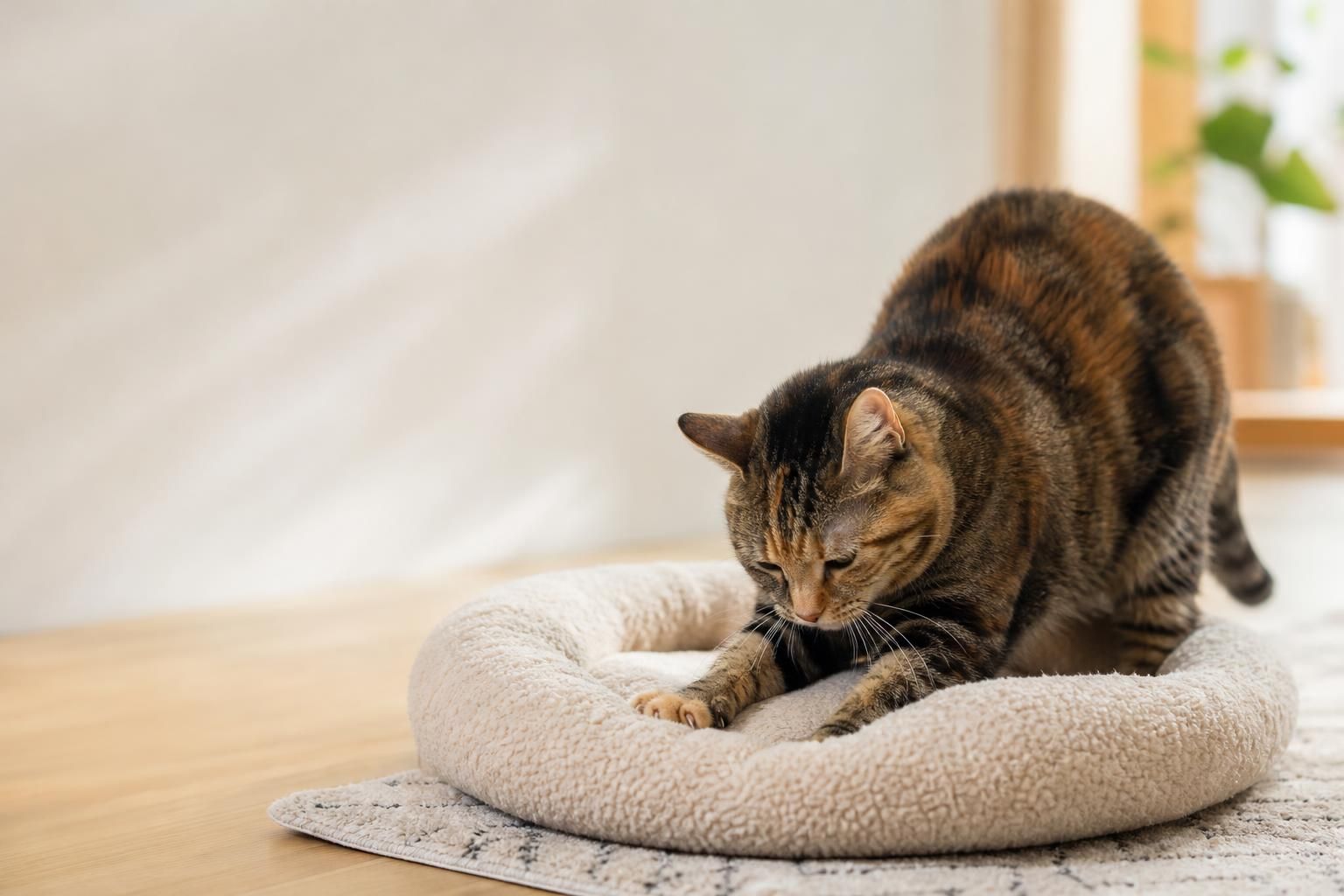
Cats scratch their beds mainly to mark territory with scent glands in their paws, to knead and "fluff" the surface into a comfortable nesting shape, and to shed the outer sheath of their claws. It's an instinctive, mostly normal behavior left over from wild ancestors who dug and shaped bedding material before settling down. Scratching only becomes a concern when it's frantic, destructive, or paired with other signs of stress or discomfort.
Key takeaways
- Bed scratching is usually nesting instinct plus scent-marking — not destructive or spiteful behavior.
- Choose bedding made of tightly woven, durable fabric so claws catch less and the bed holds up longer.
- Sudden, aggressive, or nonstop scratching paired with vocalizing or restlessness is worth a vet check.
The Instinct Behind the Behavior
Scratching is built into a cat's daily routine, not just something they do on a scratching post. Cats have scent glands in the pads of their paws, and scratching deposits pheromones onto a surface — a way of claiming it as theirs, even inside their own home. When a cat scratches her bed before lying down, she's often leaving her scent on it and checking that it still "smells like her" compared to other spots in the house.
This is closely related to kneading, the rhythmic pressing motion kittens use while nursing that many cats carry into adulthood. Combined, scratching and kneading turn a flat bed into a nest with a shape and scent the cat recognizes as safe.
Claw Maintenance Plays a Role Too
Unlike human nails, a cat's claws grow in layers, and the outer sheath needs to be shed periodically to reveal the sharper claw underneath. Scratching a textured surface — a post, a cardboard scratcher, or sometimes bedding — helps pull off that worn outer layer. The American Veterinary Medical Association notes that scratching is a normal feline behavior tied to claw health and territory marking, not a behavior problem to eliminate outright.
If your cat's bed has looped fabric or a textured weave, it can double as an informal scratching surface, which is one reason some beds wear out faster at the edges than in the middle.
When Bed Scratching Signals Something Else
Occasional scratching before settling in is normal. But a few patterns are worth paying attention to:
- Frantic or repetitive scratching that doesn't lead to lying down calmly can point to anxiety, especially if it happens during storms, after a move, or around new pets in the house.
- Digging at the bed accompanied by vocalizing may signal discomfort, including joint pain in older cats who struggle to get comfortable.
- Sudden destructive clawing that shreds fabric rather than gentle kneading can mean the bed's texture is too appealing to a cat who also needs more scratching outlets elsewhere in the home.
- Avoiding the bed after scratching it instead of settling can mean the bed itself feels off to her — wrong size, wrong material, or placed somewhere too exposed.
Cats are also known for using subtle body language to communicate mild stress before escalating, which is one reason it helps to track when and where the scratching happens, not just that it's happening.
Anxious Cats and Bedding Choices
Cats that are naturally more anxious tend to seek out enclosed, den-like spaces where they feel hidden on at least three sides. A bed that's too flat or open may actually encourage more scratching and digging as the cat tries to create the coziness an open pad doesn't offer. Raised-rim beds, hooded nests, or cave-style beds tend to reduce this digging behavior because the structure already does the "nesting" work for her.
If you've noticed your cat also seeking out small enclosed spots elsewhere — a box, under furniture, behind the couch — that's a good sign a more enclosed bed style would suit her better than an open cushion.
Choosing Bedding That Holds Up to Scratching
Not all bed fabrics respond the same way to regular clawing. Tightly woven materials with a flat or low-pile weave resist snagging better than loose knits or long-pile plush, which can pull and unravel after repeated scratching sessions. Reinforced or double-stitched edges around the rim also last longer, since that's typically where cats dig in most.
At Ziva Paws, Ai and Dudu test bedding before it's listed, and one thing they've consistently shown is that beds with sturdier weave hold their shape through daily digging and kneading far better than delicate or loosely knit options. If you're shopping for a replacement, the cat beds and nests collection includes enclosed and rimmed styles designed with that kind of everyday scratching in mind.
Redirecting Excess Scratching
If bed scratching is becoming excessive or destructive, the goal isn't to stop scratching altogether — it's to give your cat better places to do it. A scratching post or pad placed near the bed gives her an outlet that doesn't wear out her sleeping spot, and trimming claws regularly can reduce how much damage any single scratching session causes. Cats that bring you toys or seek extra attention around nap time may simply need more enrichment during the day, which is covered in more depth in this look at why cats bring their owners toys.
Interactive toys that burn energy before bedtime can also reduce nighttime digging and restlessness, since a cat who's physically tired settles faster and scratches less out of excess energy. The toys collection includes puzzle feeders and teaser-style toys that work well as a pre-bedtime wind-down.
When to Loop In a Vet
Scratching that's sudden, intense, or combined with limping, reduced appetite, or avoiding jumping onto furniture warrants a veterinary visit. The Cornell Feline Health Center points out that changes in a cat's normal routines — including sleeping and resting behavior — are often among the first visible signs of underlying pain or illness, since cats are naturally good at masking discomfort. A vet can rule out arthritis, skin irritation, or anxiety-related causes that a bed swap alone won't fix.
Frequently Asked Questions
Q: Is it normal for cats to scratch their bed before lying down?
Yes. Most cats scratch and knead bedding briefly before settling in as part of nesting and scent-marking instinct, and it's considered normal feline behavior.
Q: Why does my cat scratch her bed and then not lie in it?
This can mean the bed doesn't feel secure or comfortable to her — too open, too small, or placed somewhere too exposed — so she marks it but chooses a different spot to actually rest.
Q: Can anxiety cause a cat to scratch her bed excessively?
Yes. Anxious cats may dig or scratch bedding more intensely during stressful periods like storms, moves, or household changes, often alongside hiding or reduced appetite.
Q: What type of bed holds up best to a cat that scratches a lot?
Tightly woven, low-pile fabric with reinforced edges resists snagging and unraveling far better than loose-knit or long-pile plush materials.
Q: Should I stop my cat from scratching her bed?
You don't need to stop the instinct entirely — instead, provide a nearby scratching post or pad so the bed stays intact while she still gets to scratch.