How to Trim Dog Nails Safely at Home
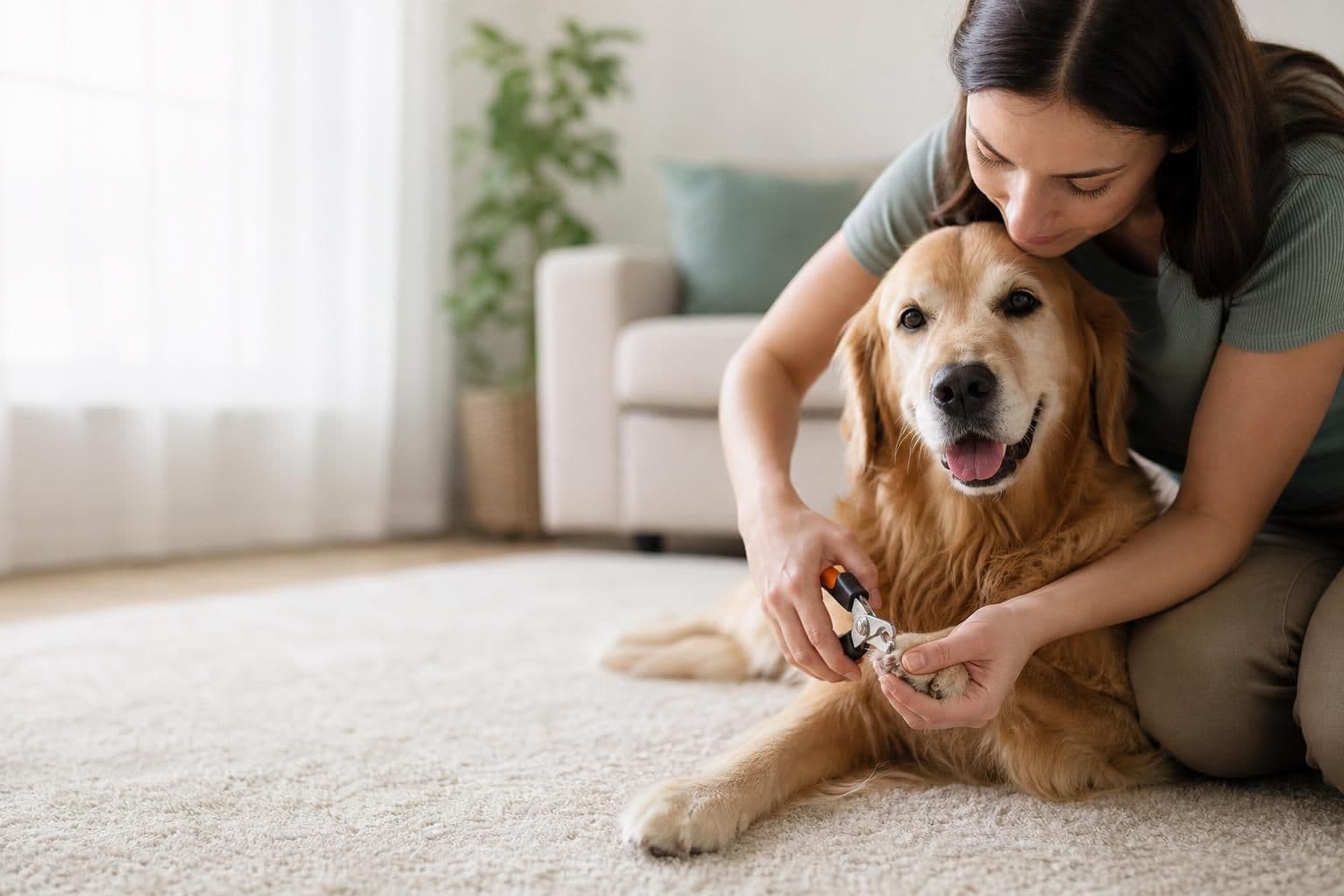
Key takeaway
To trim dog nails safely at home, use a guillotine or scissor-style clipper made for dogs, clip small amounts at a 45-degree angle just before the nail curves downward, and stop well before the pink quick visible in light-colored nails. Go slowly, trim one or two nails per session if your dog is anxious, and keep styptic powder nearby in case you nick the quick. Nails that click on the floor when your dog walks are a sign it's time for a trim.
Key takeaways
- Trim only the curved tip, stopping before the quick; when in doubt, cut less and trim more often.
- Use dog-specific clippers (guillotine or scissor-style) and keep styptic powder on hand for accidental nicks.
- Trim every 2-4 weeks, or as soon as you hear nails clicking on hard floors.
Why Regular Nail Trims Matter
Overgrown nails change how a dog's foot sits on the ground, pushing the toes back and putting uneven pressure on joints. Over time this can affect gait and posture, which is why the American Veterinary Medical Association lists nail care as a routine part of preventive health maintenance, alongside dental and coat care. Long nails are also more prone to snagging and tearing, which is far more painful than a routine trim.
A simple test: if you can hear your dog's nails clicking on tile or hardwood with every step, they're due for a trim.
Tools You'll Need
- Clippers: guillotine-style (nail goes through a hole, blade slides across) or scissor-style (better for thicker nails on larger breeds)
- Styptic powder or cornstarch: to stop bleeding quickly if you cut the quick
- A grinder (optional): files the nail gradually instead of cutting, which some dogs tolerate better
- Treats: for pairing the trim with something positive
Grooming kits sold for home dog care typically bundle clippers with a nail file and sometimes a grinder, which is convenient if you're setting up for the first time — this grooming kit guide breaks down what's actually worth having versus what's filler.
Step-by-Step: How to Trim Dog Nails Safely
- Get your dog comfortable first. Handle the paws for a few seconds daily in the days leading up to a trim so the sensation isn't new.
- Find good lighting. Natural or bright light makes it easier to see the quick in light-colored nails.
- Hold the paw steady with your thumb on the pad and fingers on top, extending one toe at a time.
- Identify the quick. In white or light nails, it appears as a pink area inside the nail. In black nails, look at the underside — the quick often shows as a darker, moist-looking oval compared to the chalky, dry tip.
- Clip small slices, not one big cut. Take off 1-2mm at a time, angled slightly so the cut follows the natural curve of the nail.
- Stop as soon as you see a grayish or pink dot in the center of the cut surface — that's the start of the quick, and it's your signal to stop on that nail.
- Don't forget the dewclaws (the nail higher up on the inside of the leg, if present) — they don't wear down naturally since they don't touch the ground.
What to Do If You Cut the Quick
It happens even to experienced groomers. If bleeding starts, press styptic powder or cornstarch directly onto the tip and hold firm pressure for 20-30 seconds. Avoid letting your dog lick or walk on wet flooring immediately after, since it can dislodge the clot. A single nicked quick is not an emergency, but if bleeding won't stop after a few applications, contact your veterinarian.
Black Nails vs. Light Nails
Light or white nails make the quick easy to spot as a pink shadow. Black nails hide the quick, so trim in smaller increments and check the cut surface after each slice — once you see a small dark dot appear in the center, stop. Some owners use a flashlight held behind the nail to help outline the quick more clearly.
How Often to Trim
Most dogs need a trim every 2 to 4 weeks, though this varies with activity level and surface. Dogs that walk regularly on pavement wear their nails down faster than dogs that mostly walk on grass or carpet. Active dogs may go longer between trims naturally, while less active or senior dogs often need more frequent attention.
Making Nail Trims Less Stressful
Short, calm sessions work better than one long ordeal. Trim one or two nails, pause, reward, and continue later if your dog gets anxious — there's no rule that all nails must be done in one sitting. Pairing trims with a favorite treat or a lick mat helps build a positive association over repeated sessions. The same gradual, reward-based approach used to help dogs adjust to new routines — like the one described in this guide to getting a dog used to wearing clothes — applies well here: short, low-pressure exposure builds tolerance faster than forcing it.
If your dog associates a specific spot with grooming, a stable, non-slip surface helps too. Some owners use a grooming hammock or a raised platform to keep the dog's feet from shifting mid-trim, which reduces the chance of a sudden movement causing a slip of the clippers.
Signs You Should See a Vet or Professional Groomer
- The nail is cracked, split, or bleeding without an obvious clean cut
- Your dog shows pain, limping, or won't bear weight after a trim
- Nails are severely overgrown and starting to curl into the paw pad
- Your dog is extremely fearful or aggressive during handling, making home trims unsafe
The American Kennel Club notes that overgrown, curling nails can eventually grow into the pad itself in severe neglect cases, which is a preventable outcome with routine trims every few weeks.
Frequently Asked Questions
Q: How short should I cut my dog's nails?
Trim only the curved tip that hangs past the paw pad, stopping before the nail meets the quick. If your dog's nails already click on hard floors, that's usually a sign they're overdue rather than a target length to reach in one session.
Q: What if my dog's nails are all black and I can't see the quick?
Trim in very small slices and check the cut surface after each one. Stop as soon as you see a small dark or grayish dot appear in the center of the cut, which signals the quick is close.
Q: Is it better to use clippers or a grinder?
Both work; clippers are faster, while grinders file gradually and let you stop the instant the nail starts to feel warm or sensitive. Some dogs tolerate the sound and vibration of a grinder better than the pinch of clippers, and vice versa.
Q: How do I stop a nail from bleeding after a bad cut?
Apply styptic powder or plain cornstarch directly to the tip and hold firm, steady pressure for about 20-30 seconds. Keep your dog calm and off wet or slippery floors immediately afterward so the clot isn't disturbed.
Q: Can I use human nail clippers on my dog?
It's not recommended, since human clippers can crush or splinter a dog's thicker, curved nail instead of making a clean cut. Dog-specific guillotine or scissor-style clippers are shaped to match nail curvature and reduce the risk of splitting.