How to Choose a Cat Collar That Won't Slip Off
Key takeaway
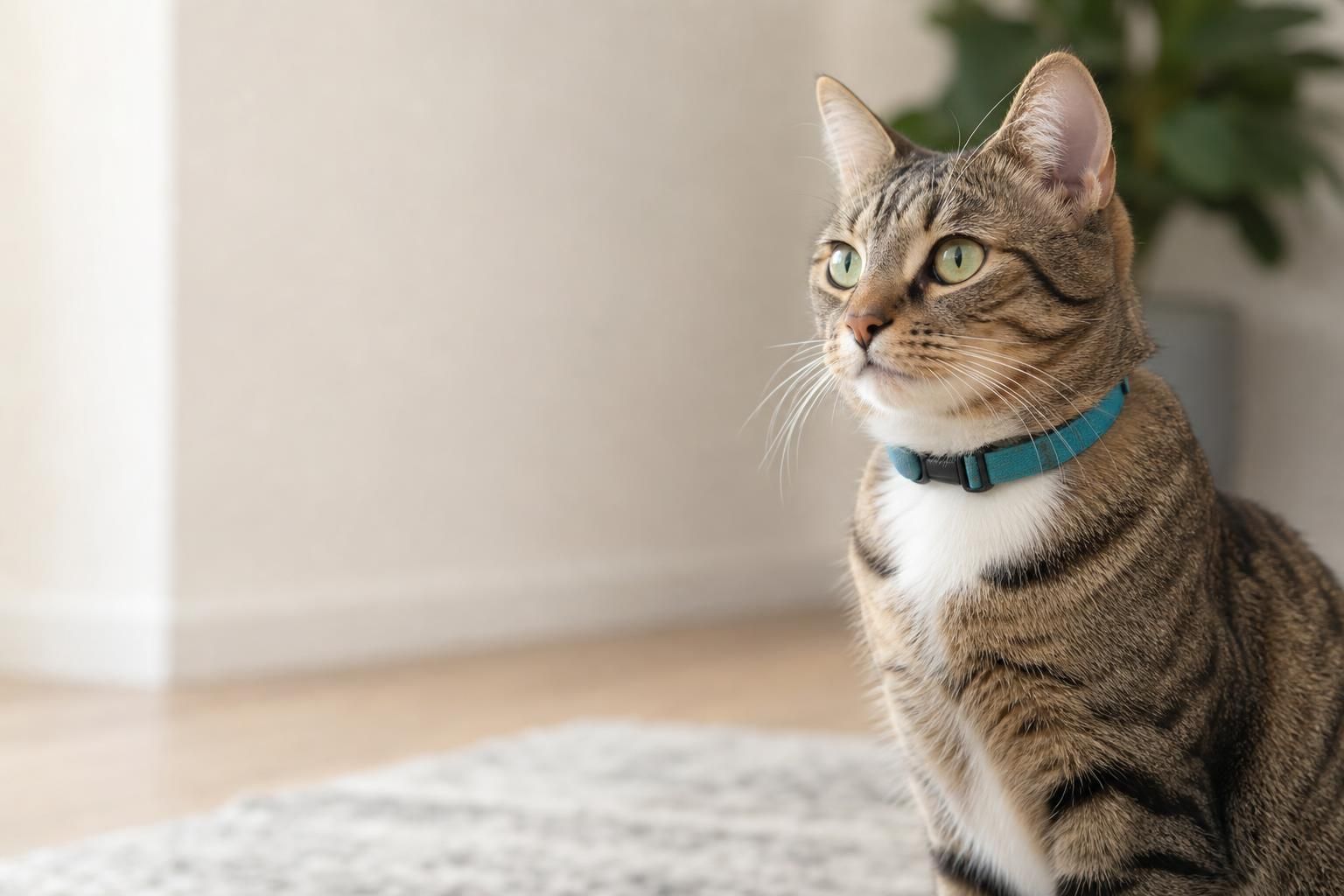
A cat collar won't slip off if it fits snugly enough that you can slide only one or two fingers underneath it, has a breakaway buckle for safety, and sits high on the neck rather than loose around the shoulders. The right combination of fit, buckle type, and material matters more than brand name or looks. Most slipping problems come down to a collar being sized for a generic "small/medium/large" label instead of the cat's actual neck measurement.
Key takeaways
- Use the two-finger test: snug enough that two fingers slide under the collar with light resistance, not a gap you can fit a fist into.
- Choose a breakaway (safety-release) buckle so the collar pops open if snagged on a branch, fence, or furniture — this is a cat-specific safety feature, not optional.
- Measure your cat's actual neck in inches rather than guessing a size, and recheck the fit every few weeks, especially with kittens or cats gaining or losing weight.
Why collars slip off in the first place
Most slipping happens for one of three reasons: the collar is too loose, it's positioned too far down the neck toward the shoulders, or the cat is still growing or losing weight and nobody's adjusted it. Cats also have looser, more flexible skin around the neck than dogs, which means a collar that looked snug in the store can still ride up and over the head during grooming, stretching, or a scuffle with another pet.
A collar sitting low near the shoulders has more room to work itself forward and off. Keeping it positioned just behind the ears and jawline, where the neck is narrowest, gives it less room to travel.
The two-finger fit test
The most reliable way to check fit at home is the two-finger test:
- Fasten the collar at the size you think is correct.
- Slide two fingers flat under the collar, side by side.
- You should feel light resistance — not a loose gap, not a struggle to fit even one finger.
- Check this with the cat standing normally, not mid-stretch, since neck circumference changes slightly with posture.
If you can pull the collar over the cat's head without unbuckling it, it's too loose, no matter what size label is printed inside.
Why breakaway buckles matter
A breakaway or safety-release buckle is designed to pop open under sudden pressure, such as when a collar catches on a branch, a fence post, or another cat's claw during play. This single feature is one of the most consistently recommended safety measures for cat collars from veterinary and animal welfare organizations, because it prevents choking injuries in situations where a cat can't free itself. The American Veterinary Medical Association and groups like the ASPCA both note that collars for cats should allow for quick release in an emergency, which is different from the rigid buckle style common on dog collars.
If a collar doesn't advertise a breakaway or quick-release mechanism, assume it's not one and look elsewhere — this is not a feature worth skipping for the sake of looks.
Measuring your cat's neck correctly
Guessing a collar size from a generic small/medium/large label is one of the most common reasons collars end up either choking-tight or loose enough to slip. Instead:
- Use a soft fabric tape measure (or a string, then measure the string against a ruler).
- Wrap it around the base of the neck, where the collar will actually sit.
- Add roughly half an inch to an inch of slack for comfort and breathing room — not more.
- Record the number in inches, not a size tier, so you can compare it directly against a product's actual sizing chart.
This is the same principle behind fitting any pet apparel: a real inch measurement beats a vague label every time. At Ziva Paws, collars and clothing are listed with inch-based sizing (neck, chest, back length) instead of generic S/M/L, specifically because cats of the same "size category" can have very different neck and chest measurements. If you've ever sized a sweater for a cat before, the step-by-step measuring approach works the same way for a collar: measure the actual body part, not the breed or weight class.
Collar material and buckle style
Not all collar materials behave the same way once a cat is moving around, climbing, or rubbing against furniture:
- Nylon or polyester webbing holds its shape well and is easy to wipe clean, but can fray at the edges over time.
- Breakaway plastic buckles are the standard safety choice for cats; metal buckles are more common on dog collars and don't release under pressure the same way.
- Elastic inserts (a stretchy panel built into part of the collar) add a small safety margin if a cat pulls hard, without making the whole collar loose day-to-day.
- Bell and ID tag attachments should sit flat against the collar rather than dangling loosely, since a swinging tag can pull the collar sideways and encourage slipping.
Avoid collars with decorative add-ons that create extra weight pulling to one side — that uneven pull is a common, overlooked cause of collars twisting and eventually riding up over the ears.
Kittens, growth spurts, and weight changes
A collar fitted correctly today can be loose or tight within weeks if a cat is still growing or going through a weight change. Kittens in particular can outgrow a neck measurement within a month or two during their first year. The American Association of Feline Practitioners recommends regular at-home checks of collar fit as part of basic cat care, since a collar that was snug at adoption can become a strangulation risk as a kitten grows if it's never readjusted.
A simple habit: check the two-finger fit every time you refill food or water, or set a recurring reminder every few weeks until the cat reaches adult size.
When a collar isn't the right choice
Some cats — especially those who are primarily indoors, easily spooked, or prone to scratching at anything around their neck — may do better with a breakaway collar used only for ID purposes rather than daily wear, or with a microchip as the primary form of identification. If a cat consistently works a properly fitted, breakaway collar off within minutes, that's often a signal to try a different buckle style or placement rather than tightening it further, since over-tightening creates its own safety and comfort problems.
Frequently Asked Questions
Q: How tight should a cat collar be?
A properly fitted cat collar allows two fingers to slide flat underneath with light resistance. If you can pull the collar over the cat's head without unbuckling it, it's too loose.
Q: What is a breakaway collar and why does it matter for cats?
A breakaway collar has a buckle designed to pop open under sudden pressure, such as when the collar snags on a branch or fence. It reduces the risk of choking or injury in situations where a cat can't otherwise free itself.
Q: How often should I recheck my cat's collar fit?
Check the fit every few weeks for adult cats and more frequently for kittens, since growth and weight changes can make a previously snug collar too loose or too tight within a month or two.
Q: Can a collar sized "small" still be too big for my cat?
Yes. Generic size labels vary between brands and don't account for individual neck size, which is why measuring your cat's actual neck in inches gives a more reliable fit than relying on a size tier alone.
Q: Is a harness safer than a collar for cats?
A harness distributes pressure across the chest and shoulders rather than the neck, which some owners prefer for leash walks, but a breakaway collar with ID tags is still commonly recommended for everyday identification at home.