How to Stop a Kitten From Chewing Cords
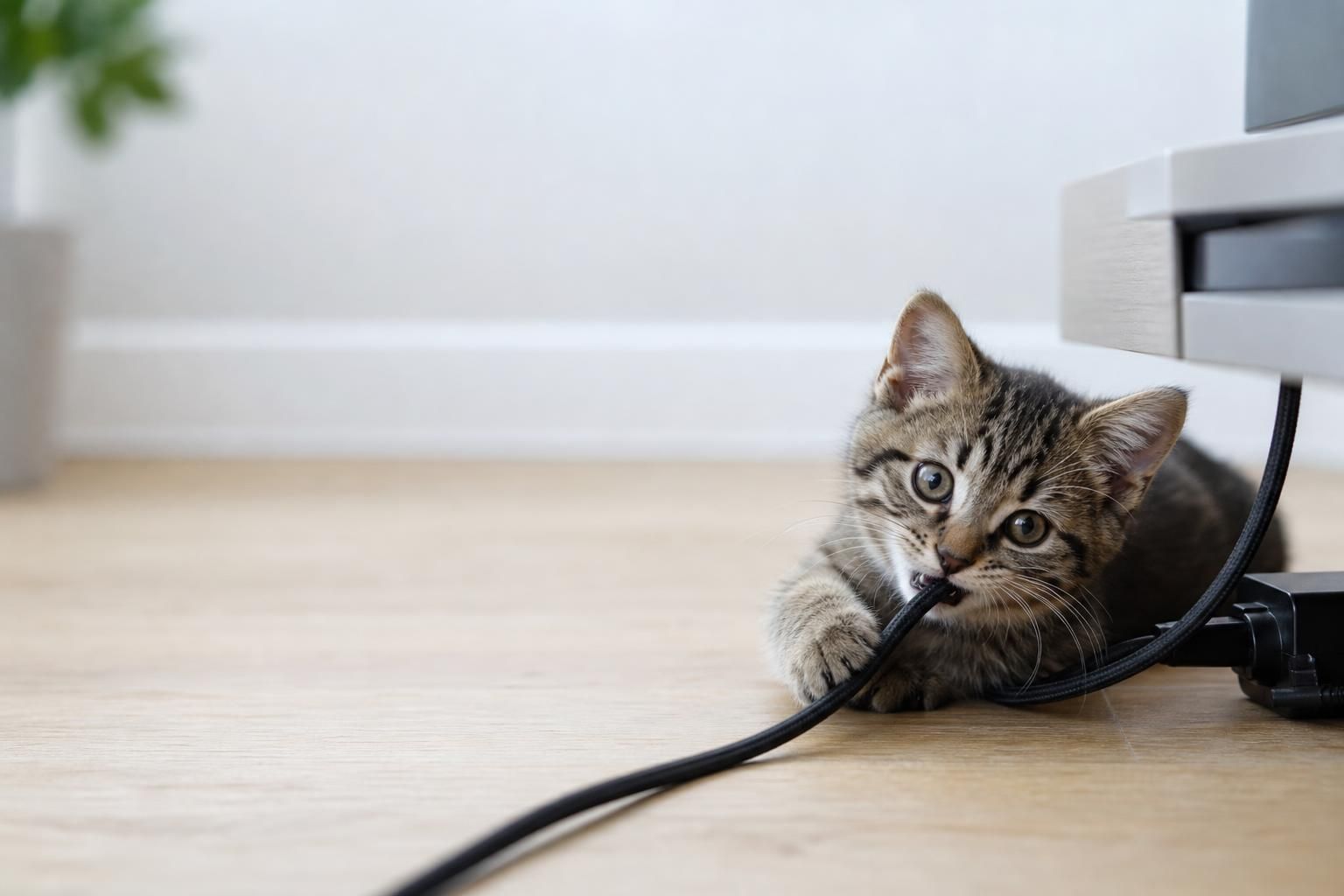
Key takeaway
To stop a kitten from chewing cords, remove or cover exposed cords with protective tubing, apply a bitter-tasting deterrent spray to any wires you can't hide, and redirect the chewing instinct onto a textured toy the moment you catch the behavior starting. Pairing physical barriers with a consistent, safe alternative works faster than correction alone, since kittens explore with their mouths and need something acceptable to bite instead. Most kittens outgrow heavy cord-chewing by the time their adult teeth finish coming in, usually around six months old.
Key takeaways
- Cover or hide cords with split-loom tubing or cord channels rather than relying on verbal corrections alone.
- Use a pet-safe bitter spray on any cord you can't physically block, and reapply after cleaning.
- Offer a rotating selection of chew-safe toys so the kitten has an approved outlet the instant the urge hits.
Why Kittens Chew on Cords
Kittens explore the world mouth-first, especially between three and six months old when their adult teeth are coming in and gums feel sore. A dangling cord moves, has an interesting texture, and is usually right at paw height near furniture — all things that make it irresistible to a curious kitten. This isn't disobedience; it's a developmental phase layered on top of normal predatory and teething instincts.
Some kittens also chew cords out of boredom or under-stimulation, particularly if they're home alone for long stretches without enrichment. If the chewing is paired with excessive meowing, pacing, or destructive scratching elsewhere, it's worth looking at overall activity levels, not just the cord itself.
Cord-Chewing Is a Real Safety Risk
This isn't just about saving a phone charger. A kitten that bites through a live electrical cord can suffer an electric shock, oral burns, or even cardiac or respiratory complications in severe cases. The American Society for the Prevention of Cruelty to Animals lists electrical cords among the common household hazards for curious pets, and the risk is highest for kittens under a year old who haven't yet learned which objects are off-limits.
Beyond shock risk, chewed cords are a fire hazard in the home. Treat any sign of teeth marks on a cord as urgent — unplug and replace that cord rather than hoping the behavior won't repeat.
Step-by-Step: Cord-Proofing Your Home
- Walk the room at kitten height. Get down low and look for any cord dangling within reach of the floor, a shelf, or a climbing spot.
- Bundle and conceal. Route cords through split-loom tubing (sold at most hardware stores) or behind furniture using adhesive cable clips so nothing swings loosely.
- Unplug what's not in use. Chargers and small appliances left plugged in overnight are a common target; unplugging removes both the temptation and the shock risk.
- Apply a bitter deterrent. A pet-safe bitter-apple or citrus spray on any cord that can't be hidden teaches most kittens to avoid it within a few applications.
- Add a chew alternative nearby. Place a textured toy or chew-safe item within a foot of any high-traffic cord area so the kitten has an immediate substitute.
Repeat the walkthrough every few weeks, since kittens find new routes and perches as they grow more confident climbers.
Redirecting the Chewing Instinct
Covering cords only solves half the problem — kittens still need an outlet for the urge to gnaw. Rotating two or three toys with different textures (plush, rubber, crinkle) keeps interest high, since kittens habituate to the same object quickly. When Ai and Dudu were kittens, the toys that held their attention longest were the ones with a mix of textures and a bit of noise or movement, not the quietest, softest options.
If your kitten tends to chew at night or while you're out, a puzzle-style toy that requires some persistence can also burn off the restless energy that leads to cord-seeking in the first place. This same redirection principle is behind most anti-chewing strategies for pets generally — the techniques used in stopping a dog from chewing furniture rely on the same swap-and-supervise approach, just scaled to a kitten's smaller world.
When to Add Physical Barriers
For cords you absolutely cannot move — behind a TV stand, under a desk — a hard plastic cord concealer or a dedicated cable box is more reliable than spray alone, since kittens can get used to bitter tastes over time. Baby-proofing products designed for toddlers work well here and are widely available at hardware and baby stores. Keep in mind that a determined kitten can still chew through soft covers, so rigid tubing or a cable box is the safer long-term choice for rooms the kitten has daily access to.
If a particular room (like a home office full of cables) can't be fully cord-proofed, consider closing it off during unsupervised hours until your kitten is a bit older and the teething phase has passed.
Supporting Behavior With the Right Environment
A kitten with enough physical and mental stimulation is less likely to seek out cords out of boredom. Daily interactive play sessions, a scratching post, and rotating toys all reduce the restless energy that often drives destructive chewing. If your kitten also tends to nip at hands during play rather than just objects, the same redirection logic applies — see our guide on getting a cat to stop biting during play for techniques that overlap closely with cord-chewing fixes.
A cozy, dedicated resting spot can help too, since kittens that nap and settle more easily tend to roam and chew less out of restlessness. A soft bed or bedding option placed away from cord-heavy areas gives them a preferred spot to retreat to instead of patrolling for something to gnaw.
FAQ Mentions of Teething Timeline
Kittens typically lose their baby teeth and get their full set of adult teeth by around six months of age, according to veterinary dental guidance from the American Veterinary Medical Association. Chewing tends to peak during this transition and usually tapers off noticeably afterward, though some cats retain a lifelong preference for gnawing on plastic or rubbery textures.
If cord-chewing continues well past eight or nine months, or seems compulsive rather than exploratory, it's worth mentioning to your veterinarian, since persistent pica-like chewing can occasionally point to a nutritional or behavioral issue that benefits from professional input.
Frequently Asked Questions
Q: Why does my kitten only chew cords at night?
Kittens are naturally more active during dawn and dusk hours, and a quiet house at night means fewer distractions pulling their attention away from an interesting cord. Covering cords and offering a toy before bedtime usually reduces nighttime chewing.
Q: Is bitter spray safe to use around cats?
Pet-safe bitter sprays made for deterring chewing are formulated to be non-toxic if licked in small amounts, but you should still check the label and avoid spraying near food or water bowls. Always choose a product labeled specifically for pets rather than a generic household deterrent.
Q: Will my kitten grow out of chewing cords on its own?
Most kittens chew less once their adult teeth are fully in, typically by around six months old, but a kitten that's bored or under-stimulated may keep the habit longer. Combining cord-proofing with regular play usually speeds up the process.
Q: What should I do if my kitten already chewed through a cord?
Unplug and discard that cord immediately, check your kitten's mouth for any burns or injury, and call your veterinarian if you notice drooling, pawing at the mouth, or reluctance to eat. Replace the cord with a covered or bundled version before plugging anything back in.
Q: Are certain cords more tempting to kittens than others?
Thin, flexible cords like phone chargers and earbud cables tend to attract more attention than thick appliance cords, likely because their texture and movement resemble prey. These are also the easiest to bundle into cord tubing, so prioritize them first.