How to Choose a Chew Toy for a Puppy
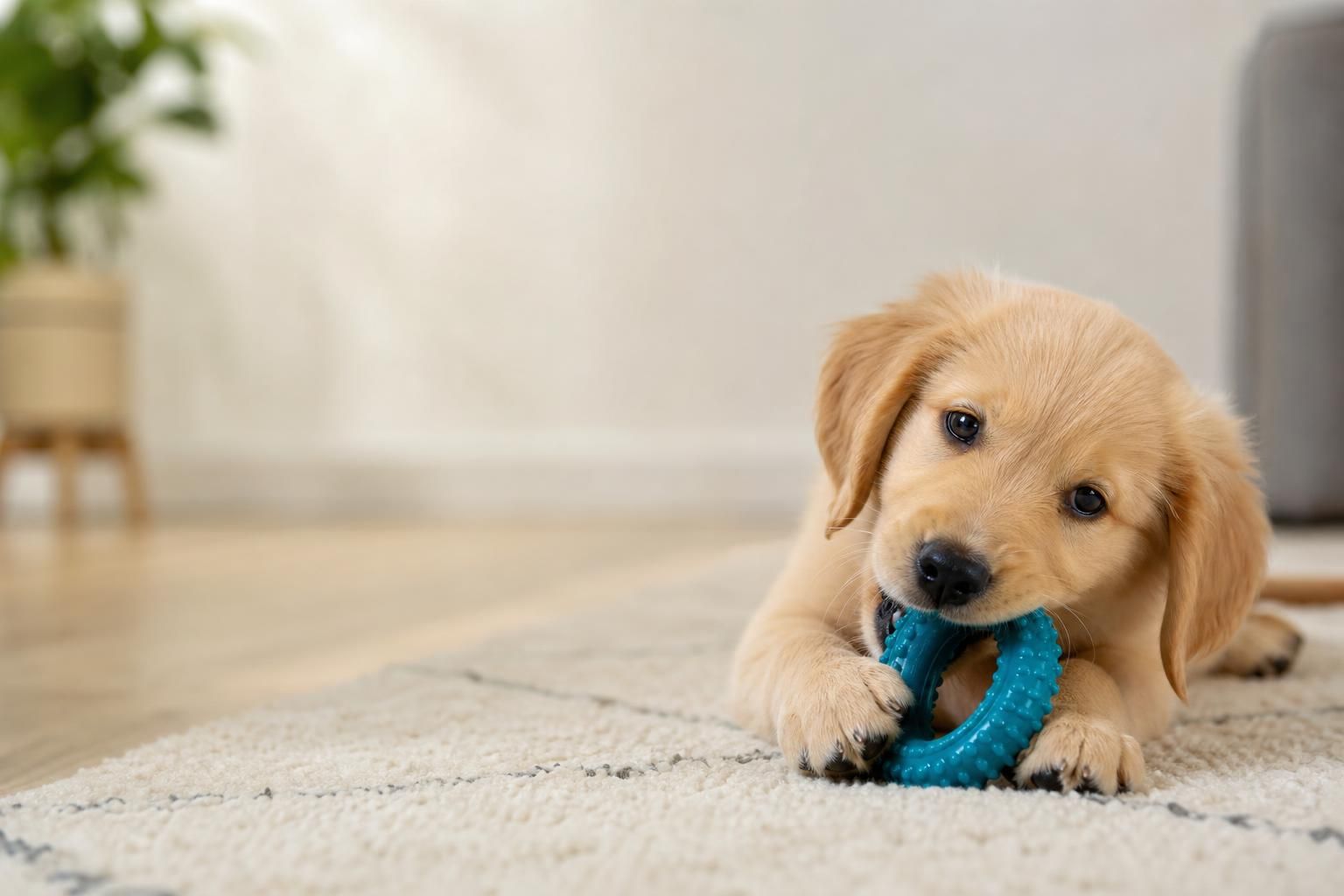
Key takeaway
Choose a chew toy for a puppy based on three things: size relative to your puppy's mouth, material firmness appropriate for their current teething stage, and a design with no small parts that can break off and be swallowed. The toy should be big enough that it can't be fully mouthed and swallowed whole, but soft enough during teething months that it won't crack baby teeth or irritate sore gums.
Key takeaways
- Pick a toy too large to swallow whole and free of small detachable pieces (squeakers, pom-poms, hard plastic eyes).
- Match firmness to age: softer rubber or rope for teething puppies under 6 months, firmer rubber once adult teeth are in.
- Supervise new chew toys for the first few sessions and retire anything with cracks, exposed stuffing, or missing chunks.
Why Chew Toy Choice Matters More Than It Seems
Puppies chew to explore the world, relieve teething discomfort, and burn mental energy — it's a normal developmental behavior, not just a habit to manage. The American Veterinary Medical Association notes that teething in puppies typically runs from around 3 to 6 months of age, which is exactly when inappropriate chewing and destructive habits tend to peak. Giving the right toy during this window redirects that instinct away from furniture, cords, and shoes.
The wrong toy, though, carries real risk. Pieces that break off can become choking hazards or cause intestinal blockages requiring emergency surgery — a problem vets see often enough that it's a standard topic in puppy wellness visits. Picking well up front avoids an unplanned trip to the emergency vet.
Match the Toy to Your Puppy's Size and Mouth
A toy sized for a 5-pound Chihuahua puppy is not safe for a 40-pound Labrador puppy, and vice versa — too small, and a large-breed puppy can swallow it in one gulp; too big and dense, a toy-breed puppy may not be able to get a grip or may strain their jaw.
A simple rule: the toy should be at least as wide as the widest part of your puppy's muzzle when their mouth is closed. If you can't picture the right size, use these general categories as a starting point:
- Small/toy breeds (under 15 lbs): lightweight rope toys, small soft rubber shapes, plush squeakers sized for a small jaw.
- Medium breeds (15–50 lbs): medium rubber chews, rope tug toys, puzzle-style feeders that double as chew enrichment.
- Large/giant breeds (50+ lbs): larger, denser rubber chews built to withstand stronger bite force, sized so they can't be swallowed even when wet and slippery.
This is the same logic behind real sizing: just as a generic "S/M/L" label doesn't tell you how a sweater will actually fit, a vague "small dog" or "large dog" label on a toy package doesn't account for your specific puppy's jaw width or bite strength. If your household is also sorting out clothing sizes for a growing pup, the same inch-based thinking applies — Ziva Paws uses chest, neck, and length measurements rather than generic labels for exactly this reason.
Match Firmness to Teething Stage
Puppies lose their baby teeth and grow in adult teeth roughly between 3 and 6 months old, according to veterinary dental timelines, and their gums are genuinely tender during that stretch. During this stage:
- Favor softer rubber, textured silicone, or knotted rope toys that give slightly under pressure.
- Avoid very hard nylon or antler-style chews until adult teeth are fully in — hard chews are a known cause of slab fractures (cracked molars) in dogs of any age, but puppy teeth are especially vulnerable.
- Cold can help soothe inflamed gums: a clean, damp washcloth tied in a knot and frozen is a low-cost option vets sometimes recommend alongside purpose-made teething toys.
Once adult teeth are in (typically by 6–7 months), you can transition to firmer rubber chews designed for sustained gnawing. This is also roughly the age range when many owners start thinking about moving a puppy onto adult food, so it's a natural checkpoint to reassess toys, bowls, and feeding routine together.
Check Construction and Materials
Before buying, look at how a toy is actually built, not just what the package claims:
- No small detachable parts. Squeakers, plastic eyes, bells, and pom-poms can pop loose and be swallowed. If a toy has them, they should be sewn in securely, not glued.
- Solid seams on plush toys. Pull gently on seams in the store or in photos before buying online — loose stitching means stuffing will come out fast.
- Non-toxic materials. Look for chew toys labeled free of phthalates and BPA; the U.S. Consumer Product Safety Commission maintains general guidance on toy safety standards that reputable pet toy makers also reference.
- One-piece rubber or silicone construction for durable chews, since multi-part toys have more joints that can separate under pressure.
A behavior to watch for at home: if your puppy can remove and swallow small pieces of a toy within minutes of getting it, that toy isn't right for them — regardless of what the label says about the intended size of dog.
Supervise, Rotate, and Retire
No chew toy is "set it and forget it," especially in the first weeks of ownership. A few habits make a real difference:
- Supervise the first several sessions with any new toy to see how your puppy chews it — some puppies shred, others gnaw steadily.
- Rotate 3–4 toys in and out of circulation weekly; novelty keeps a puppy engaged and reduces obsessive chewing on one item.
- Inspect toys regularly and retire anything with cracks, exposed stuffing, frayed rope strands, or chunks missing.
- Separate "chew toys" from "fetch toys" from "comfort toys" so your puppy learns which is which, rather than treating every object as fair game.
Resident testers Ai and Dudu (Ziva Paws' own cats) go through new toy shipments before anything is listed, checking for loose stitching or parts that come apart easily under normal play — the same checks worth doing with any chew toy you bring home, puppy or kitten.
When Chewing Points to Something Else
If your puppy is chewing non-stop regardless of what toys you offer, it may not be a toy problem. Common underlying causes include boredom, under-exercise, separation anxiety, or simply teething discomfort that hasn't been addressed. If your puppy also chews bedding or furniture at night, a cozy, appropriately sized nest bed paired with a designated chew toy at bedtime can help redirect that energy before it becomes a habit. The same redirect-with-a-safe-alternative approach is behind guidance for kittens that chew on cords — the underlying principle (give them something appropriate to chew instead of just removing options) applies across species.
Frequently Asked Questions
Q: What size chew toy is safe for a puppy?
A safe chew toy should be at least as wide as your puppy's muzzle when their mouth is closed, so it can't be swallowed whole even when slippery with saliva. Size categories matched to weight (toy, medium, large breed) are a reasonable starting point, but always check actual width against your puppy's jaw.
Q: Are rawhide chews safe for puppies?
Rawhide carries choking and blockage risk because pieces can break off and swell in the digestive tract, which is why many vets suggest supervised use only or alternative chews like rubber or rope toys. If you offer rawhide, watch your puppy closely and remove small remaining pieces before they can be swallowed.
Q: How do I know if a chew toy is too hard for my puppy?
A simple test vets often cite: if you can't press a thumbnail into the material at all, it's likely too hard for a teething puppy and risks cracking a tooth. Very hard nylon, antler, or bone-style chews are best saved until adult teeth are fully in, usually around 6–7 months.
Q: How often should I replace my puppy's chew toys?
Replace a chew toy as soon as you see cracks, exposed stuffing, frayed strands, or missing chunks — there's no fixed weekly or monthly schedule, since wear depends entirely on how hard your puppy chews. Rotating several toys in and out of use also reduces how fast any single one wears down.
Q: Can puppies choke on squeaky toys?
Yes — the squeaker mechanism inside plush toys is a common choking hazard if a puppy manages to tear the toy open and extract it. Toys with securely sewn-in squeakers and reinforced seams reduce this risk, but supervision during early use of any new squeaky toy is still the safest approach.