Why Does My Cat Shed More in Spring?
Key takeaway
Cats shed more in spring because lengthening daylight signals their bodies to release the dense winter undercoat they grew to stay warm. This process, called photoperiod-driven shedding, is hormonal and largely automatic — it happens whether your cat lives indoors or outdoors, though indoor cats under artificial light often shed on a milder, more spread-out schedule. The result is a heavier-than-usual coat blowout that typically settles down within a few weeks.
Key takeaways
- Spring shedding is triggered by increasing daylight hours, not temperature alone, so it happens even in mild indoor conditions.
- Daily brushing during peak shedding weeks removes loose fur before it ends up on furniture or is swallowed and turned into hairballs.
- A sudden bald patch, scabbing, or shedding that doesn't taper off after a few weeks is a reason to call a vet rather than wait it out.
The Biology Behind Seasonal Coat Changes
Cats' coats are regulated by a light-sensitive internal clock, not a thermostat. As days lengthen after winter, the pineal gland reduces melatonin production, which in turn signals hair follicles to shift out of their resting phase and release old hairs to make room for a lighter summer coat. This is the same basic mechanism seen in many mammals and is well documented in veterinary and animal physiology literature from institutions such as Cornell University's College of Veterinary Medicine. Outdoor and semi-outdoor cats tend to shed in a sharper, more concentrated burst because they experience the full swing in daylight; strictly indoor cats under consistent lamps and windows often shed more gradually across several months.
Why Indoor Cats Still Shed Heavily
Even indoor cats near windows pick up enough natural light cues to trigger a seasonal coat change. Central heating and air conditioning don't cancel out the photoperiod signal — light is the dominant driver, not room temperature. Double-coated breeds (Maine Coons, Ragdolls, Persians) tend to notice the most dramatic difference because they carry a thick, insulating undercoat in addition to their topcoat, while short-haired cats shed a comparable volume of hair but it's less visually obvious per tuft.
How Long Spring Shedding Usually Lasts
Most cats go through an intense shedding window lasting roughly four to six weeks, though this varies by breed, age, and how much natural light they're exposed to. Kittens and senior cats sometimes shed on a less predictable timeline because their hormone regulation is still developing or slowing down. If shedding is still heavy well past that window, or if it's accompanied by redness, thinning that leaves visible skin, or excessive scratching, it's worth ruling out allergies, parasites, or a thyroid issue with a veterinarian rather than assuming it's seasonal.
Managing the Extra Fur at Home
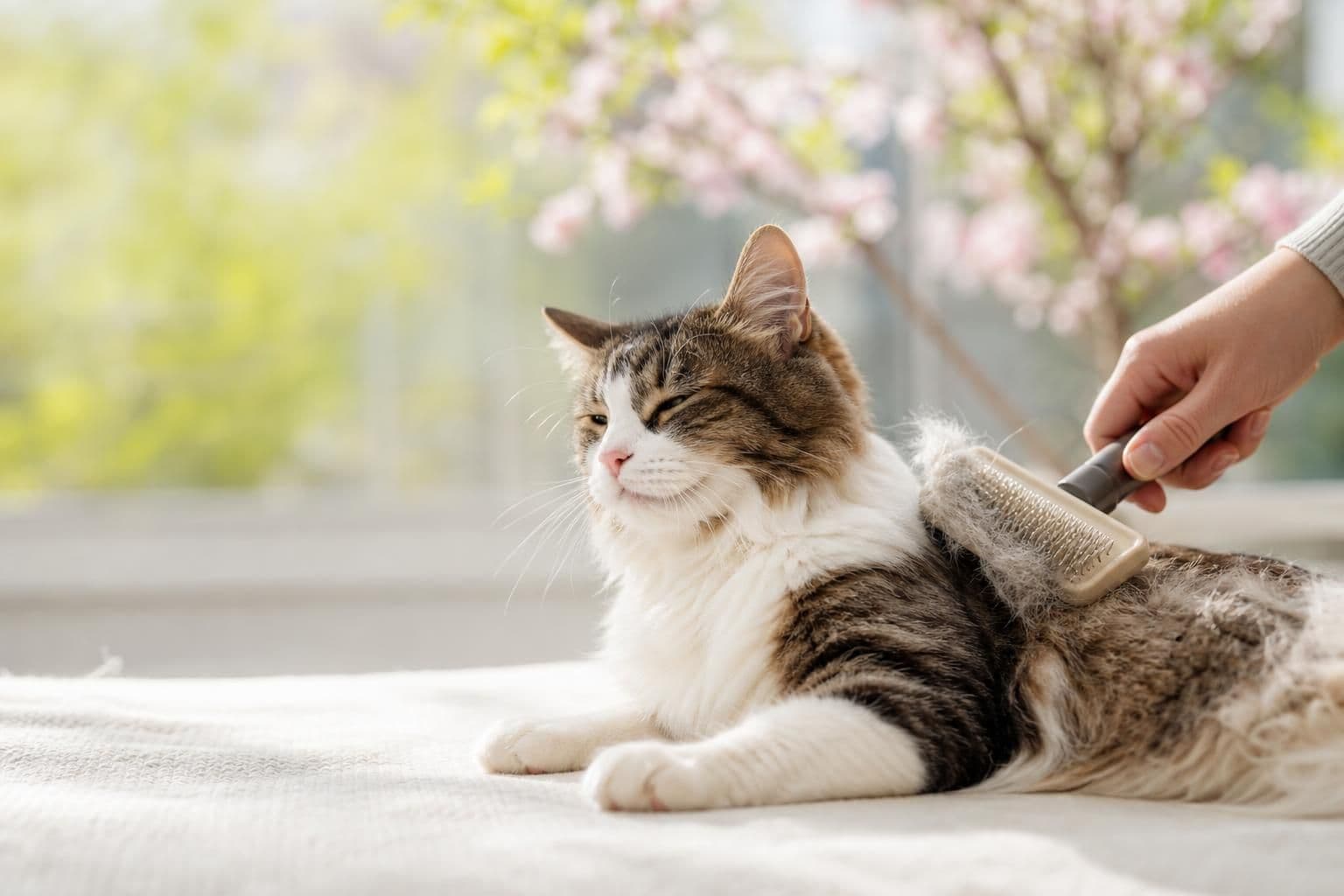
A consistent brushing routine is the single most effective tool during peak shedding, because it physically removes loose undercoat before your cat ingests it during self-grooming. For short-haired cats, a rubber curry brush or grooming glove used two to three times a week works well; long-haired cats often need daily attention with a slicker brush to prevent mats from forming in the thinning undercoat. Our own cats, Ai and Dudu, go through a noticeably fussier grooming phase every spring, and a self-cleaning slicker brush that pulls hair off with one button press has made the daily catch-up realistic instead of a chore we put off. If you want a fuller walkthrough of brushing technique by coat type, see this guide on brushing a short-haired cat.
Hairballs and Ingested Fur
Cats swallow a meaningful amount of loose fur while grooming themselves, and during heavy shedding season that volume increases along with hairball frequency. The American Veterinary Medical Association notes that occasional hairballs are normal in cats but frequent vomiting, gagging without producing a hairball, or signs of digestive blockage warrant veterinary evaluation. Brushing reduces the raw material available for hairballs in the first place, and slow feeders that encourage calmer eating can help cats settle rather than groom obsessively out of stress, which sometimes compounds shedding-related fur intake.
Diet, Hydration, and Coat Health
A well-hydrated cat with a nutritionally complete diet typically has a coat that sheds in a more even, less dramatic pattern than a cat that's dehydrated or nutrient-deficient. Cats that don't drink enough water can develop drier skin and a coat that feels coarser, which sometimes reads as "worse" shedding even when the volume is similar. If your cat has been avoiding its water bowl, it's worth checking whether the bowl itself is the problem — some cats are picky about moving water or bowl placement, covered in more depth in this piece on cats that won't use a water fountain.
When Fur Ends Up Everywhere Else
Shed fur doesn't stay confined to the cat — it migrates to bedding, blankets, and furniture, especially anywhere your cat naps for long stretches. Washable covers and low-pile fabrics make spring cleanup far more manageable than plush surfaces that trap fur in the weave. If your cat's favorite nap spot is getting matted with loose undercoat, a bed with a removable, machine-washable cover in the beds and furniture lineup can cut down on how often you're vacuuming the same corner. For general household strategies beyond grooming tools, this guide to reducing cat shedding at home covers air filtration, cleaning routines, and fabric choices.
Signs That Go Beyond Normal Seasonal Shedding
Not every spring hair loss is routine. Watch for:
- Bald patches with visible skin rather than an evenly thinning coat
- Redness, scabs, or a greasy or flaky texture to the skin underneath
- Shedding paired with noticeable weight loss or a dull, brittle coat
- Excessive licking or chewing at one spot repeatedly
Any of these point toward allergies, fleas, ringworm, or a hormonal condition like hyperthyroidism rather than a normal seasonal coat change, and are worth a veterinary visit.
Frequently Asked Questions
Q: Why does my cat shed so much in spring specifically?
Lengthening daylight hours reduce melatonin production, which signals hair follicles to release the dense winter undercoat. This happens on a hormonal schedule tied to light exposure, not just rising temperatures.
Q: Do indoor cats shed as much as outdoor cats in spring?
Indoor cats still shed seasonally because they pick up daylight cues through windows, but the shedding is often more gradual and spread across a longer period than the sharp burst seen in outdoor cats.
Q: How long does spring shedding last?
Most cats shed heavily for about four to six weeks, though the exact length varies with breed, age, and how much natural light the cat is exposed to daily.
Q: Should I be worried if shedding doesn't slow down?
If heavy shedding continues well past six weeks, or comes with bald patches, scabbing, or excessive scratching, it's worth having a veterinarian check for allergies, parasites, or a thyroid problem.
Q: Does brushing actually reduce shedding, or just move the mess?
Regular brushing removes loose undercoat before it falls out on its own or gets swallowed during grooming, which measurably cuts down on both loose fur around the house and hairball frequency.