Why Does My Dog Shed So Much? Causes & Fixes
Key takeaway
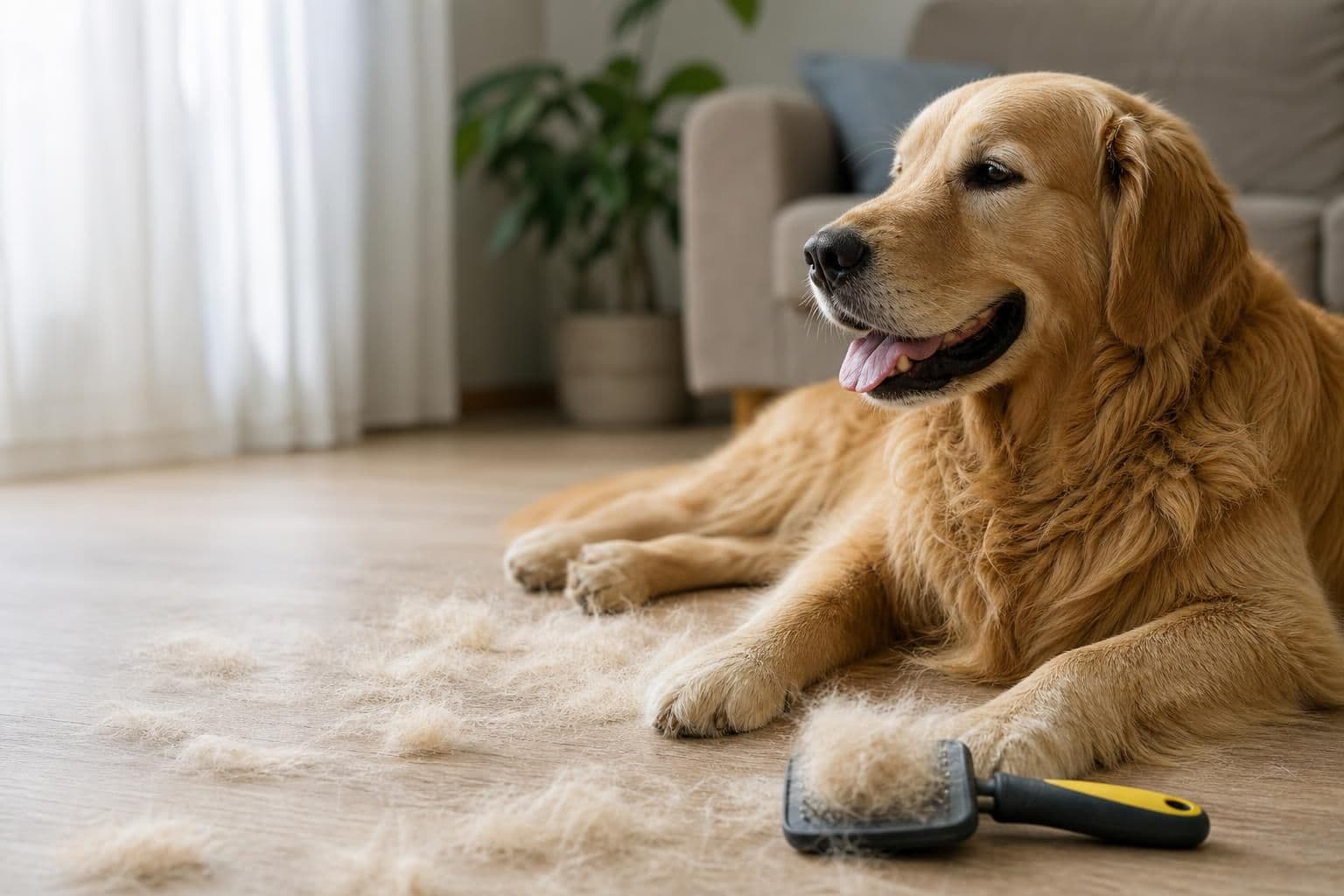
Most dogs shed because it's a normal part of their hair growth cycle, and the amount increases with seasonal temperature changes, especially in double-coated breeds that "blow their coat" in spring and fall. Heavy, year-round shedding that comes with bald patches, itching, redness, or flaky skin usually points to an underlying issue like allergies, parasites, poor nutrition, or a hormonal imbalance rather than normal fur turnover. A regular brushing routine and the right diet can manage normal shedding, but sudden or excessive hair loss is worth a vet visit.
Key takeaways
- Seasonal shedding (especially in double-coated breeds) is normal and usually heaviest in spring and fall.
- Bald spots, scabs, or constant scratching alongside shedding signal a medical cause, not just coat-blowing.
- Brushing two to three times a week and checking for diet or flea issues solves most non-medical shedding problems.
How the normal dog shedding cycle works
Dog hair grows in cycles with three phases: anagen (active growth), catagen (transition), and telogen (resting), after which the hair falls out and a new one begins growing in its place. Indoor dogs exposed to consistent artificial light tend to shed a little all year, while dogs that spend more time outdoors often shed in bursts tied to daylight length, according to the American Kennel Club. Double-coated breeds — think Huskies, German Shepherds, and Golden Retrievers — carry a dense undercoat that they shed heavily twice a year to adjust to temperature changes, a process often called "blowing coat."
Single-coated breeds, like many terriers or Poodles, shed far less and more gradually, which is why they're often marketed as lower-shedding. No dog is truly non-shedding, though; even low-shed breeds lose hair continuously in small amounts.
When shedding is a sign of a bigger problem
Shedding becomes a red flag when it's paired with other symptoms. Watch for:
- Bald or thinning patches, especially with uneven edges
- Red, inflamed, or scabby skin underneath the coat
- Excessive scratching, licking, or chewing at one area
- A dull, brittle coat texture instead of normal shine
- Shedding that doesn't slow down after the seasonal change passes
These combinations can point to flea or mite infestations, food or environmental allergies, fungal infections like ringworm, or hormonal conditions such as hypothyroidism or Cushing's disease. The Merck Veterinary Manual notes that hormonal skin diseases often cause symmetrical hair loss on the trunk without itching, which helps differentiate them from allergy-driven shedding that usually comes with visible scratching. If you're also noticing flaky or dry patches under the coat, it's worth reading through common causes of dry skin in dogs to rule out a related issue before assuming it's "just shedding season."
Diet, parasites, and stress as shedding triggers
A poor-quality diet lacking enough protein or essential fatty acids can make a dog's coat shed more and look dull, since hair follicles need a steady supply of nutrients to complete the growth cycle properly. Switching to a diet appropriate for the dog's life stage, or adding a vet-approved omega-3 supplement, often improves coat condition within a few weeks.
Fleas, mites, and lice irritate the skin and trigger scratching that pulls out hair in clumps, separate from the normal shedding cycle. Monthly parasite prevention recommended by a veterinarian, along with routine checks of the skin and coat during grooming, catches most infestations early. Stress and anxiety can also cause a temporary shedding spike — dogs sometimes "blow coat" after a stressful event like a vet visit, move, or loud thunderstorm, which is a real physiological stress response rather than a coincidence.
Practical ways to manage normal shedding at home
Brushing is the single most effective tool for controlling loose fur before it ends up on furniture and clothing. For double-coated breeds, a slicker brush or undercoat rake used two to three times a week during peak shedding seasons removes loose hair before it falls out on its own. Ai and Dudu, the two cats who test grooming products before they're added to the shop, go through the same kind of daily brushing check that dogs need — a quick once-over catches loose fur, mats, and skin issues long before they become a bigger problem.
A few other habits help:
- Bathe on a reasonable schedule (not too often) with a gentle, species-appropriate shampoo to avoid stripping natural oils that protect the skin.
- Vacuum and wash bedding weekly, since loose hair collects fast in a dog's bed or blanket.
- Keep a dedicated grooming tool on hand rather than relying on an old human hairbrush, which isn't designed for a dog's coat type.
A self-cleaning slicker brush or grooming hammock can make this routine faster and less stressful for dogs who dislike being brushed, and both fall under the kind of grooming tools designed for regular at-home coat maintenance. Washable bed covers also matter more than owners expect — a bed that traps loose fur and dander can aggravate skin irritation, so breathable, easy-to-clean options in the beds and bedding lineup are worth considering for heavy shedders.
When to call the vet
A dog scratching to the point of broken skin, developing bald patches, or shedding heavily outside the normal seasonal window should see a veterinarian. Bloodwork can rule out thyroid or adrenal issues, while a skin scrape or coat exam checks for mites, fungal infections, or bacterial overgrowth. The ASPCA advises that any sudden change in coat condition paired with behavior changes like lethargy or appetite loss warrants prompt veterinary attention rather than waiting it out. If the dog is also avoiding food during this time, it's worth reviewing possible reasons behind a dog refusing to eat, since appetite changes often travel together with skin and coat problems.
Frequently Asked Questions
Q: Why does my dog shed so much all of a sudden?
Sudden heavy shedding is often triggered by a seasonal coat change, but it can also signal stress, a new flea infestation, a diet change, or a hormonal imbalance. If it's paired with bald spots, itching, or skin changes, a vet visit is the fastest way to find the cause.
Q: What time of year do dogs shed the most?
Double-coated breeds typically shed the heaviest in spring, as they lose their winter undercoat, and again in fall when a thicker coat grows in for winter. Indoor dogs under artificial light may shed lightly year-round instead of in sharp seasonal bursts.
Q: Does diet really affect how much a dog sheds?
Yes — a diet lacking sufficient protein or essential fatty acids can lead to a duller coat and increased shedding, since hair follicles depend on consistent nutrition to complete their growth cycle. Improving diet quality or adding an omega-3 supplement often shows visible results within a few weeks.
Q: How often should I brush a heavy-shedding dog?
Two to three times a week is a good baseline for double-coated breeds, increasing to daily brushing during peak seasonal shedding. Regular brushing removes loose hair before it falls out around the house and also gives you a chance to spot skin issues early.
Q: Can allergies cause a dog to shed excessively?
Yes, both food and environmental allergies commonly cause excess shedding along with itching, redness, and sometimes hot spots. Identifying and removing the allergen, often with veterinary guidance, usually brings shedding back to a normal level.