What Is the Best Way to Organize a Garage?
Key takeaway
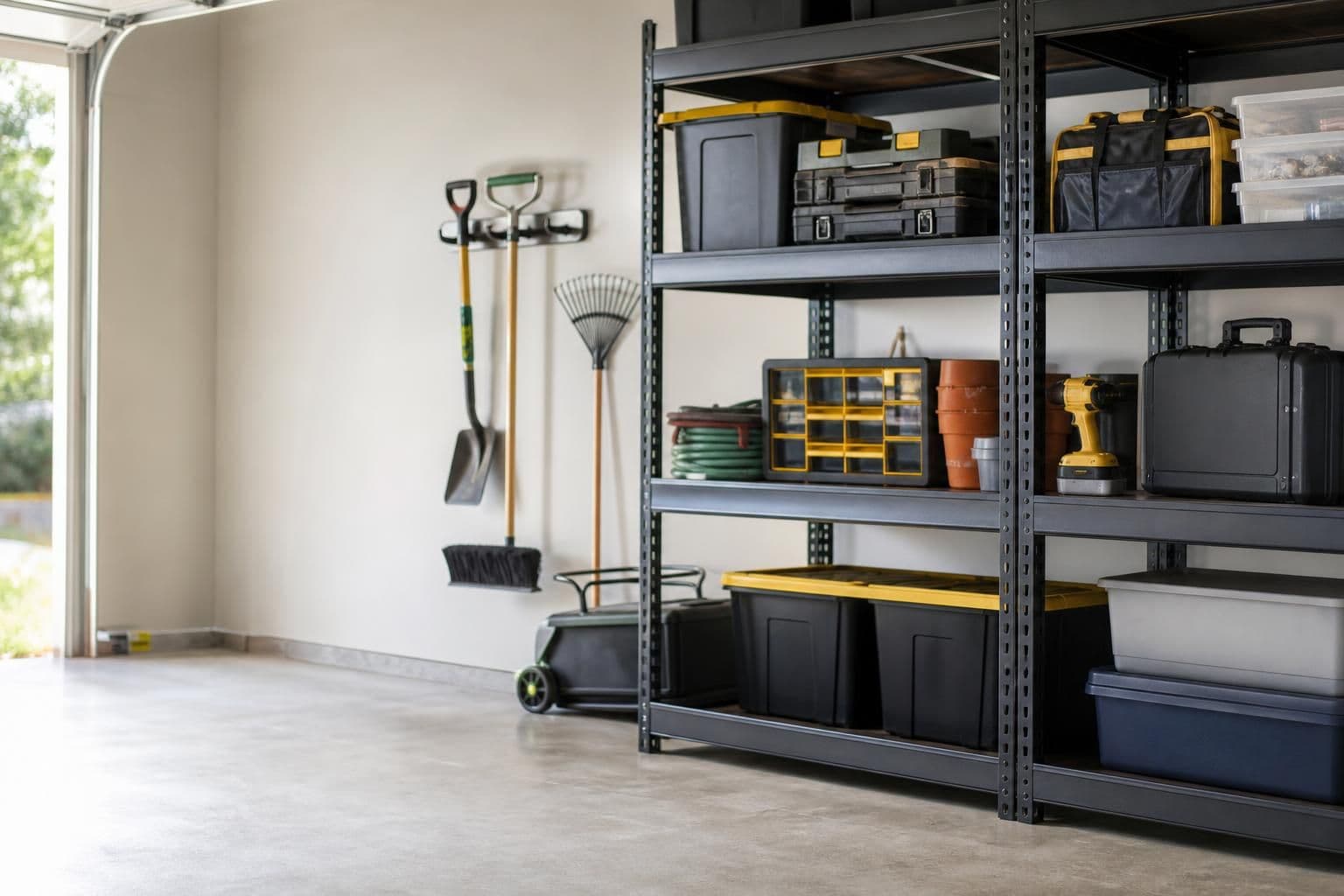
The best way to organize a garage is to split it into clear zones (parking, tools, sports gear, seasonal items), get everything off the floor using wall and ceiling storage, and store items in labeled, stackable containers rather than open piles. Vertical storage alone can reclaim 20-30% of usable floor space in a typical one-car garage. Once zones are set, maintenance is just putting things back where they belong.
Key takeaways
- Divide the garage into 4-6 zones based on how often you use each item, not by category alone.
- Move at least half your stored items off the floor using pegboards, slat walls, or ceiling racks.
- Use clear or labeled bins for anything seasonal so you're not opening five boxes to find holiday lights.
Start With a Zone Map, Not a Shopping List
Most garage organization projects fail because people buy shelving before deciding what goes where. A simpler approach: sketch your garage floor (even roughly, on paper) and mark zones first — parking, workbench/tools, sports and outdoor gear, seasonal storage, and a "donate or toss" staging area. The National Association of Home Builders has noted that garages are now routinely used as de facto storage rooms and workshops, not just parking, which is exactly why a single-purpose layout rarely works.
Once zones are marked, everything you own gets sorted into one of them. Items that don't fit any zone are candidates for donation.
Get Things Off the Floor First
Floor space is the most valuable real estate in a garage because it's what you walk and park on. Three options handle most of what accumulates:
- Pegboard or slat wall near the workbench for hand tools, cords, and small hardware.
- Overhead ceiling racks for bins you access only a few times a year, like holiday decorations or camping gear.
- Wall-mounted hooks for bikes, ladders, and folding items.
If you also use part of the garage as a casual workspace or sit-down repair area, a collapsible seat stores flat against a wall when not in use, which matters when every square foot is already spoken for.
Sort by Frequency of Use, Not Just Category
A common mistake is grouping items purely by type (all sports gear together, all tools together) without considering how often each item gets touched. Put daily or weekly items — the broom, the recycling bins, the gear you grab on your way out — within easy reach near the door. Seasonal or rarely used items belong higher up or further back.
This is the same logic that works for organizing a home office on a budget: keep what you use constantly closest at hand, and store the rest out of the main sightline.
A Quick Comparison of Storage Methods
| Storage method | Best for | Approximate cost range | Floor space used |
|---|---|---|---|
| Pegboard wall | Hand tools, small hardware | Low | None |
| Freestanding shelving unit | Bins, bulk supplies | Low-moderate | High |
| Overhead ceiling rack | Seasonal bins, rarely used gear | Moderate | None |
| Wall hooks/slat rail | Bikes, ladders, folding chairs | Low | None |
| Cabinet with doors | Chemicals, sharp tools (child/pet safety) | Moderate-high | Moderate |
Shelving units are the easiest entry point but eat the most floor space, so they work best along one wall rather than scattered through the middle of the garage.
Don't Forget Sports and Gym Gear
Loose balls, resistance bands, and gym bags are some of the fastest things to turn a garage corner into clutter. A dedicated hook or shelf for gym bags keeps them from ending up on the floor between workouts. If you're shuttling gear to the gym and back, a magnetic gym bag that can mount to a metal surface or locker door gives you one less bag rolling around the garage floor, and our guide on choosing a gym bag with a shoe compartment covers what to look for if you're shopping for one.
Handle Hazardous and Flammable Items Separately
Garages commonly store paint, solvents, propane, and gasoline for mowers or generators — all of which need their own storage logic for safety, not just tidiness. The U.S. Occupational Safety and Health Administration recommends keeping flammable liquids in approved, labeled containers away from heat sources and ignition points. The National Fire Protection Association also publishes guidance on safe storage quantities for flammable materials in residential settings. Practically, this means a dedicated, ventilated cabinet away from the water heater or any space heater, not a shelf next to the workbench where sparks fly.
Label Everything, Even If It Feels Obvious
Clear bins help, but labels save real time months later when you've forgotten what's inside. Use a simple system: one word per bin ("Holiday," "Camping," "Kids' Sports") written large enough to read from a few feet away. If you're storing car-related items like a windshield sunshade or jumper cables, a dedicated "car gear" bin near the door to the driveway keeps you from rummaging through unrelated boxes before you leave.
Maintain It With a 10-Minute Reset
Organization fails without a maintenance habit. Pick one day a week (even just 10 minutes) to return stray items to their zone before clutter builds back up. This is far easier when every item already has a designated spot — the whole point of the zone map from step one.
Frequently Asked Questions
Q: What is the cheapest way to organize a garage?
Pegboard and wall hooks are typically the lowest-cost option since they use existing wall space and don't require new shelving units. Pair them with repurposed boxes or bins you already own before buying new storage containers.
Q: Should I store paint and chemicals in the garage?
You can, but store them in a dedicated, ventilated cabinet away from heat sources like water heaters, and keep them in their original labeled containers. Check local guidance, since disposal and storage rules for hazardous household chemicals vary by state, as outlined by the U.S. Environmental Protection Agency.
Q: How do I organize a garage that's also used as a workshop?
Keep the workbench and tool zone separate from parking and storage zones, ideally along one wall with pegboard above it. This keeps sawdust, tools, and in-progress projects from spreading into the areas you walk through daily.
Q: What should go on overhead garage racks?
Overhead racks are best for lightweight, rarely accessed items like holiday decorations, camping gear, or seasonal clothing bins, since they're harder to reach than wall or floor storage. Avoid storing heavy items overhead unless the rack is rated for that weight.
Q: How often should I declutter a garage once it's organized?
A quick seasonal check (four times a year) is usually enough to catch items that have drifted out of their zone or things you no longer need. Tying it to a season change, like swapping winter and summer gear, makes it easier to remember.