Body Camera for Landlords: What to Know Before You Buy
Key takeaway
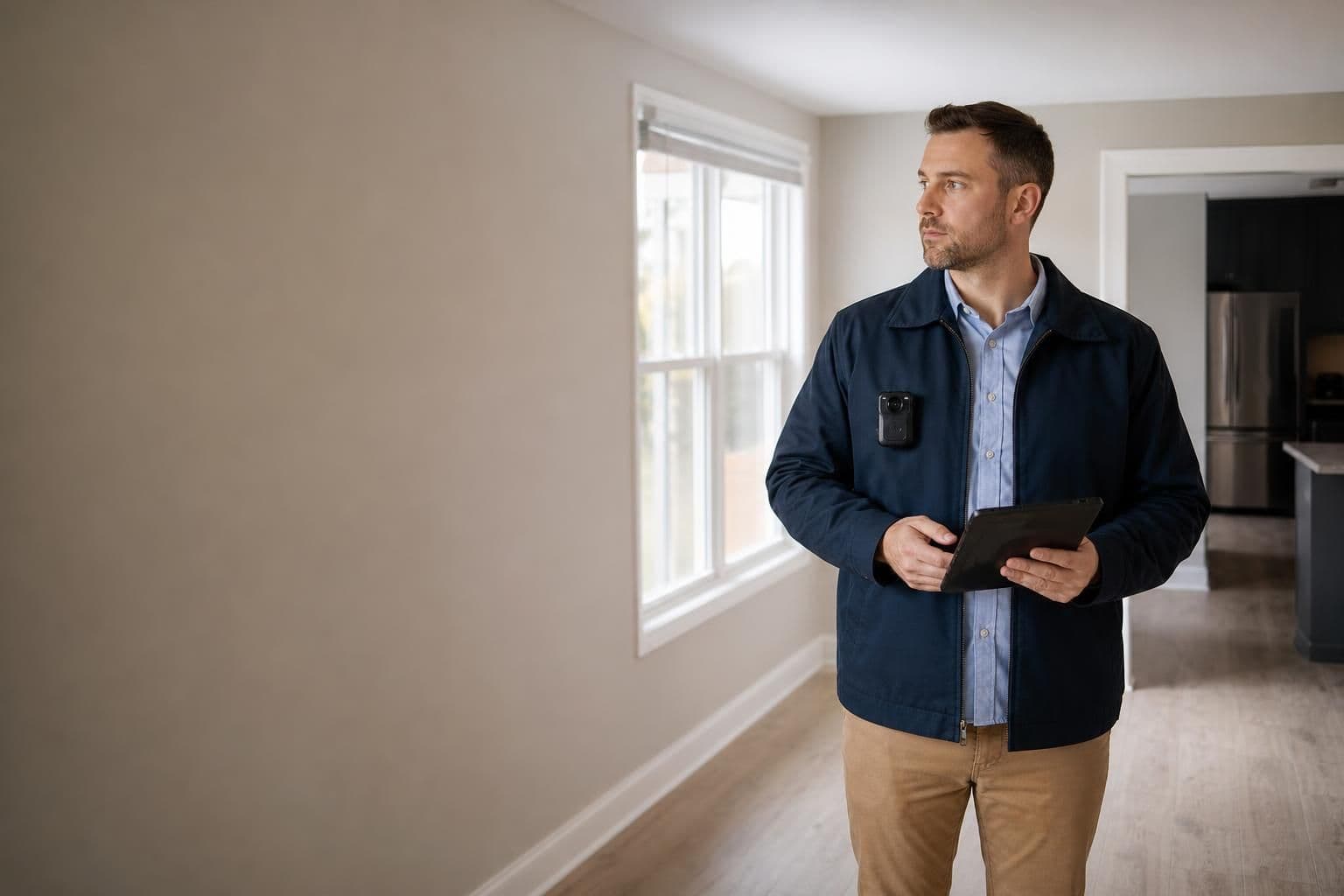
A body camera for landlords is typically used to document property conditions during move-in/move-out walkthroughs, maintenance visits, and disputed interactions with tenants or contractors — not to secretly monitor anyone. Whether it's legal to record audio or video during those visits depends on your state or country's consent laws, so check local rules before you start filming. The right unit for this job is simple to wear, easy to operate one-handed, and records clear enough footage to hold up as a record of what actually happened.
Key takeaways
- Visual documentation during inspections and repairs protects both landlords and tenants from "he said, she said" disputes.
- Audio recording laws vary — some states require all parties to consent before you record a conversation, not just one.
- Look for a camera that's easy to wear hands-free and simple to operate, since you'll often be holding tools, keys, or paperwork at the same time.
Why Landlords Use Body Cameras
Property walkthroughs, repair visits, and eviction-related interactions are exactly the moments where a clear, timestamped record is useful. If a tenant later disputes the condition of a unit at move-out, or claims a contractor damaged something during a repair, video from the visit settles the question faster than two conflicting accounts. The same applies to maintenance staff entering occupied units — a visible camera documents that the visit happened as described, what was observed, and roughly when.
This is different from covert surveillance. A body camera worn openly during a scheduled visit is documentation; a hidden camera left behind to catch a tenant without their knowledge is a different — and often illegal — use case.
What the Law Actually Says
Recording laws split into two broad categories that matter here: video recording in a space, and audio recording of a conversation.
- Video in common areas or during a visit you're legitimately present for is generally less restricted than audio, especially when you're an owner or agent present for a lawful purpose like an inspection.
- Audio recording a conversation is where state law varies the most. Some states only require one party (you) to consent, while others require all parties to consent before a conversation can be recorded — recording without that consent can be a criminal offense in two-party states.
- Recording inside a tenant's private space without notice or legal basis — bedrooms, bathrooms, or any area with a reasonable expectation of privacy — is not something recording laws are designed to permit, regardless of who owns the building.
Because these rules differ by state and country, landlords should check a current legal reference before recording any tenant interaction, and treat this article as general information rather than legal advice. Justia's state law library and FindLaw's legal guides both maintain breakdowns of recording consent rules by state, and the Reporters Committee for Freedom of the Press publishes a frequently updated guide to recording laws across the U.S. For a plainer answer to whether private individuals can legally wear a camera at all, see this breakdown of what the law says about civilians wearing body cameras.
What to Look for in a Camera for Rental Property Use
Landlords aren't filming action sports or patrol shifts — the job is short, practical visits where you need your hands free and footage you can actually see clearly afterward. A few things matter more than others for this use case:
- Resolution — sharper footage makes it easier to confirm details like a crack in a wall or the state of an appliance after the fact.
- Camera positioning — a rotatable body lets you adjust the angle without repositioning your whole body, useful when you're bent over checking under a sink or looking up at a ceiling stain.
- Wearability — a hands-free, wearable design matters when you're carrying a clipboard, keys, or tools during a walkthrough.
- Ease of setup — you want to clip it on and start recording quickly, not fumble through menus while a tenant is waiting.
The 4K Rotatable Body Camera is built around these basics: 4K recording, a rotatable body for adjusting your angle without repositioning, and a wearable, hands-free format with simple operation. For a broader rundown of what to check across any 4K body camera before buying, see this 4K body camera buying guide.
Quick Comparison: What to Check vs. What This Camera Offers
| What to check | Why it matters for property visits | 4K Rotatable Body Camera |
|---|---|---|
| Video resolution | Clearer footage for documenting damage or condition | Records in 4K |
| Angle adjustment | Fewer awkward body positions while filming during inspections | Rotatable body for flexible positioning |
| Wearability | Keeps hands free for keys, tools, or paperwork | Wearable, hands-free design |
| Setup/operation | Faster start during short, scheduled visits | Simple, easy operation |
| Delivery | Matters if you need it before a scheduled move-out | Free express shipping, 1–2 business day processing, 7–12 business day estimated arrival |
For specs beyond what's confirmed here — like storage capacity or mounting style — check the product page directly rather than assuming, since this article only covers what's listed there.
Best Practices for Using a Body Camera on Rental Property
A few habits keep this useful and above-board:
- Tell tenants in advance when a visit will be recorded, especially for scheduled inspections — written notice in a lease addendum or a simple heads-up text avoids surprises.
- Keep the camera visible, not concealed — worn openly on the body is the point of this type of device.
- Avoid recording in private areas like bathrooms unless there's a specific, lawful reason tied to the repair itself.
- Store footage securely and only share it when relevant to a dispute, rather than keeping an open archive of every visit indefinitely.
For guidance on where to clip the camera and how to angle it for a usable view, this guide to body camera placement and setup covers the practical side of wearing one during a walkthrough.
Who Else Uses a Similar Setup
Landlords aren't the only ones documenting routine visits this way — the same reasoning applies to security guards who need a reliable record of incidents during a shift. The core need is the same: a hands-free camera that's simple to start recording and captures a clear enough view to settle a dispute after the fact.
Frequently Asked Questions
Q: Is it legal for a landlord to wear a body camera during a tenant visit?
Generally yes for video during a lawful visit like an inspection or repair, but audio recording of a conversation may require the tenant's consent depending on your state's law. Check your state's specific rules before recording, since this varies and this isn't legal advice.
Q: Do I need to tell my tenant I'm recording?
Giving notice is a good practice even where it isn't strictly required, and in states with two-party consent laws it's legally necessary before recording a conversation. A simple note in the lease or a heads-up before the visit covers most situations.
Q: Can I use the footage in an eviction or deposit dispute?
Video documentation of unit condition or interactions can support your position in a dispute, but how it's weighed depends on local landlord-tenant law and how the recording was obtained. Consult a local attorney or your state's housing authority guidance for specifics.
Q: What features actually matter for this use case versus a security or delivery job?
Landlords mainly need clear resolution, flexible angle adjustment, and hands-free wearability for short, scheduled visits rather than long-shift features. The 4K Rotatable Body Camera covers those basics with 4K recording, a rotatable body, and simple operation.
Q: Is a body camera better than a hidden camera for documenting a rental property?
Yes for legal clarity — a worn, visible camera used openly during a legitimate visit avoids the legal risk tied to hidden recording devices placed without a tenant's knowledge. Hidden recording in a tenant's private space is a separate and much riskier legal territory that this article does not recommend.