Can Civilians Wear Body Cameras? What the Law Says
Key takeaway
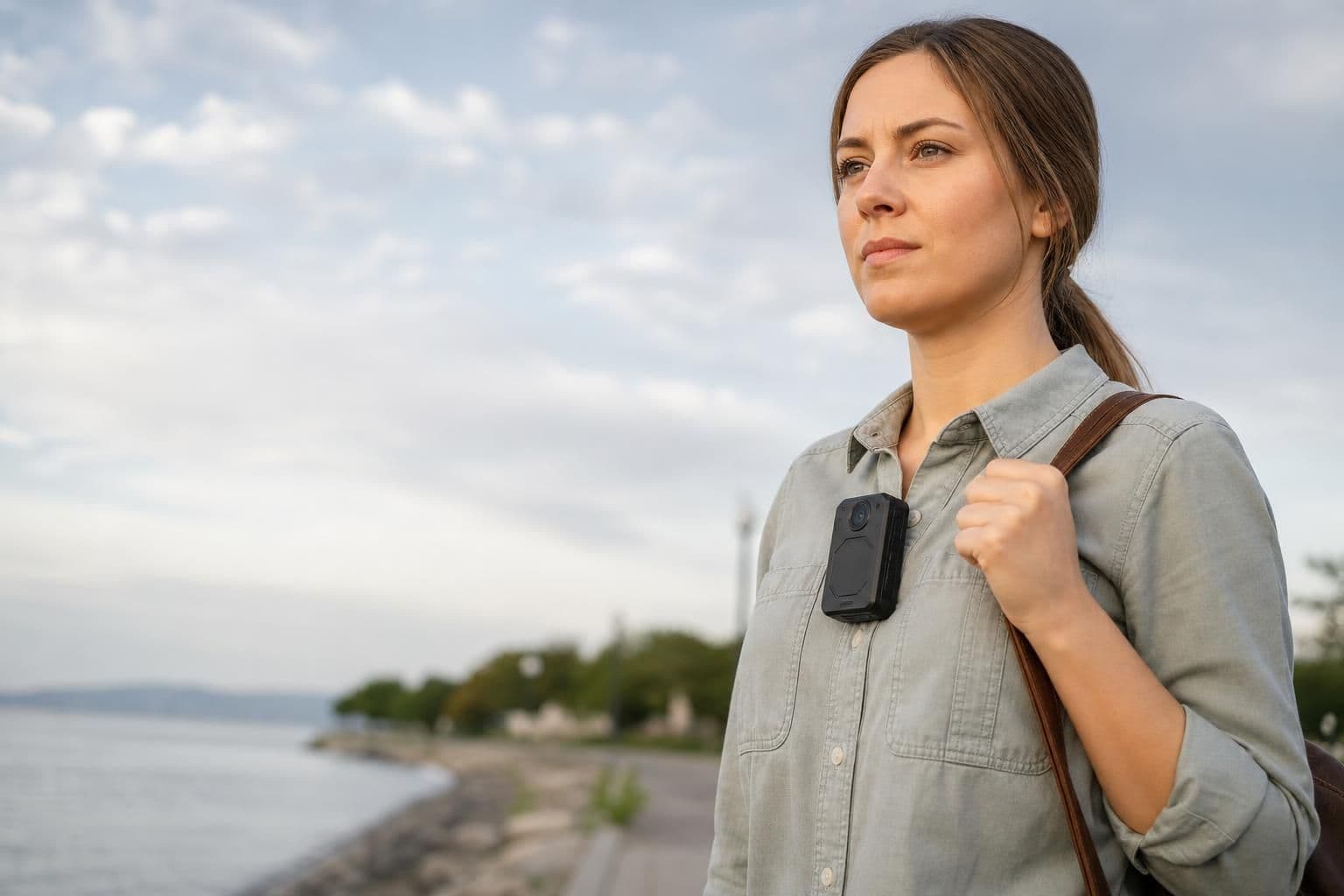
Yes, civilians can generally wear and use body cameras in the United States and most other countries, since recording in public or recording yourself in your own interactions is typically legal. The main legal limits involve audio consent rules that vary by state, and recording someone in a place where they have a reasonable expectation of privacy, like a bathroom or changing room. None of this is legal advice — laws differ by jurisdiction, so check your state or country's specific rules before relying on footage for any formal purpose.
Key takeaways
- Recording video in public is legal almost everywhere; audio recording has stricter, state-specific consent rules in the U.S.
- One-party consent states let you record a conversation you're part of; two-party (all-party) consent states require everyone's agreement.
- Wearing a camera to document your own commute, deliveries, or interactions is different from secretly recording someone in a private space — the latter can carry legal risk regardless of state.
Why Civilians Wear Body Cameras in the First Place
Most everyday users aren't trying to catch anyone off guard — they're documenting delivery drop-offs, rideshare pickups, dog walks, or roadside encounters in case something goes wrong later. A body camera gives a hands-free, first-person record of what actually happened, which is useful for insurance claims, workplace disputes, or simply peace of mind. If you're deciding what kind of footage you actually need, the body camera vs action camera comparison breaks down when a chest-worn format makes more sense than a handheld one.
What U.S. Law Actually Says About Recording
Video recording in places open to the public is broadly protected, since there's no reasonable expectation of privacy on a sidewalk, in a store, or in your own car. Audio is where it gets more complicated. The United States splits into:
- One-party consent states (the majority) — you can legally record a conversation as long as you, one participant, consent. You don't need the other person to agree.
- Two-party or all-party consent states (including California, Florida, and several others) — every participant in a private conversation must consent to being recorded.
The Reporters Committee for Freedom of the Press maintains a state-by-state guide to these consent laws, and it's worth a look before you rely on audio from a body camera in any dispute. Legal reference sites like Justia and FindLaw also publish summaries of state recording statutes if you want a second source.
Where It Gets Risky
The line isn't "civilian vs. professional" — it's public vs. private space, and open vs. secret recording. A few situations to know:
- Recording inside someone's home without consent can raise both civil and criminal issues, even if you're a guest.
- Recording in restrooms, locker rooms, or similar spaces is restricted almost everywhere regardless of consent laws, because of the heightened privacy expectation.
- Using a camera to covertly surveil a specific person — a neighbor, coworker, or ex — can cross into stalking or harassment territory even if the underlying recording law is one-party consent.
Valenza's hidden camera detector exists for the opposite concern — checking whether you're being recorded somewhere you shouldn't be — which is a reminder that privacy expectations run both directions.
Who Actually Wears Body Cameras Day-to-Day
Civilian use has grown well beyond law enforcement. Common everyday wearers include:
- Delivery and rideshare drivers documenting pickups, drop-offs, and passenger interactions
- Dog walkers and joggers wanting a record of their route
- Landlords or tenants documenting the condition of a unit during a dispute
- Parents supervising outdoor activities who want a record of an incident if one occurs
If you're in the delivery or rideshare category specifically, the guide on choosing a body camera for delivery and rideshare drivers covers the practical side of what to look for.
What to Check Before You Buy One
Not every body camera suits every use case. Before buying, it helps to compare on a few concrete criteria rather than marketing claims:
| Criterion | Why it matters |
|---|---|
| Recording resolution | Higher resolution helps with reading plates, faces, or signage later |
| Mounting/wear position | Chest, shoulder, or collar mounts change the angle and stability |
| Rotatable lens | Lets you adjust the angle without repositioning the whole unit |
| Ease of setup | Matters if you'll be using it one-handed, in a hurry, or daily |
| Processing and shipping time | Affects how soon the camera arrives if you need it for a specific job |
The 4K Rotatable Body Camera from Valenza records in 4K and has a rotatable body so you can adjust the angle without unclipping it, aimed at hands-free everyday wear. It ships with free express shipping, 1-2 business day processing, and an estimated arrival window of 7-12 business days. For battery life, storage capacity, or other detailed specs, check the product page directly rather than assuming — those details are listed there, not guessed here.
If you're still narrowing down what "4K" and "rotatable" actually mean for your use case, the 4K body camera buying guide and the explainer on rotatable lens design go into more depth on those two features specifically.
Outside the U.S.
Recording laws outside the United States vary just as much, and sometimes more. The U.K., for example, generally allows filming in public spaces but has stricter rules once footage is used to identify individuals under data protection law. The Bureau of Justice Assistance publishes U.S.-focused guidance on recording and body-worn camera policy that's a useful starting reference point, even for civilian (non-law-enforcement) context, since the underlying privacy principles overlap.
Getting the Placement Right
Once you've decided a body camera fits your situation, how you wear it affects both footage quality and your own comfort over a full shift or outing. Chest height generally gives the steadiest, most natural field of view, while shoulder or collar mounts can introduce more motion blur when you turn your head. The guide to body camera placement, angles, and setup walks through mounting options in more detail.
Frequently Asked Questions
Q: Is it legal for a regular person to wear a body camera in public?
Yes, in general. Recording video in public spaces is legal in the U.S. and most countries, since there's no reasonable expectation of privacy in a public place. Audio recording of conversations has additional consent rules that vary by state.
Q: Do I need to tell someone I'm recording them with a body camera?
It depends on your state or country's consent laws. In one-party consent states, no — your own consent is enough; in two-party consent states, all participants in a private conversation generally need to agree before audio is recorded.
Q: Can I wear a body camera at work?
Many employers allow it for jobs like delivery or security, but some workplaces have their own policies restricting recording, especially around coworkers or customers. Check your employer's policy in addition to state law before wearing one on shift.
Q: Is using a body camera to secretly record someone illegal?
Covertly recording someone in a space where they expect privacy, or recording audio without required consent, can carry civil or criminal risk depending on the state or country. This article is general information, not legal advice — consult a legal professional for your specific situation.
Q: What's the difference between a body camera and a hidden camera for legal purposes?
A body camera is typically worn visibly and openly, while a hidden camera is designed to be concealed, which raises separate legal and ethical questions around consent and surveillance. If your concern is detecting a hidden camera rather than wearing one, a hidden camera detector addresses that instead.