Can I Record at Work With a Body Camera? What to Know
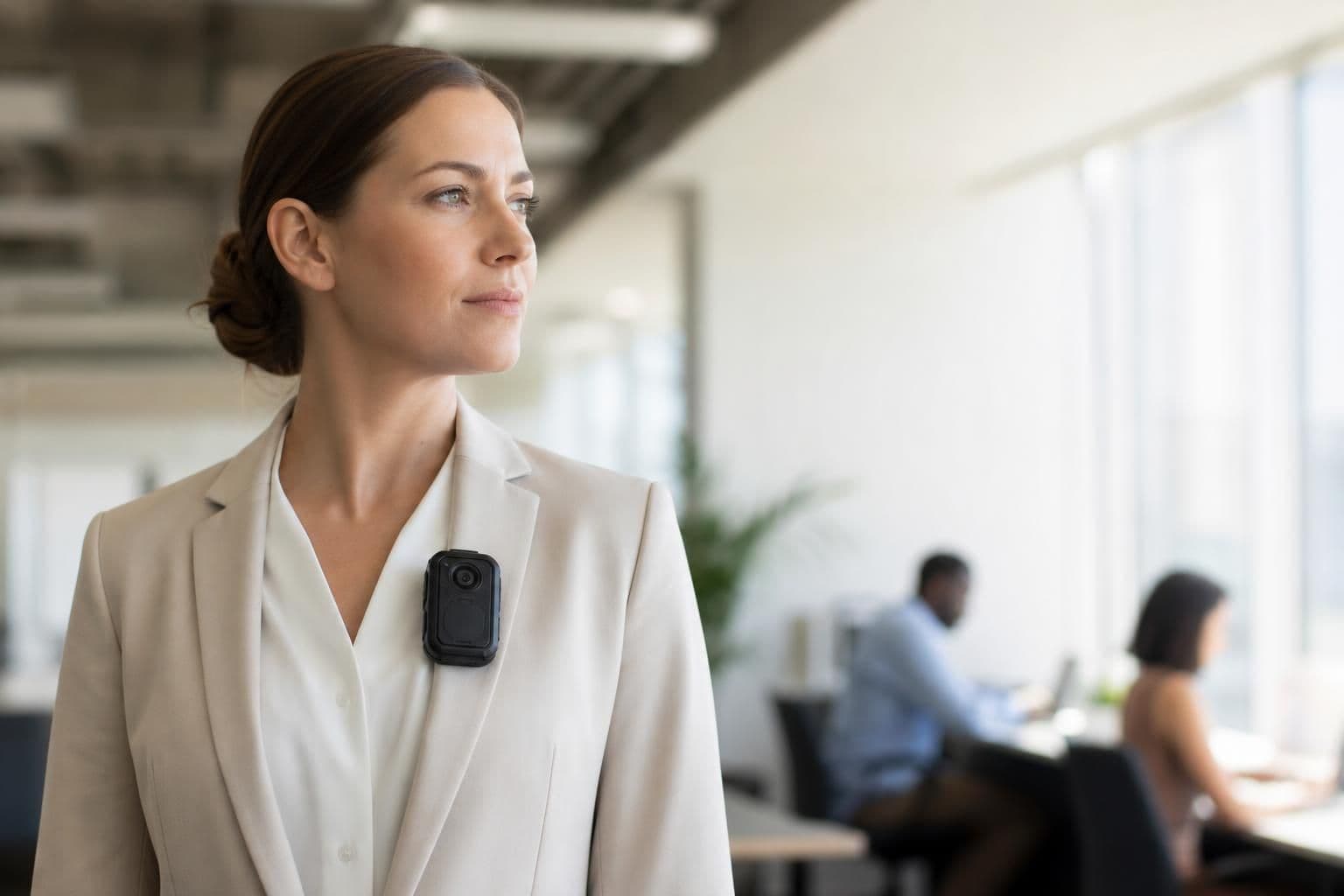
Key takeaway
Whether you can record at work with a body camera depends on three things: your state or country's consent laws, your employer's internal policies, and whether the recording is for personal safety documentation versus covert surveillance of coworkers. In many U.S. states one-party consent is legal, meaning you can record a conversation you're part of, but employer handbooks and workplace privacy expectations can still restrict or prohibit it on company property. This is general information, not legal advice — check your specific state law and your employer's policy before recording anything at work.
Key takeaways
- One-party consent is legal in most U.S. states, but about a dozen states require all parties to agree before audio is recorded — know which category your state falls into.
- Employer policy can override what's legally permitted; many workplaces ban recording in handbooks even in one-party-consent states.
- Recording coworkers covertly, especially in breakrooms, bathrooms, or locker rooms, can violate both law and company policy regardless of consent rules.
What the law actually says about workplace recording
Recording laws in the U.S. are primarily about consent to record conversations, not about wearing a camera itself. Federal law and most states follow a one-party consent rule, meaning only one person in the conversation (you) needs to know it's being recorded. A smaller group of states, including California and Illinois, require all-party consent, where everyone being recorded must agree. The Reporters Committee for Freedom of the Press maintains a state-by-state breakdown of these consent rules, which is a useful starting point before you record anything involving coworkers or supervisors.
Video-only recording (no audio) generally faces fewer legal restrictions than audio, since most wiretapping statutes target audio interception specifically. Still, video recording in places where someone has a reasonable expectation of privacy — a locker room, a private office with the door closed — can raise separate privacy claims even without audio.
Employer policy usually matters more than the law
Even in a one-party consent state, your employer can have a workplace policy that prohibits recording on company premises, and violating that policy can be grounds for discipline or termination, separate from whether the recording itself was legal. Many companies have added no-recording clauses to handbooks over the past decade specifically because of the rise in personal recording devices. Before wearing any device at work, check your employee handbook or ask HR directly whether recording is addressed.
A narrow exception exists for recordings related to reporting illegal activity, harassment, or safety violations — in many jurisdictions, whistleblower protections can shield an employee who records evidence of wrongdoing, even against a company no-recording policy. Justia and FindLaw both publish general overviews of workplace recording and whistleblower protection that explain how these carve-outs typically work, though the specifics vary by state.
Common reasons people want to record at work
People usually aren't trying to spy — they're documenting something specific. Typical reasons include:
- Protecting against harassment or discrimination claims with a factual record
- Documenting a safety incident or hazard as it happens
- Creating a record of a disciplinary meeting or performance review
- Supporting security roles where recording is part of the job (like guards or delivery drivers)
If your goal is documentation for safety or dispute-resolution purposes, a wearable option like the 4K Rotatable Body Camera offers hands-free 4K recording with a rotatable body so you can adjust the angle without taking it off, which suits situations where you need a consistent point-of-view record rather than a handheld phone clip. The same openness and consent principles apply regardless of which device you use.
Jobs where body cameras are part of standard practice
Some roles already use body cameras as a documented part of the job, with employer knowledge and consent built in. Security guards, for instance, often wear them to create incident records for liability purposes, a use case covered in more detail in what to look for in a body camera for security guards. Delivery and rideshare workers also increasingly use them to document deliveries or passenger interactions, which is explored in the guide to body cameras for delivery and rideshare drivers. In both cases, the recording is typically known to the people being filmed, which sidesteps most of the consent problems that arise with covert recording.
What not to do with a body camera at work
Never use a body camera, or any recording device, to covertly capture coworkers in private moments or conversations they don't know are being recorded — this can violate wiretapping statutes, company policy, and basic workplace trust at the same time. The Bureau of Justice Assistance publishes general guidance on body-worn camera use in professional contexts, which, while aimed at law enforcement, reflects a broader principle worth borrowing: cameras work best for accountability when their use is transparent rather than hidden.
If your actual concern is the reverse — suspecting you're being recorded without your knowledge at work — that's a different problem, and a hidden camera detector is built for scanning a room for covert devices rather than for wearable recording.
Frequently Asked Questions
Q: Is it legal to wear a body camera at work?
It depends on your state's consent laws and your employer's internal policy; one-party consent states generally permit it for conversations you're part of, but a company handbook can still prohibit it on the premises.
Q: Can my employer fire me for recording at work?
In most states, yes — violating a company's no-recording policy can be grounds for discipline even if the recording itself was legal, unless the recording falls under a whistleblower or harassment-reporting protection.
Q: Do I need to tell coworkers I'm recording them?
In all-party consent states you legally must get agreement from everyone recorded; in one-party consent states you don't legally have to, but many workplace policies still expect transparency about recording.
Q: Does a body camera record audio as well as video?
Audio and video capabilities vary by device and model, so check the specific product listing for what a given body camera records before relying on it for documentation.
Q: What's the difference between recording at work and covert surveillance?
Recording at work for documentation, safety, or job duties is generally done openly or within policy; covert surveillance targets people without their knowledge in situations where they'd reasonably expect privacy, which carries legal and ethical risk regardless of consent rules.