How to Remove Scratches From Quartz Countertops
Key takeaway
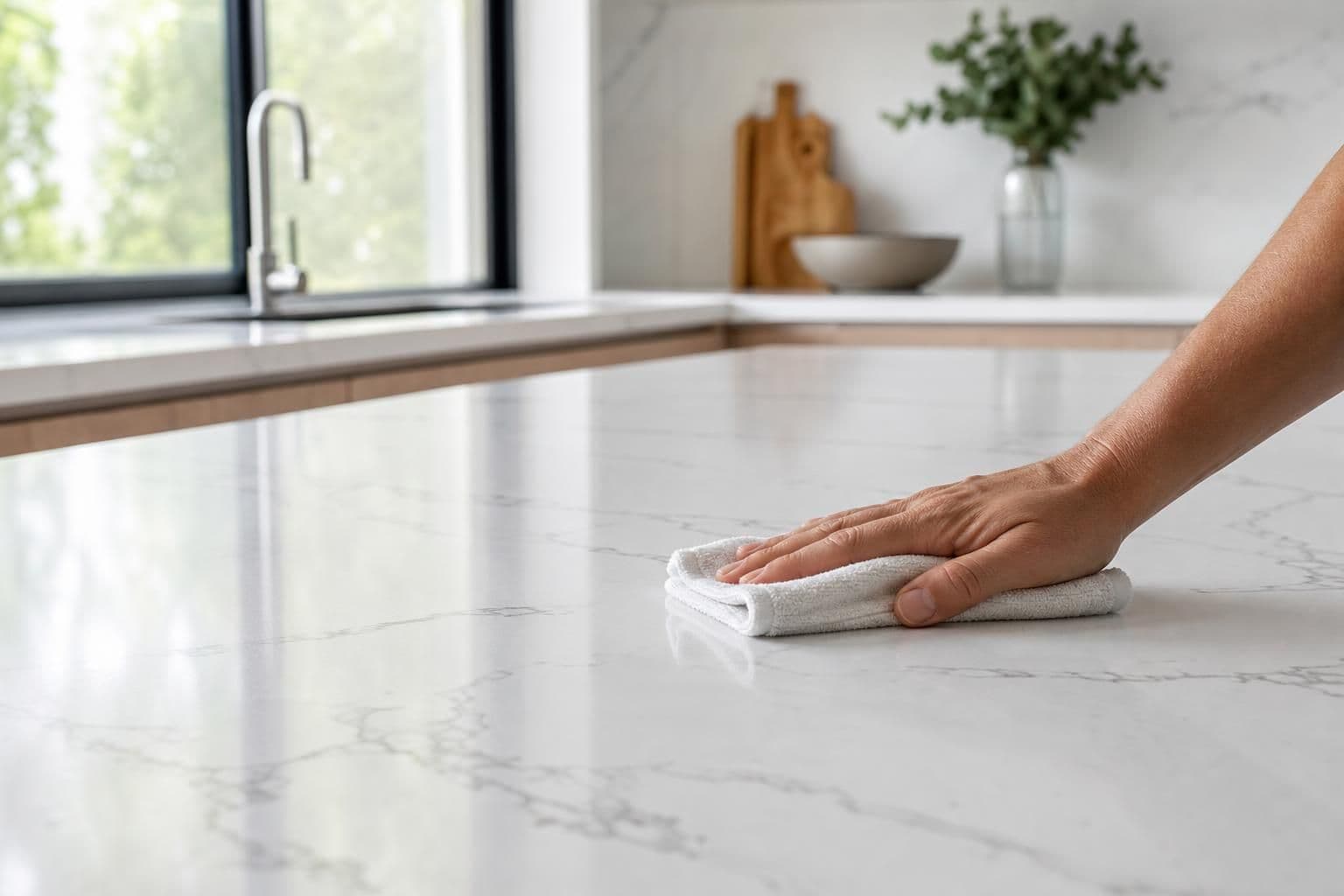
Light surface scratches on quartz countertops can often be buffed out with a non-abrasive polishing compound and a soft cloth, using small circular motions and light pressure. Deeper scratches or chips that catch a fingernail usually need a professional repair kit or resurfacing, because quartz's resin binder can be damaged by aggressive sanding. If a scratch keeps reappearing in the same spot or the surface looks dull around it, that's usually a sign of a larger surface issue rather than a simple cosmetic mark.
Key takeaways
- Try a quartz-safe polishing compound and soft cloth first — never steel wool, sandpaper, or abrasive scouring pads.
- Test any product on a hidden edge or under-sink cutout before working on a visible section.
- Deep gouges, chips, or scratches that keep dulling are best handled by a countertop pro rather than a DIY fix.
Why Quartz Scratches in the First Place
Quartz countertops are engineered from roughly 90–95% crushed natural quartz mixed with resins and pigments, which is why manufacturers rate them near the top of the Mohs hardness scale used to compare mineral hardness — a system maintained and referenced by the USGS. That hardness makes quartz highly scratch-resistant for everyday kitchen use, but it isn't scratch-proof. Ceramic knife blades, ring settings, ceramic cookware bottoms dragged across the surface, and grit from sandy beach gear or garden tools can all leave fine marks, especially on darker or high-polish finishes where scratches show up more visibly.
In condos and vacation rentals across Oahu, countertops also take a harder hit than in a typical single-family kitchen. Higher turnover means more renters cutting directly on the surface or setting down gritty items from the beach, which is part of why durable countertops for high-turnover vacation rentals are such a common request from property owners here.
Step-by-Step: Removing Light Surface Scratches
Most hairline scratches respond well to a careful, low-abrasion approach:
- Clean the area first. Wipe with warm water and a mild dish soap to remove grease and debris so you're not grinding grit into the surface.
- Apply a quartz-specific polishing compound. These are formulated to be gentle enough for the resin binder in engineered stone — avoid generic metal or auto-body polishes.
- Buff in small circles with a soft microfiber cloth. Use light, even pressure. Rushing or pressing hard can dull the surrounding finish instead of blending the scratch.
- Wipe clean and inspect under good light. Natural daylight or a bright LED shows whether the mark has blended in or needs another pass.
- Repeat sparingly. If two or three gentle passes don't improve it, stop — continued buffing in one spot can create a visible dull patch, which is harder to fix than the original scratch.
Baking soda mixed into a thin paste is sometimes suggested as a mild alternative, but it should only be used very lightly and rinsed off completely, since any abrasive left to sit can dull a polished finish over time.
What Not to Do
Certain habits make scratches worse or create new damage:
- Skip steel wool, sandpaper, or scouring pads. These are abrasive enough to scratch the resin matrix itself, not just the surface grime.
- Avoid bleach-based or highly acidic cleaners on a scratch. They won't remove the mark and can degrade the resin binder around it with repeated use.
- Don't use a heat gun or open flame near quartz. Unlike granite, quartz contains resin, and localized heat can scorch or discolor the surface — a risk worth knowing if you're comparing how granite is sealed and cared for in humidity versus how quartz is maintained.
- Don't try to sand out a chip yourself. Sanding removes material unevenly and can leave a visible low spot that's more noticeable than the original damage.
If you do use a compound with fine abrasive grit, keep the work area ventilated. Cutting, grinding, or aggressively sanding any quartz surface can release silica dust, and prolonged exposure to fine silica particles is a recognized workplace hazard tracked by OSHA — a good reason to leave heavier resurfacing work to a professional with the right equipment and dust control.
When a Scratch Needs a Professional Fix
Some damage is beyond a polishing cloth:
- Deep gouges or chips that catch a fingernail or show a visible groove.
- Cracks, even hairline ones, especially near a sink cutout or seam.
- Scratches that keep returning to the same dull look after buffing — this often means the surface finish itself has worn thin in that spot.
- Scratches on a honed or matte finish, which can be trickier to blend than gloss finishes because the sheen is more uniform and any repair stands out more easily.
Professional resurfacing typically uses graduated diamond pads to level and re-polish a small section without leaving a mismatched sheen, a process best left to fabricators who work with engineered stone regularly. Homeowners weighing repair against replacement on an older or heavily worn counter sometimes use the opportunity to look at low-maintenance quartz options built for Hawaii's climate, particularly if the current surface is showing wear in several spots rather than just one.
Preventing Future Scratches
A few daily habits go a long way:
- Always use a cutting board — quartz resists scratches better than laminate, but knife edges still mark the resin over time.
- Set down cast iron, ceramic, and stoneware gently rather than sliding them across the surface.
- Keep a small brush or damp cloth handy for sandy or gritty debris from beach bags, garden tools, or shoes, which is a distinctly local wear-and-tear issue in island homes.
- Use trivets for hot pans even though quartz handles moderate heat reasonably well, since sudden temperature shock combined with pressure can stress the surface.
Frequently Asked Questions
Q: Can toothpaste remove scratches from quartz countertops?
Toothpaste contains very mild abrasives and occasionally softens the look of a hairline scratch, but it's not formulated for engineered stone and results are inconsistent. A quartz-specific polishing compound is a more reliable and predictable choice.
Q: Are quartz countertops more scratch-resistant than granite?
Both rank very high on the Mohs hardness scale, but quartz's engineered composition gives it a more consistent resistance to scratching across the whole slab, while natural granite's hardness can vary slightly by mineral pattern. Neither is fully scratch-proof.
Q: Will a scratch get worse if I ignore it?
A shallow scratch usually stays cosmetic and won't spread on its own. However, dirt and grease can settle into it over time, making it more visible, so cleaning and light buffing sooner rather than later keeps it less noticeable.
Q: Can I use the same scratch-removal method on quartz and granite?
No — granite is a natural stone without resin, so it tolerates some products and light heat differently than quartz does. Always check whether a cleaner or polish is labeled safe for engineered stone before using it on quartz.
Q: Does a matte or honed quartz finish scratch more easily than polished quartz?
Matte finishes don't scratch more easily, but scratches and dull spots can be more visible on them because the surface already has a soft, non-reflective texture that shows any inconsistency.