How to Soundproof a Condo Floor
Key takeaway
Soundproofing a condo floor means pairing a sound-rated underlayment with a compatible flooring material so impact noise (footsteps, dropped objects, moved furniture) doesn't travel into the unit below. The two ratings that matter most are IIC (Impact Insulation Class) and STC (Sound Transmission Class), and most Honolulu condo associations set a minimum IIC/STC of 50 before they'll approve a flooring change. Getting this right up front avoids failed inspections, neighbor complaints, and having to tear out new floors.
Key takeaways
- Check your condo association's house rules for a minimum IIC/STC rating (commonly 50) before buying any flooring or underlayment.
- Pair a rated acoustic underlayment (cork, rubber, or dense foam) with a rigid-core product like SPC luxury vinyl plank for the best noise reduction and moisture stability.
- Keep the paperwork — most associations require a written IIC/STC test certificate for the exact assembly, not just a product label.
Why Condo Buildings Care About Impact Noise
Impact noise — the thud of footsteps or a dropped dish — travels through a slab far more efficiently than airborne noise like voices or music. Building codes and condo governing documents address this with two lab-tested numbers: STC measures airborne sound blocking, while IIC measures how well a floor assembly absorbs impact energy before it reaches the unit below. The U.S. Department of Housing and Urban Development has long used a minimum STC/IIC of 50 as a baseline for multifamily construction, and that 50 threshold has become the de facto standard many condo boards borrow when writing their own flooring rules.
Choosing an Underlayment That Actually Meets the Rating
The underlayment, not the flooring itself, does most of the acoustic work. Options generally fall into three categories:
- Cork underlayment — dense, naturally resilient, often tested to IIC 50–60 depending on thickness (commonly 2mm–6mm).
- Rubber underlayment — heavier and more expensive, frequently used where boards require a higher rating (IIC 55+).
- Closed-cell foam — the most common budget option bundled with SPC vinyl plank, typically rated IIC 50–53 in tested assemblies.
The rating only applies to the exact assembly that was tested — a specific underlayment glued or floated under a specific flooring product over a specific slab type. Swapping in a different plank or a thinner pad can drop the real-world performance well below the labeled number, which is why associations ask for the manufacturer's test report for your specific combination rather than a generic spec sheet.
Flooring Materials That Work Well Over an Acoustic Pad
Not every flooring type performs the same way once it's paired with underlayment. Rigid-core waterproof SPC luxury vinyl plank is popular in Oahu condos partly because its stiff core sits well on top of foam or cork pads without flexing or creaking, and it holds up in the humidity swings typical of island living. Engineered hardwood can also carry a sound pad, but solid hardwood generally cannot be floated over foam and often needs to be glued down, which changes the acoustic assembly entirely. Tile is trickier still — it's rigid and transmits impact noise readily unless it sits over a rated isolation membrane, which is one reason tile installations in Honolulu condos are governed by their own set of association rules distinct from soft flooring.
Working Within Your Condo Association's Rules
Most Oahu condo associations require flooring plans to be submitted for approval before work starts, and a stated IIC/STC minimum is one of the most common conditions attached to that approval. Boards typically want three things: the product's tested rating, confirmation it matches the exact underlayment/flooring pairing being installed, and sometimes a physical inspection after the job is done. Skipping this step is one of the fastest ways to end up redoing a floor, so it's worth reviewing the condo association approval process for renovations before ordering materials rather than after.
What a Professional Soundproofing Installation Looks Like
A properly executed job generally follows this sequence:
- Slab prep — the concrete subfloor is cleaned, leveled, and checked for moisture, since trapped moisture under a pad can cause it to compress unevenly over time.
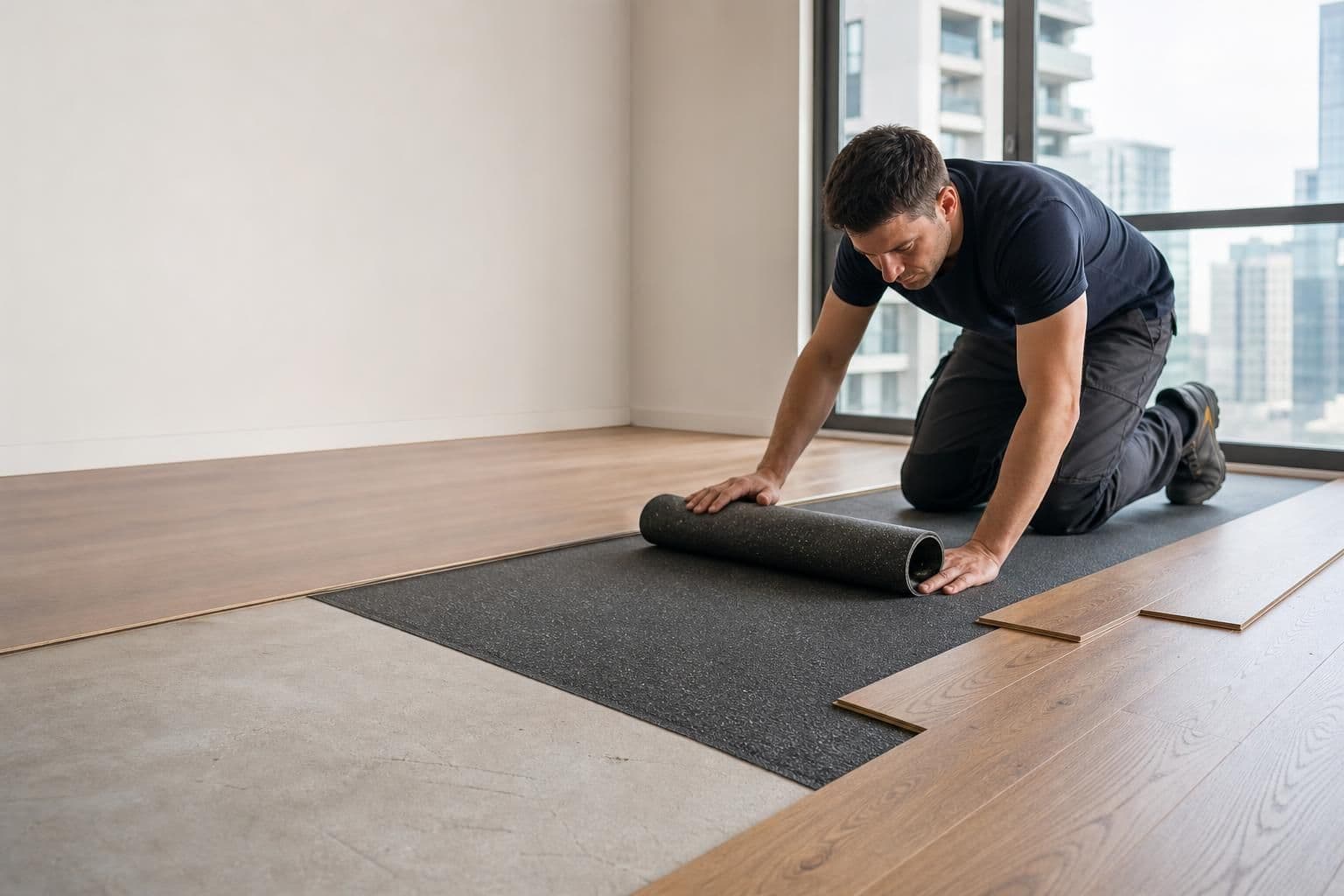
- Underlayment placement — the rated pad is rolled or glued down per the manufacturer's tested method (floating vs. adhered changes the IIC result).
- Perimeter isolation — a small acoustic gap is left at the walls so the floor doesn't transmit vibration directly into the wall framing.
- Flooring installation — planks or tile go down per the tested assembly, with attention to expansion gaps.
- Documentation — photos and the test certificate are kept on file in case the association requests proof later.
Because these assemblies are engineered to a tested spec, matching material choices to the island's humidity is still part of the equation — a pad and flooring combination that performs well acoustically but traps moisture can lead to separate problems, which is covered in more detail in guidance on choosing flooring suited to Hawaii's humid climate.
Other Ways to Reduce Noise Beyond the Floor Assembly
Underlayment and flooring solve most of the impact-noise problem, but a few supplementary steps help in daily living:
- Add area rugs with a felt pad in high-traffic rooms like living rooms and hallways.
- Use furniture floor protectors on chair and table legs to cut down on scraping noise.
- Ask a contractor about resilient sound clips or isolation channels on the ceiling below if noise complaints persist after a flooring upgrade — this addresses the ceiling side of the assembly rather than the floor side.
The World Health Organization has published guidance noting that chronic exposure to environmental noise, including from neighboring units, is linked to sleep disruption — one more reason boards treat impact-noise ratings as a serious requirement rather than a formality.
Frequently Asked Questions
Q: What IIC rating do I need for a condo floor?
Most Honolulu condo associations require a minimum IIC (and often STC) of 50, though some buildings set the bar higher, especially for units above ground-floor commercial space or over bedrooms. Always confirm the exact number in your building's house rules before purchasing materials.
Q: Does luxury vinyl plank need underlayment for soundproofing?
Yes — the vinyl plank itself does little to reduce impact noise on its own. The acoustic performance comes from the underlayment pad beneath it, and the two need to be installed together as a tested assembly to reach a specific IIC rating.
Q: Can I soundproof a floor without removing existing flooring?
Sometimes, if the current floor is a compatible substrate, but most rated assemblies require going down to the slab so the underlayment sits directly on concrete rather than over old tile or carpet, which can distort the tested rating.
Q: Is cork or rubber underlayment better for soundproofing?
Both perform well; rubber tends to reach higher IIC ratings and holds up longer under heavy furniture, while cork is lighter and often less expensive. The right choice depends on the required rating in your building and the flooring product it's paired with.
Q: Will soundproofing underlayment also help with humidity or moisture?
Some acoustic underlayments include a vapor barrier layer, but not all do, so it's worth confirming moisture protection separately rather than assuming it's included — this matters in Oahu's climate where slab moisture is common.