Are Squeaky Toys Bad for Dogs? What Owners Should Know
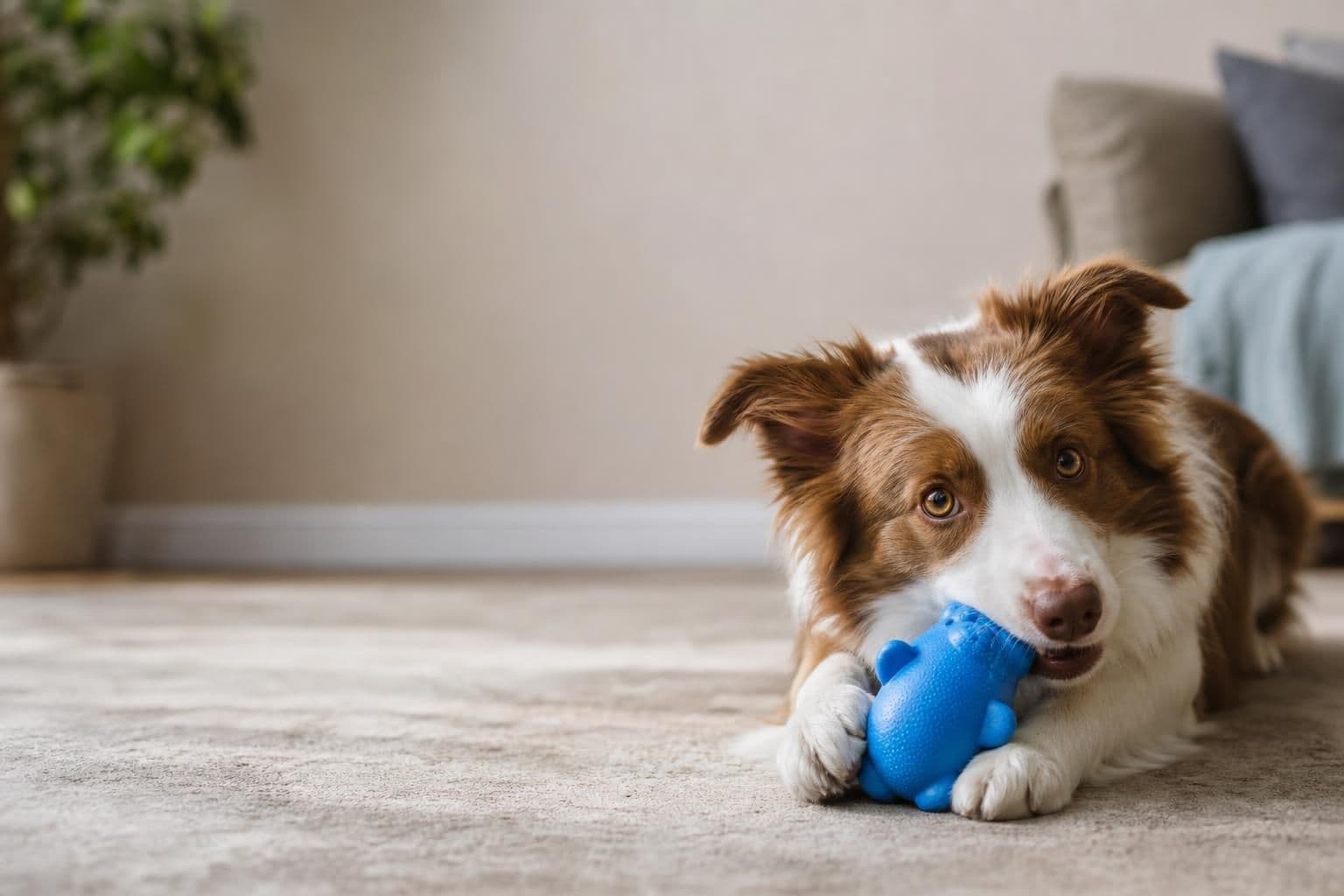
Key takeaway
Squeaky toys are not inherently bad for dogs — the squeak itself is harmless and taps into a dog's natural prey drive, which is why so many dogs get excited by it. The real risk comes from the squeaker mechanism and torn fabric or rubber being swallowed, choked on, or causing an intestinal blockage, especially with aggressive chewers or dogs left unsupervised. Choosing a toy sized and built for your dog's chewing style, and supervising play, is what makes squeaky toys safe rather than risky.
Key takeaways
- The squeak sound is not harmful; the danger is a swallowed squeaker or ingested fabric/foam once the toy is torn open.
- Match toy size and durability to your dog's chew strength, and retire any toy once seams split or stuffing shows.
- Supervised play, especially for the first few sessions with a new toy, catches problems before they become emergency vet visits.
Why squeaky toys aren't dangerous by themselves
The squeak comes from a small plastic or metal bellows that compresses air when your dog bites down. There's nothing toxic or physically harmful about the sound or the mechanism while it's intact inside the toy. Dogs respond to the noise because it mimics the sound of small prey — a rabbit's squeal or a rodent's alarm call — which is why herding and terrier breeds in particular can become fixated on squeaky toys during play.
The concern isn't the squeak; it's what happens after the outer layer fails. Once a seam rips or the fabric wears thin, the squeaker itself becomes a small, hard object a dog can swallow. That's a choking and blockage risk, not a noise-related one.
When squeaky toys actually become a problem
Veterinary emergency clinics regularly see foreign-body obstructions from toy parts, and the American Veterinary Medical Association notes that ingested foreign objects are a common reason dogs need emergency abdominal surgery. Squeakers, along with stuffing, small plastic eyes, and torn-off fabric pieces, are frequent culprits because they're compact enough to swallow but not soft enough to pass easily.
Risk goes up in a few specific situations:
- Power chewers: Dogs that destroy a plush toy in minutes are far more likely to reach and swallow the squeaker than a dog who chews gently.
- Unsupervised play: A toy that's fine for a 20-minute supervised session can be shredded within an hour if left with a dog alone all day.
- Wrong size toy: A toy small enough to fit fully in the mouth is easier to compress hard enough to break the seams, and easier to choke on if a piece breaks free.
- Multi-dog households: Tug-of-war between two dogs puts far more stress on seams than solo play, speeding up wear.
How to choose a safer squeaky toy
Look for toys built for your dog's actual chew style rather than picking whatever looks cute. A few practical checks:
- Size it to the dog, not the breed label. A toy that a dog can fully close its jaw around and compress is easier to tear into. Bigger toys relative to the dog's mouth are generally safer.
- Check the seam construction. Double-stitched or reinforced seams hold up longer than single-stitched plush.
- Look at the squeaker's placement. Some designs use a squeaker sewn into a separate inner pouch, which adds a layer between your dog's teeth and the mechanism.
- Match durability to chew strength. Light chewers can usually handle standard plush; heavy chewers do better with reinforced or rubber-based squeaky toys designed for tougher play.
- Retire torn toys immediately. Once stuffing or the squeaker is visible, the toy's job is done — no exceptions for a "favorite."
If you're shopping for enrichment options beyond squeaky plush, rotating in puzzle-style toys alongside squeaky ones keeps play varied and reduces the wear on any single toy, since your dog isn't relying on one item for all their mental stimulation.
Supervision matters more than the toy itself
Most veterinary guidance on chew toy safety comes back to the same point: supervision during the first several play sessions with any new toy tells you how your specific dog interacts with it. The American Kennel Club recommends observing a new toy closely at first, since chewing style varies enormously between individual dogs even within the same breed.
A practical habit: introduce a new squeaky toy during a time you're in the room, not right before you leave for work. Watch whether your dog chews casually, mouths it gently, or immediately starts trying to tear the seam open. That tells you whether it's a toy you can leave out unsupervised later or one that should only come out during play sessions.
Squeaky toys and anxious or reactive dogs
For dogs who are anxious, noise-sensitive, or easily overstimulated, a squeaky toy's sudden sound can sometimes spike arousal rather than provide calm enrichment. If your dog tends to get wound up rather than settled during play, it can help to pair active squeaky-toy sessions with a designated calm-down space afterward — many owners find that having a consistent cozy resting spot for an anxious dog makes it easier for a dog to wind down once play ends. Ai and Dudu, the two resident cats who test products before they're listed, react to squeaky sounds very differently from each other, which is a good reminder that individual temperament matters as much as the toy itself.
Cats and squeaky toys: a quick note
Squeaky toys aren't just a dog product — some cats respond to the sound too, though most cats are more reliably drawn to crinkle textures, feathers, or catnip scent than to squeakers. If you have both a dog and a cat in the house, keep squeaky dog toys separate from cat toys, since a cat's smaller mouth and lighter bite can still work a squeaker loose over time.
Frequently Asked Questions
Q: Can a squeaker inside a toy hurt a dog if swallowed?
Yes. A swallowed squeaker can cause choking or, if it passes into the intestines, a blockage that may require surgery to remove. This is why any toy with an exposed or loose squeaker should be taken away immediately.
Q: Are squeaky toys bad for dogs with anxiety?
Not inherently, but a sudden loud squeak can increase arousal in an already anxious dog rather than calm them. Pairing active play with a quiet, consistent rest space afterward often works better than relying on the toy alone for comfort.
Q: How long should a squeaky toy last before I throw it away?
There's no fixed timeline — it depends entirely on how hard your dog chews. Check the toy every time your dog plays with it, and discard it as soon as seams fray, stuffing shows, or the squeaker becomes visible or loose.
Q: Do squeaky toys damage a dog's hearing?
No. The squeak is well within the range of everyday household sounds and isn't loud enough to cause hearing damage during normal play.
Q: Are some squeaky toys safer than others?
Yes. Toys with reinforced seams, an inner pouch protecting the squeaker, and sizing appropriate to your dog's mouth are generally safer than thin, single-layer plush toys, particularly for dogs that chew aggressively.