Why Does My Dog Like Squeaky Toys So Much?
Key takeaway
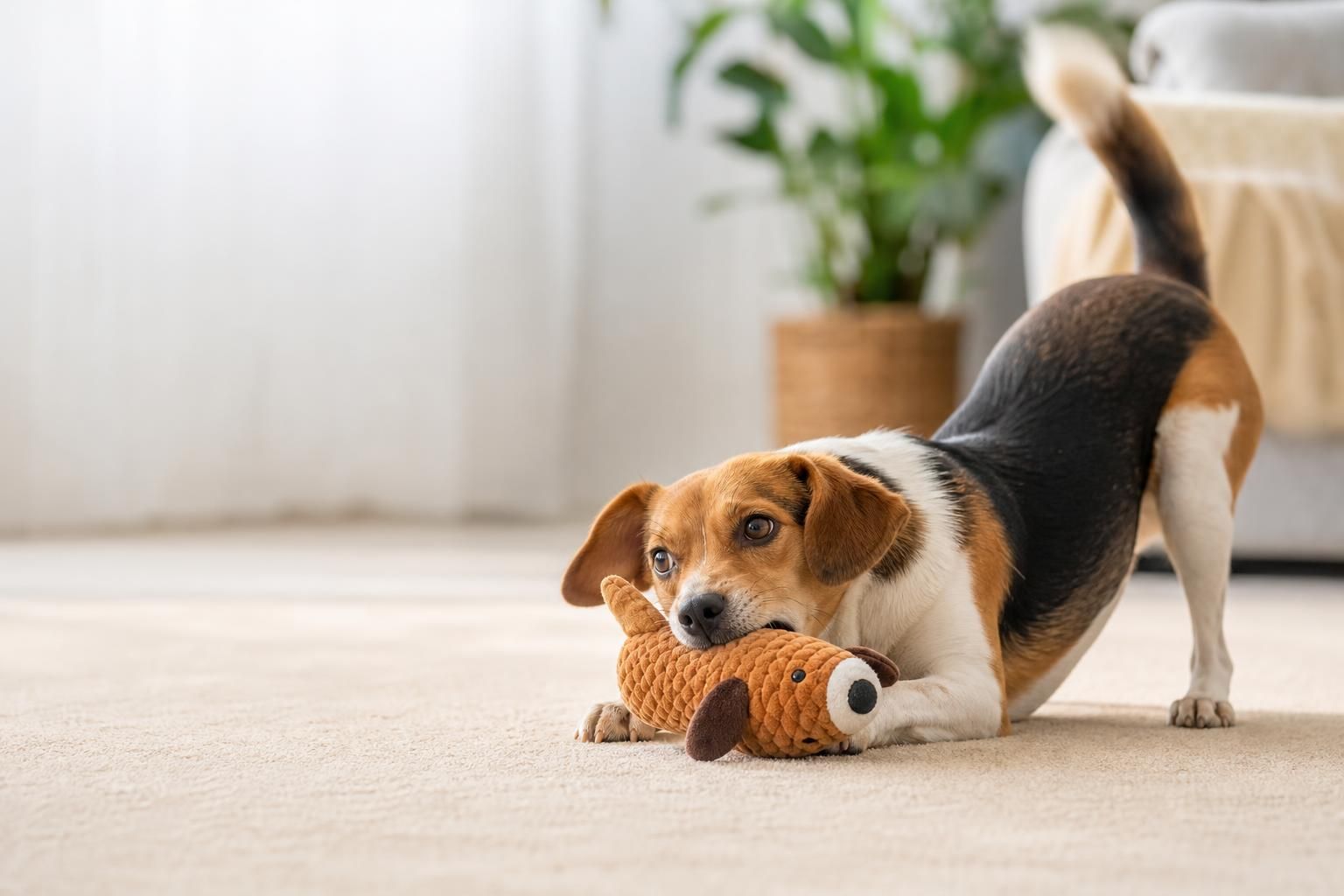
Dogs like squeaky toys because the high-pitched sound mimics the distress noises of small prey animals, which triggers an instinctive predatory response. The squeak also gives instant, repeatable feedback — bite down, hear a sound, get a tiny jolt of satisfaction — which keeps a dog engaged far longer than a silent toy. For many dogs, especially terriers and other hunting breeds, this pattern taps directly into behaviors that were once essential for survival.
Key takeaways
- The squeak mimics prey sounds, which activates a dog's natural hunting instinct (search, chase, bite, "kill").
- Instant auditory feedback reinforces the behavior loop, making squeaky toys more engaging than silent ones.
- Supervise squeaky toy play and retire any toy once the squeaker or stuffing becomes exposed, since both are choking hazards.
The Instinct Behind the Squeak
Domestic dogs descend from predators, and even breeds that have never hunted a day in their lives still carry pieces of that behavioral sequence: scan, stalk, chase, grab, shake, "kill." A squeaky toy short-circuits straight to the final steps. The sound resembles the yelp or squeal of a small rodent or bird, and that auditory cue is often enough to trigger a dog to pounce, bite down repeatedly, and shake the toy — the same motion wild canids use to dispatch prey.
This is why breeds historically used for hunting or vermin control — terriers, dachshunds, and many sporting breeds — tend to go especially wild for squeaky toys. The American Kennel Club notes that terrier breeds in particular were developed to locate and kill small prey, and that drive doesn't disappear just because the "prey" is now made of fleece.
Why the Sound Itself Is So Rewarding
It isn't just the resemblance to prey — the mechanics of the squeak matter too. Every bite produces an immediate, predictable sound. That instant cause-and-effect is a powerful reinforcer in dog learning: the dog doesn't have to wait or guess, it bites and gets a result every single time. Behaviorally, this is similar to how a clicker works in training, except the dog is triggering its own reward on demand.
For dogs with high energy or strong play drive, that immediate feedback loop can turn a two-minute toy session into twenty minutes of focused engagement. It's also why a squeaky toy often outlasts a plush toy with no noise as the household favorite, even if the plush toy is objectively softer or better made.
Is It About the Toy, or About You?
Some of the appeal is also social. Dogs are highly attuned to the reactions of the people around them, and a squeak often gets a laugh, a "get it!", or renewed attention from an owner. If a dog has learned that squeaking the toy makes a person engage with them, that interaction becomes part of the reward — not just the sound itself. This is one reason squeaky toys tend to work well for interactive play and short training breaks, not just solo chewing.
When Squeaky Toys Aren't a Good Fit
Squeaky toys aren't right for every dog or every moment:
- Resource-guarding dogs can become more possessive over a toy that "rewards" aggressive biting and shaking, so supervise multi-dog households closely during play.
- Noise-sensitive dogs (and noise-sensitive cats in the house) may find repeated squeaking stressful rather than fun.
- Aggressive chewers can destroy a squeaker and swallow the small plastic bulb or exposed stuffing within minutes. If your dog tends to tear through toys quickly, a tougher, more chew-resistant design is usually the safer choice — see our guide to sturdier options for dogs that destroy everything for what to look for.
- Puppies teething may prefer squeaky toys for the sensory feedback, but should still be supervised, since teething pressure can crack a squeaker casing faster than expected.
The ASPCA recommends rotating toy types and checking them regularly for wear, which is a simple habit that catches a cracked squeaker or exposed stuffing before it becomes a hazard.
How to Pick a Safer Squeaky Toy
A few practical checks before buying:
- Squeaker placement — a squeaker sewn deep inside multiple fabric layers is harder for a dog to extract than one sitting just under a single thin layer.
- Seam strength — double-stitched seams hold up better to the shake-and-tear motion squeaky toys invite.
- Size match — a toy too small for your dog's mouth is easier to swallow whole; always size up for large or strong-jawed breeds.
- Supervision level needed — reserve the squeakiest, most exciting toys for active play sessions rather than leaving them in a crate overnight.
At Ziva Paws, Ai and Dudu — our two resident cats — test toys before they're listed, and even though they're cats rather than dogs, the same wear-and-tear checks apply: does the seam hold up, does the squeaker stay buried, does the toy survive repeated shaking and chewing. You can see the current lineup of squeaky and interactive toys if you're shopping for one.
Matching Play Style to Personality
Not every dog is wired the same way. Some dogs barely register a squeaky toy and prefer tug, fetch, or puzzle-style enrichment instead. Others will ignore every other toy in the house in favor of the one that squeaks. Watching how your dog actually engages — pouncing and shaking versus carrying it around proudly versus ignoring it entirely — tells you more about what kind of enrichment they need than any general rule about squeaky toys.
Dogs recovering from illness, surgery, or low appetite sometimes lose interest in toys altogether, which is worth noting separately from normal play preferences. If a normally toy-obsessed dog suddenly stops engaging with anything, it's often tied to how they're feeling overall rather than the toy itself — our article on why some dogs stop wanting to eat covers a related pattern where appetite and general engagement drop together.
Frequently Asked Questions
Q: Why does my dog get so obsessed with one specific squeaky toy?
Dogs often fixate on the toy that produces the most satisfying sound or texture combination for their particular bite style. Once a toy becomes the reliable source of that feedback, dogs tend to keep returning to it over newer options.
Q: Is it bad for dogs to play with squeaky toys all the time?
Occasional, supervised squeaky toy play is fine for most dogs. The main risks are a dog destroying the toy and swallowing the squeaker or stuffing, so regular inspection and retiring worn toys matters more than limiting playtime itself.
Q: Why does my dog try to destroy the squeaky toy instead of just playing with it?
Shaking and tearing mimics the instinctive "kill" motion used on real prey, and many dogs are driven to get to the sound source itself. This is more common in breeds bred for hunting small animals.
Q: Do cats respond to squeaky toys the same way dogs do?
Cats can respond to squeaky sounds too, since the pitch resembles small rodent or bird noises, but cats generally prefer toys that also move erratically, like teaser wands or battery-powered mice, over sound alone.
Q: What should I do if my dog destroys squeaky toys within minutes?
Switch to a toy built for heavy chewers, with reinforced seams and a squeaker buried deep inside multiple layers, and always supervise play until you know how quickly your dog can get through a new toy.