Best Cooling Mat for Dogs: How to Choose the Right One
Key takeaway
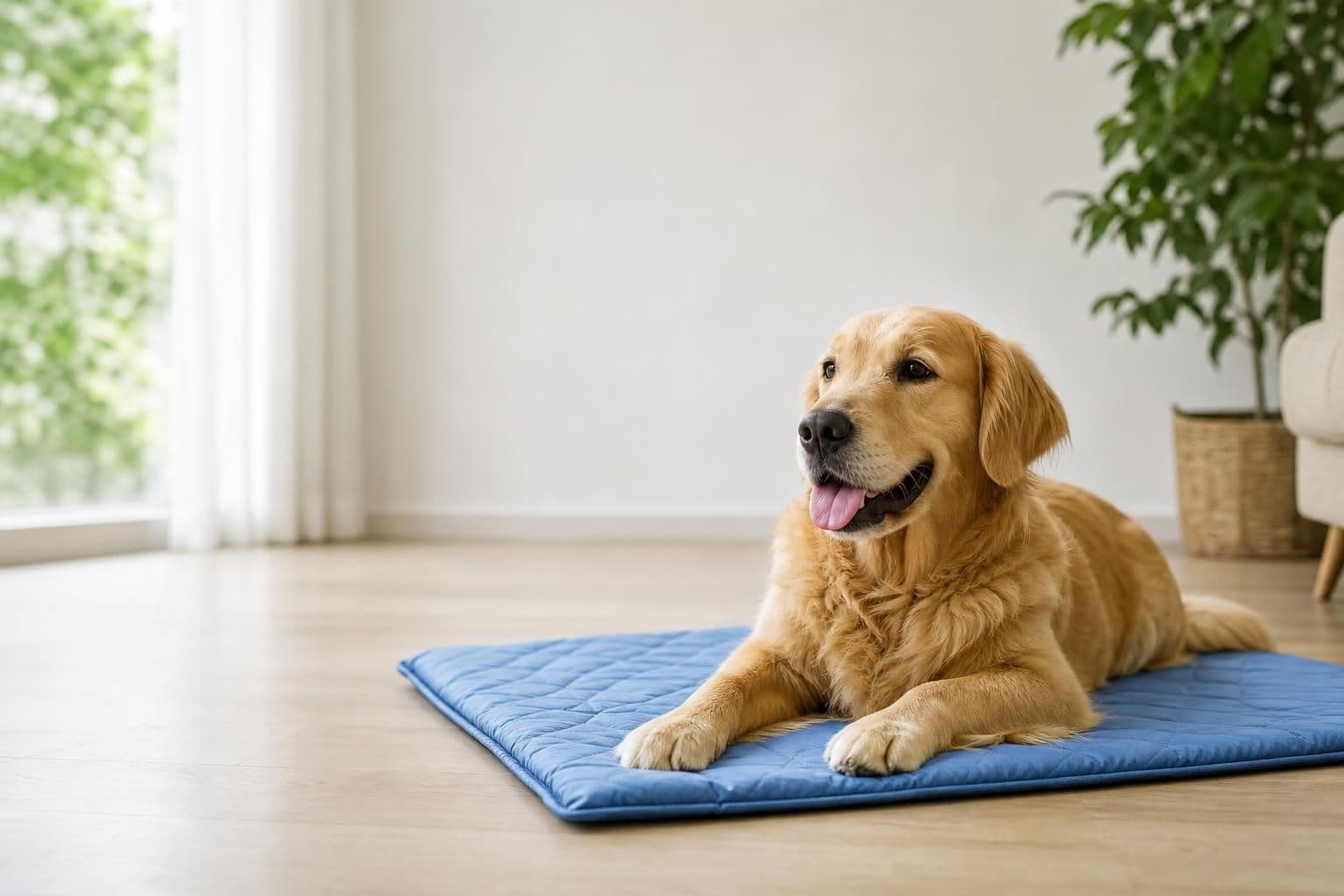
The best cooling mat for dogs is a pressure-activated gel mat sized to let your dog lie fully stretched out, since these work without electricity or refrigeration and stay cool through direct contact rather than evaporation. For dogs that chew or dig, a reinforced or water-filled mat with a puncture-resistant cover is the safer pick. The right choice depends mostly on your dog's size, chewing habits, and whether the mat will live indoors or outside.
Key takeaways
- Pressure-activated gel mats cool on contact and need no freezer or power source, but can be punctured by heavy chewers.
- Size the mat so your dog can lie fully stretched out, not curled up — a mat that's too small won't cool enough surface area to matter.
- Check the mat's temperature range and avoid leaving it in direct sun for hours, since some gel fillings can degrade or leak in high heat.
How cooling mats actually work
Most dog cooling mats use one of three mechanisms: pressure-activated gel, water or ice inserts, or evaporative fabric. Gel mats contain a non-toxic cooling gel that absorbs body heat the moment your dog lies down, then slowly releases that heat into the air so the surface resets after 15–20 minutes of rest. Water-filled mats work similarly but need to be filled before first use and can be chilled in the fridge for a stronger effect. Evaporative mats rely on a damp inner layer and wick moisture to the surface, cooling through evaporation the same way sweat cools skin — these need occasional re-wetting but hold up better to sunlight.
None of these mats actively refrigerate; they only draw heat away faster than a regular bed would. According to the American Veterinary Medical Association, dogs cool themselves primarily through panting and limited sweating through their paw pads, so a cooling mat is a supplement to shade and water, not a replacement for them.
Types compared
| Type | How it cools | Best for | Watch out for |
|---|---|---|---|
| Pressure-activated gel | Absorbs heat on contact | Indoor dogs, crates, car rides | Can puncture under heavy chewing |
| Water/ice-fillable | Chilled water inside a sealed pad | Dogs who like a stronger chill | Needs refilling; heavier to move |
| Evaporative fabric | Damp layer wicks heat away | Outdoor use, patios, kennels | Needs re-wetting; less cold than gel |
| Raised mesh cot | Improves airflow underneath | Hot climates, elevated porches | Doesn't actively cool, just ventilates |
Choosing the right size
A cooling mat that's too small will only cover a dog's belly or chest, leaving the rest of the body exposed to a warm floor. Measure your dog from nose to base of tail and across the widest part of the body while lying down, then pick a mat with a few extra inches on each side so they can stretch out fully. This is the same reasoning behind inch-based sizing for dog apparel — a label like "medium" tells you almost nothing about how a specific mat or garment will actually fit your dog's frame. If you're also shopping for warm-weather layers, the sizing breakdown in our cooling vest guide walks through how to measure chest and neck accurately.
Safety basics before you buy
- Check the filling material. Reputable gel mats use a non-toxic cooling gel, but it's still worth confirming the cover is sealed and chew-resistant if your dog is a known chewer.
- Avoid direct, prolonged sun exposure. Heat can cause some gel fillings to expand or degrade faster; move the mat to shade during peak afternoon hours.
- Watch for overheating signs even with a mat in use. The CDC's guidance on extreme heat notes that panting, drooling, and lethargy are early warning signs of heat stress in animals, and a cooling mat alone won't prevent heatstroke if a dog is left in a hot car or without water.
- Introduce it gradually. Some dogs are startled by the initial cool sensation; letting them sniff and step on the mat first helps them accept it faster.
Indoor vs. outdoor use
Indoor mats can be thinner and lighter since they're protected from weather, while outdoor mats benefit from a reinforced, water-resistant cover that won't degrade from sun or rain. If the mat will sit on a patio or in a yard, look for UV-stable materials and a cover that can be wiped down, since dirt and fur buildup reduce how well the surface conducts heat away from your dog's body.
What our cats taught us about testing cooling products
Dogs aren't the only pets that overheat — cats do too, just more quietly. When Ziva Paws tested cooling-adjacent products, our resident cats Ai and Dudu made it clear that texture matters as much as temperature: a mat with a crinkly or slick surface got avoided entirely, while a softer woven cover got used daily. The same logic applies to dogs — a mat that feels unpleasant underfoot won't get used no matter how well it cools. For pets who prefer airflow over direct contact cooling, a breathable elevated bed from the home and bedding collection can work alongside or instead of a gel mat.
Maintenance and lifespan
Most cooling mats lose effectiveness if the surface stays dirty, since fur and oils insulate the gel layer and slow heat transfer. Wipe gel and evaporative mats down weekly with a damp cloth, and check water-filled mats periodically for leaks at the seams. A reusable mat should last multiple warm seasons if it's stored flat and kept out of direct sun when not in use.
When a mat isn't enough
For dogs with heavy coats, brachycephalic breeds, or senior dogs with mobility issues, a cooling mat should be one part of a broader heat-management routine that includes fresh water, shade, and limiting outdoor activity during peak heat. Pairing a mat with proper hydration habits matters more than people expect — our guide on choosing a travel water bottle for dogs covers how to keep water accessible on walks when overheating risk is highest.
Frequently Asked Questions
Q: How long does a dog cooling mat stay cold?
Most pressure-activated gel mats stay noticeably cool for about 15–20 minutes of continuous contact before needing a short rest period to "recharge." They don't need a freezer — simply having your dog get off the mat for a few minutes restores the cooling effect.
Q: Are cooling mats safe for puppies?
Cooling mats are generally safe for puppies, but puppies are more likely to chew through a gel-filled mat, so a reinforced or water-filled option with a thicker cover is usually the safer choice until chewing habits settle.
Q: Can I put a cooling mat in the freezer?
Only water-filled mats designed for refrigeration should be chilled, and even then the manufacturer's instructions usually call for the refrigerator rather than the freezer, since extreme cold can stiffen the material or cause leaks.
Q: Do cooling mats work for cats too?
Yes, the same gel and evaporative mechanisms work for cats, though cats often prefer a smaller mat with a softer texture — our testing with Ai and Dudu showed texture preference can matter more to cats than to dogs.
Q: How do I know if my dog is overheating despite using a cooling mat?
Heavy panting, excessive drooling, bright red gums, and lethargy are early signs of heat stress that a cooling mat won't reverse on its own; move your dog to a cooler area and offer water immediately if you notice these signs.