Best Dog Tunnel Bed for Burrowing Dogs: A Buying Guide
Key takeaway
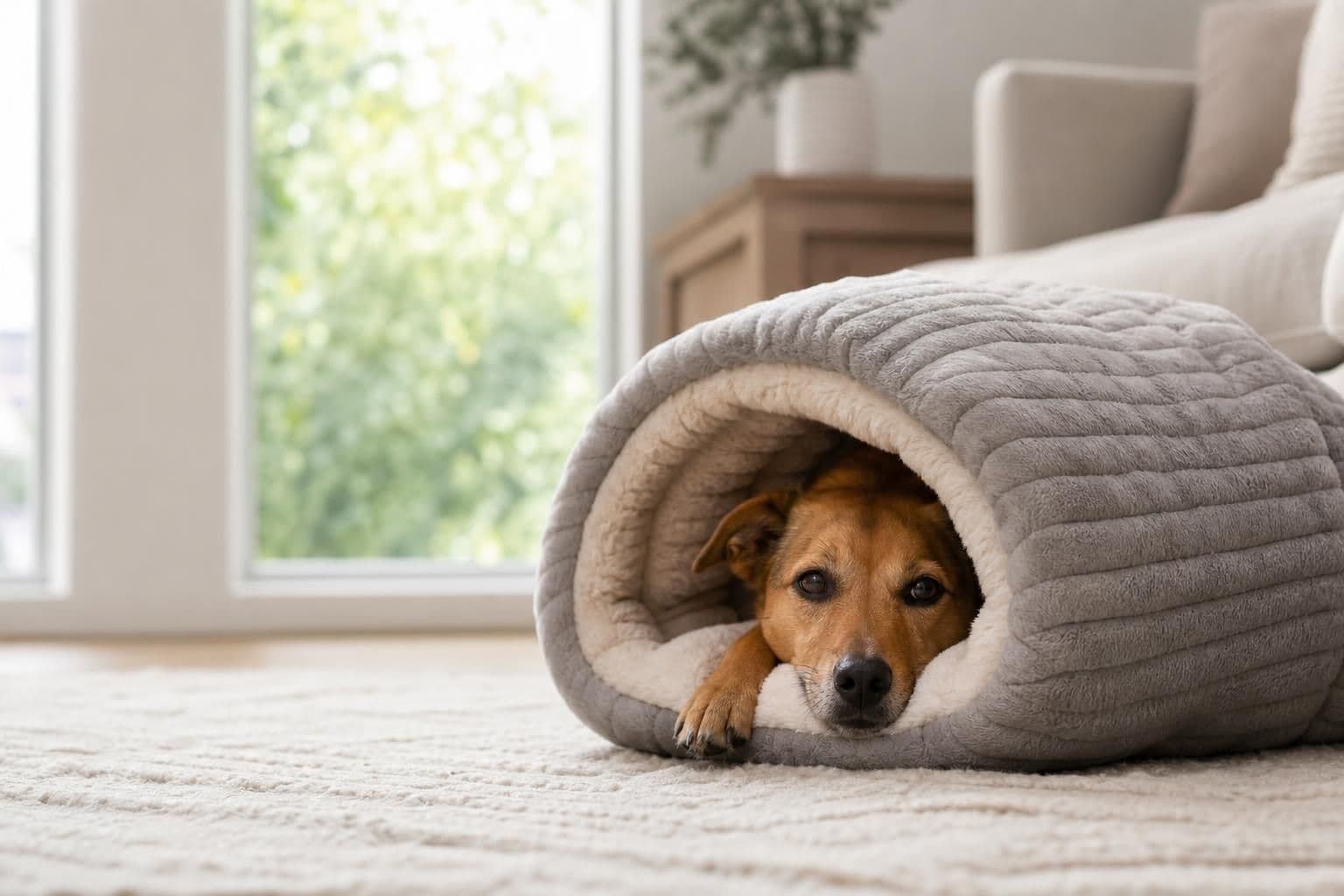
A dog tunnel bed for burrowing dogs is an enclosed, den-style bed with a covered opening that lets a dog dig, wiggle, and fully cover itself, mimicking the instinct many breeds have to nest before settling down. The best options combine a snug but not restrictive interior, breathable and washable fabric, and a wide enough entrance that the dog can enter without feeling trapped. Look for a size that lets your dog turn around and lie stretched out or curled up, since a tunnel bed that's too tight can cause overheating or reluctance to use it.
Key takeaways
- Measure your dog's length and girth before buying — a tunnel bed should allow full stretch-out, not just curling.
- Choose washable, low-pile fabric so burrowing habits don't trap odors or shed fur inside the enclosed space.
- Watch for overheating signs in warm rooms; a tunnel bed works best paired with airflow and a cool sleeping surface underneath.
Why Some Dogs Need to Burrow
Burrowing is a leftover denning instinct seen in many small and short-haired breeds, sighthounds, and anxious dogs of any size. Digging and covering up before sleep is a normal, self-soothing behavior rather than a bad habit, and it often intensifies in colder months or during stressful periods like thunderstorms or new environments. The American Kennel Club notes that nesting and digging behaviors are rooted in ancestral wolf denning patterns, where a covered space offered protection and warmth. A tunnel bed simply gives that instinct a designated, comfortable outlet instead of a shredded couch cushion or a dug-up dog bed.
What Makes a Tunnel Bed Different From a Regular Dog Bed
A standard bolster or flat mattress bed gives a dog a surface to lie on; a tunnel bed adds a hood, flap, or fully enclosed tube shape so the dog can disappear inside. Key structural differences to check before buying:
- Entrance width: should be wide enough for the dog to walk in without squeezing, but snug enough to feel secure once inside.
- Interior length: measure your dog nose-to-tail-base and add a few inches so they can stretch out fully, not just curl.
- Removable cover: burrowing dogs shed and track dirt inside the tunnel, so a machine-washable liner matters more here than on an open bed.
- Base cushioning: a thin, unsupportive floor under a heavy fabric hood can leave joints unsupported, especially for older or arthritic dogs.
If your dog already seems anxious at bedtime, it's worth reading The Best Cozy Bed for Anxious Dogs: What to Look For alongside this guide, since many of the same comfort principles — enclosed sides, soft texture, a defined "den" feel — apply to both bed types.
Sizing a Tunnel Bed Correctly
Generic small/medium/large labels are a common source of returns, because a "medium" tunnel bed from one brand can be several inches smaller than another brand's "medium." Instead, measure your dog's body length (base of neck to base of tail) and chest girth while standing, then compare those numbers to the bed's actual interior dimensions in inches, not just the size tag. This is the same reason Ziva Paws lists clothing in real inch measurements rather than S/M/L — sizing by body measurements rather than vague labels reduces guesswork and returns. If you're not sure how to take accurate measurements at home, the steps in how to measure a dog for an accurate clothes size chart work almost identically for measuring a dog against a bed's interior dimensions.
Materials and Safety Considerations
Enclosed beds trap more heat and moisture than open ones, so material choice matters more than it does for a flat mat. Look for:
- Breathable fabric on the hood or tunnel walls rather than solid vinyl or heavy faux fur, especially for dogs in warmer climates or homes without air conditioning.
- Non-toxic, low-shed fill in the base cushion — the FDA's Center for Veterinary Medicine advises checking that pet product materials don't contain small detachable parts a dog could chew and swallow.
- A washable liner or removable cover, since burrowing dogs push their nose and paws against fabric repeatedly, wearing down cheap materials faster than beds used only for lying on top.
- Non-slip base if the bed will sit on hardwood or tile, so the whole tunnel doesn't slide when the dog digs or repositions.
Ai and Dudu, the two cats who test products before they're listed at Ziva Paws, actually gravitate toward enclosed, tunnel-style beds more than open ones — it's a useful reminder that the same "hide and feel safe" instinct crosses species, even if the guide here is written for dogs.
Signs a Tunnel Bed Is the Wrong Fit
Not every dog takes to a fully enclosed bed, and it's worth watching for a few signs before assuming the bed itself is defective:
- The dog paces around the entrance but won't go in — the opening may feel too narrow or too low.
- The dog goes in but repeatedly pants or seems restless — check room temperature and ventilation before assuming it's the bed's fault.
- The dog outgrows the tunnel within a few months — a fast-growing puppy needs a size reassessment sooner than an adult dog would.
For dogs that also chew at bedding out of boredom or anxiety rather than settling in, it's worth pairing a den-style bed with something to redirect that energy, such as the options covered in safe chew toys for aggressive chewers.
Placement and Everyday Care
Where you put the tunnel bed affects how much a dog uses it. A draft-free corner away from heating vents and direct sun keeps the temperature inside more stable, which matters since the enclosed shape already holds body heat well. Wash the removable liner on a regular schedule — weekly is a reasonable starting point for dogs that burrow daily, more often if the dog has allergies or sheds heavily. A bed that's washed regularly also holds its shape longer, since dirt and oils breaking down the fabric fibers are a common reason tunnel beds flatten out faster than expected.
Frequently Asked Questions
Q: What size tunnel bed does my dog need?
Measure your dog's body length from the base of the neck to the base of the tail and their chest girth while standing, then compare those numbers to the bed's stated interior dimensions in inches. Add a few extra inches so the dog can stretch out fully, not just curl into the smallest available space.
Q: Are tunnel beds safe for puppies?
Tunnel beds can work for puppies once they're steady on their feet and past the stage of chewing everything in reach, but supervise early use and check that fabric edges and any trim can't be pulled loose and swallowed. A puppy will also outgrow a tunnel bed faster than an adult dog, so expect to size up sooner.
Q: Why does my dog burrow under blankets instead of using an open bed?
Burrowing is a natural denning instinct tied to feeling secure and regulating body temperature, and it's especially common in short-haired, small, or anxious breeds. A tunnel bed gives that instinct a dedicated space instead of the dog dragging blankets off the couch or bed.
Q: Can a tunnel bed cause a dog to overheat?
It's possible in a warm room without airflow, since the enclosed shape naturally traps more heat than an open mat. Choose breathable fabric, place the bed away from heating vents and direct sun, and watch for excessive panting as a sign to adjust placement or bedding weight.
Q: How is a tunnel bed different from a regular covered dog bed?
Both are enclosed, but a tunnel bed typically has a straight, open-ended tube shape the dog can walk fully through or nestle inside, while a covered or hooded bed usually has one entrance and a rounded interior. The right choice often comes down to whether your dog prefers a through-passage or a single snug pocket to curl into.