How to Help an Underweight Cat Gain Weight
Key takeaway
To help an underweight cat gain weight, start with a vet visit to rule out illness, then switch to a calorie-dense food fed in smaller, more frequent meals, and track weight weekly using a kitchen scale or the same vet scale. Most healthy adult cats need roughly 20 calories per pound of body weight just to maintain weight, so gaining requires feeding above that baseline gradually. Sudden or unexplained weight loss in a cat is never something to simply feed through without a checkup, since it can signal dental pain, parasites, or a treatable medical condition.
Key takeaways
- Rule out medical causes first — unexplained weight loss in cats is a common sign of dental disease, parasites, kidney issues, or hyperthyroidism.
- Increase calories gradually with small, frequent, calorie-dense meals rather than one large portion, and weigh your cat weekly to track progress.
- Make eating easier and less stressful with a flat, wide bowl, a quiet feeding spot, and a feeding routine that reduces competition from other pets.
Why Cats Lose Weight in the First Place
Weight loss in cats usually comes from one of three buckets: not eating enough, not absorbing nutrients properly, or burning more calories than normal. Dental pain, nausea, stress, and food aversion fall into the first group. Intestinal parasites, inflammatory bowel disease, and pancreatic insufficiency fall into the second. Hyperthyroidism, diabetes, and kidney disease often cause the third, since the body burns through muscle and fat even while appetite stays normal or increases. The American Veterinary Medical Association notes that unplanned weight loss is one of the more reliable early indicators that a cat needs diagnostic bloodwork, not just a diet change.
If your cat has stopped eating altogether rather than just eating less, that's a more urgent situation — our guide on how long a cat can safely go without eating breaks down the timeline and when to treat it as an emergency.
Start With a Veterinary Checkup
Before changing anything about feeding, a vet visit should confirm there isn't an underlying illness driving the weight loss. A basic workup typically includes a physical exam, a fecal test for parasites, and bloodwork to check thyroid, kidney, and liver function. Senior cats in particular are screened for hyperthyroidism, since it's common enough in cats over ten that many vets test for it as a matter of routine. Trying to fatten up a cat with an untreated medical issue usually fails and can delay a diagnosis that matters.
If your cat seems to be eating less out of disinterest rather than inability, it's worth reading through the possible causes in why a cat might stop eating before assuming it's purely behavioral.
Feeding Strategies That Actually Add Weight
Once a vet has cleared your cat for a weight-gain plan, the mechanics are straightforward: more calories, delivered in a way the cat will actually eat.
- Switch to a calorie-dense food. Look for foods higher in fat and protein per can or cup rather than just "more food" of the same formula — a cat that's already full-feeling from bulk won't eat enough extra volume to gain weight.
- Feed smaller meals more often. Four to six small meals a day are often tolerated better than two large ones, especially for cats recovering appetite after illness.
- Warm wet food slightly. Mild warming can boost aroma and palatability, which matters more to cats than it does to dogs.
- Add toppers sparingly. A small amount of a cat-safe topper can increase both scent appeal and calorie intake, but it shouldn't replace a balanced diet.
- Avoid sudden full-switch diet changes, which can upset digestion in a cat already struggling to keep weight on.
Weigh your cat on the same schedule — once a week, same time of day — rather than daily, since daily fluctuations from water intake and litter box timing can be misleading.
Make the Feeding Environment Work in the Cat's Favor
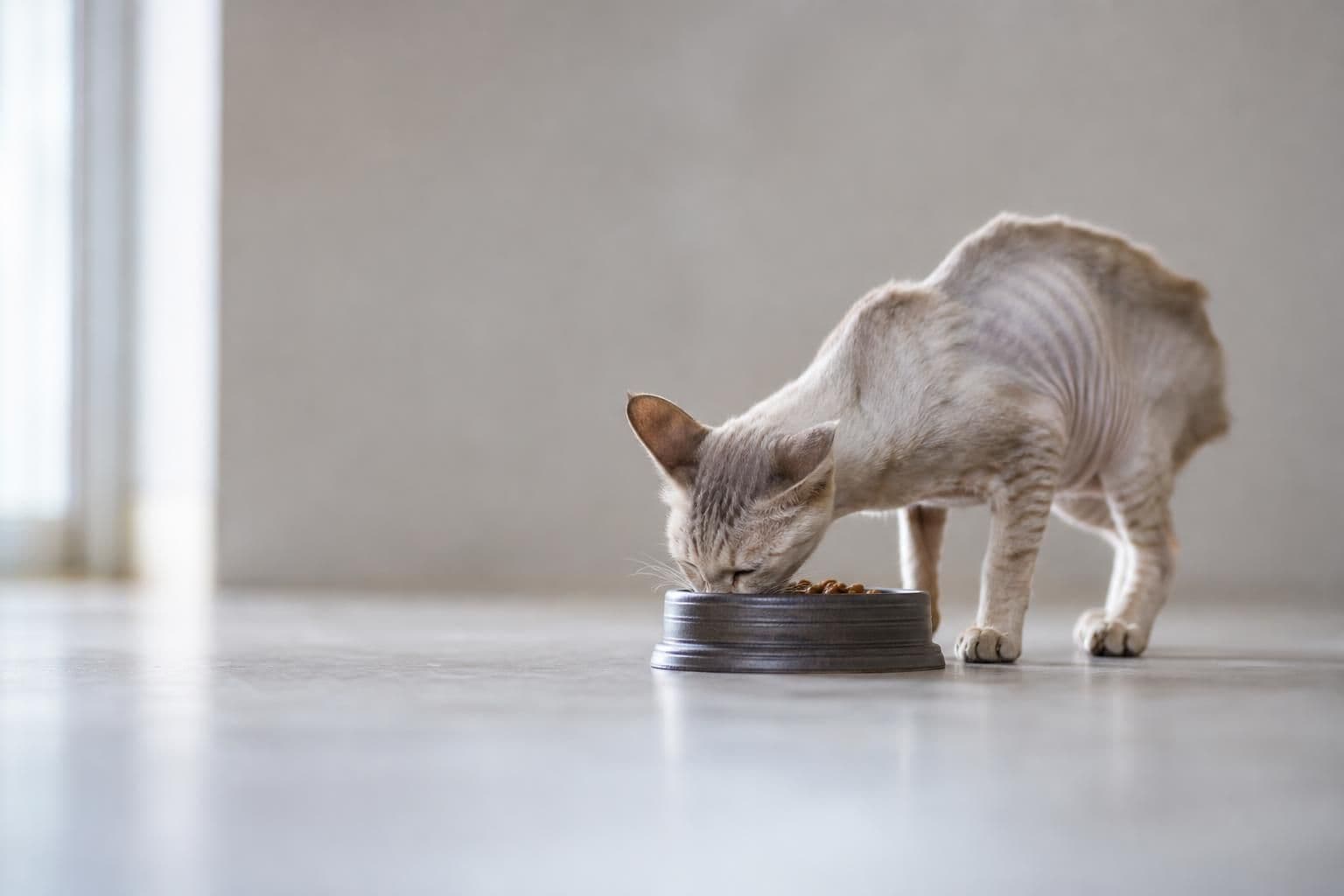
Underweight cats sometimes eat less simply because the feeding setup is working against them. Whisker fatigue from deep, narrow bowls can discourage eating, and competition with other pets can push an anxious cat away from the bowl entirely. A wide, shallow feeder reduces whisker contact with the sides of the bowl, and a dedicated, quiet feeding spot away from foot traffic or other animals' bowls helps a stressed or lower-confidence cat eat in peace. For multi-cat households where a thin cat keeps losing meals to a more dominant cat, a separate feeding station — or an automatic feeder with scheduled portions — can make sure the right cat actually gets the extra food. Ai and Dudu, the two cats who test products for Ziva Paws, eat on separate schedules precisely because one of them will otherwise finish the other's bowl, which is a useful reminder that feeding setup matters as much as the food itself. Ziva Paws' feeding collection includes slow feeders and wide stainless bowls designed around that kind of real-world mealtime competition.
Reduce Stress That Suppresses Appetite
Stress is an underrated cause of poor eating in cats, and it compounds any medical issue that's already reducing appetite. New pets, recent moves, loud households, or even a draft from a cold window can be enough to put a cat off food. A cat recovering its appetite often benefits from a warm, enclosed resting spot where it can eat and rest without feeling exposed; this is also why cats that already run lean tend to feel temperature drops more acutely, as covered in do cats get cold in winter. A cozy bed tucked in a quiet corner, away from other pets, gives a recovering cat a low-stress base to return to between small meals — something worth considering from Ziva Paws' bedding and cat furniture if your cat's current bed is exposed or drafty.
When to Call the Vet Again
Go back to the vet, rather than waiting out the feeding plan, if any of the following show up:
- Weight hasn't budged after two to three weeks of consistent increased feeding
- Vomiting, diarrhea, or lethargy appear alongside the weight loss
- The cat is drinking noticeably more water or urinating more often
- Ribs, spine, or hip bones become more visible rather than less
Rapid or ongoing weight loss in a cat older than ten is worth rechecking promptly, since conditions like hyperthyroidism and kidney disease progress and are far easier to manage when caught early, according to guidance from the Cornell Feline Health Center.
Frequently Asked Questions
Q: How much weight should an underweight cat gain per week?
A gradual gain of about 1–2% of body weight per week is a reasonable target for most cats, which works out to a few ounces for an average-sized cat. Faster gains are possible but should be guided by a vet, since rapid refeeding in a severely underweight cat carries its own risks.
Q: What foods help a cat gain weight fastest?
Calorie-dense wet foods with higher fat and protein content, fed in small frequent portions, tend to work better than simply increasing the volume of a cat's existing food. A vet can recommend a specific recovery or weight-gain formula if the cat needs more support than a diet switch alone.
Q: Is it normal for a cat to be a little underweight with no other symptoms?
Some cats run naturally lean with no underlying problem, especially active or younger cats, but any noticeable weight loss over time from a cat's normal baseline should still be checked rather than assumed to be normal. A vet can compare current weight to past records to tell the difference.
Q: Can stress alone cause a cat to lose significant weight?
Yes — chronic stress can suppress appetite enough to cause real weight loss over weeks or months, even without an underlying illness. Addressing the stressor, such as conflict with another pet or a disrupted routine, often restores normal eating once the cat feels secure again.
Q: Should I free-feed an underweight cat to encourage more eating?
Free-feeding can help some cats eat more throughout the day, but it makes it hard to track exactly how much food is going in and can mask a continued decline in appetite. Scheduled smaller meals with a visible log of intake usually make it easier to catch problems early and adjust the plan.