How to Introduce a Kitten to an Older Cat
Key takeaway
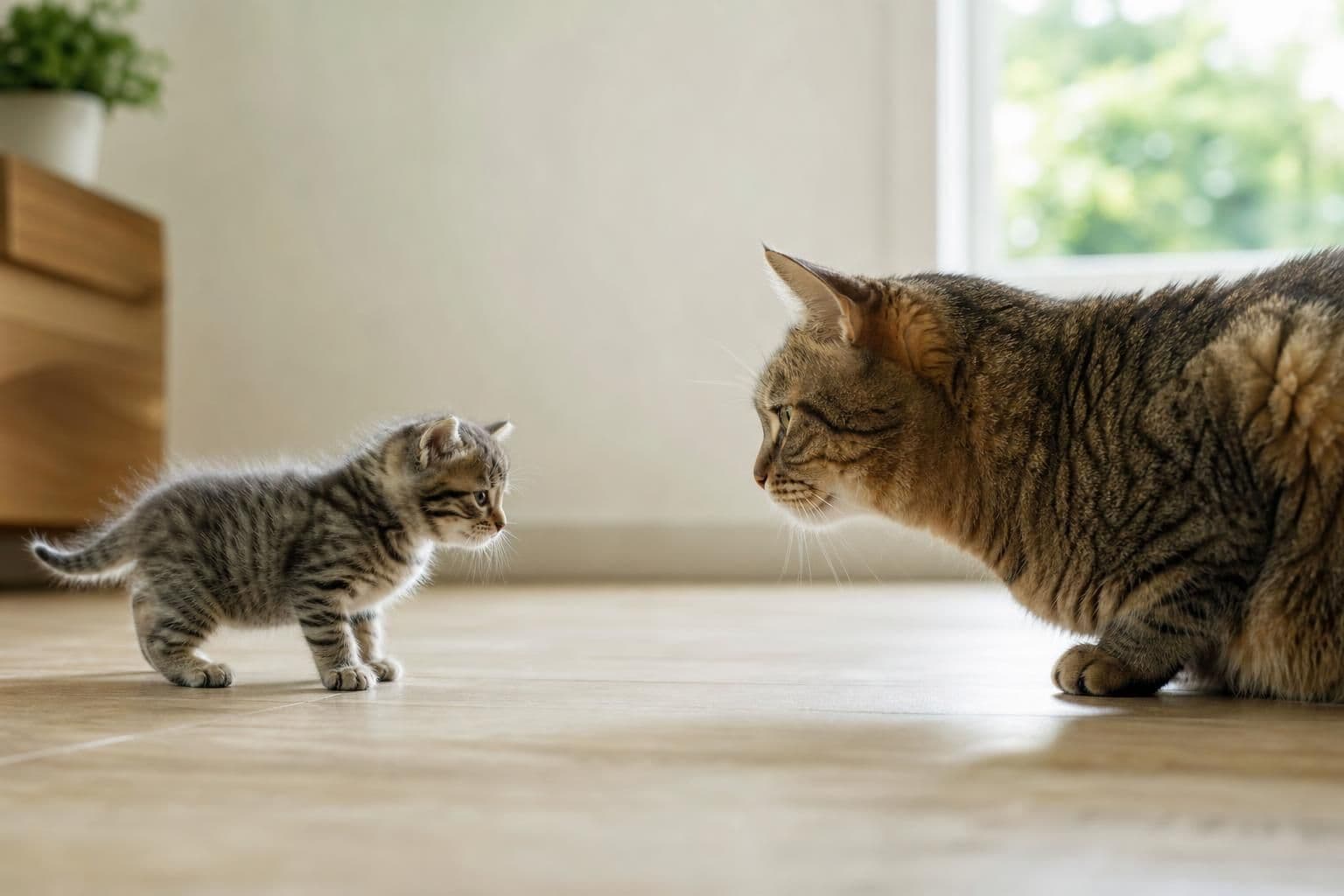
Introduce a kitten to an older cat gradually, over one to three weeks, using scent swapping, a closed door, and short supervised visits rather than a face-to-face meeting on day one. The goal is to let the resident cat get used to a new smell and sound before a new body shows up in its territory. Rushing this process is the single biggest reason introductions fail and turn into long-term hissing matches.
Key takeaways
- Keep the kitten in a separate room with its own food, water, and litter box for at least 3-5 days before any visual contact.
- Swap scented bedding or towels between the two cats daily so each one learns the other's smell before meeting face to face.
- Watch for slow blinks and relaxed tails as progress signs; hissing or flattened ears means you should slow down, not push through.
Why the First Few Days Matter
An older cat's reaction to a kitten is less about personality and more about territory. Cats are scent-based animals, and a resident cat that suddenly smells an unfamiliar animal throughout its home — on the floor, the furniture, even its own food bowl — can go on the defensive fast. The Cornell Feline Health Center notes that slow, controlled introductions reduce the stress hormones associated with prolonged conflict between housemates, which is why rushing a meeting tends to backfire.
Setting the kitten up in its own closed-off room for the first several days isn't about punishment — it gives the older cat time to investigate smells under the door at its own pace while the kitten adjusts to a smaller, safer space.
Step-by-Step Introduction Process
A gradual process generally moves through these stages, each lasting a few days to a week depending on how both cats react:
- Separate spaces first. Keep the kitten in one room with its own litter box, food, water, and a few toys for 3-5 days minimum.
- Scent swapping. Rub a soft cloth on each cat and place it near the other's food bowl, or swap bedding between rooms daily.
- Feed near the shared door. Place food bowls on either side of the closed door so both cats associate the other's presence with something positive.
- Visual introduction through a barrier. Use a cracked door, baby gate, or screen door so the cats can see each other without direct contact.
- Short supervised meetings. Once both cats are calm at the barrier, allow brief, supervised time in the same room, then separate them again.
- Gradually increase time together. Extend sessions over one to two weeks as both cats show consistently relaxed behavior.
This same scent-first, barrier-then-contact approach is the basis of most cat-to-cat introductions, not just kitten pairings — the full walkthrough for introducing two adult cats covers the same mechanics in more depth if the older cat has a history of being territorial.
Setting Up Separate Resources
Resource competition is one of the fastest ways to undo progress. Each cat needs its own food and water station, its own litter box, and ideally its own resting spot during the adjustment period — sharing too soon can trigger guarding behavior even between cats that otherwise get along. The general guideline from the ASPCA is one litter box per cat plus one extra, which matters even more during an introduction when territory feels unsettled.
Separate, clearly defined feeding stations also help prevent food-guarding between a confident kitten and a more cautious senior cat; slow feeder bowls or individually placed stainless bowls in the feeding collection can keep mealtimes calmer by giving each cat its own clearly separated space to eat without crowding.
Reading Body Language During Meetings
Cats communicate tension long before a fight breaks out, and catching the early signs lets you intervene before a bad memory forms.
- Good signs: slow blinking, relaxed tail held upright, ears forward, curious sniffing from a distance.
- Caution signs: flattened ears, puffed tail, low growling, or freezing in place.
- Stop and separate immediately if: hissing escalates, a cat swats with claws out, or either cat tries to flee and can't.
An older cat that goes quiet and stops eating during this period is also worth watching closely — stress-related appetite loss is common enough during introductions that it's worth comparing notes with what else can cause a cat to stop eating if the behavior lasts more than a day.
What to Do If There's Tension
If a meeting goes badly, go back a step rather than pushing forward. Return to scent swapping and door-feeding for a few more days before trying another visual introduction. Giving the older cat vertical space — a cat tree, window perch, or elevated shelf — also helps, since height gives a stressed cat a way to observe the newcomer from a safe distance rather than feeling cornered. A quiet hideaway bed tucked in a low-traffic room, like the enclosed nests and hammocks in the home and bedding collection, gives either cat a retreat spot that isn't contested territory. When Ai and Dudu test enclosed beds and hammocks before they're listed, the main thing they're checking is whether a nervous cat can tuck in and feel hidden rather than exposed — that same instinct to retreat is exactly what an unsettled older cat needs an outlet for.
Persistent nighttime vocalizing from either cat during this adjustment is also common and usually settles once the pecking order feels stable; if it continues, common reasons cats meow at night is worth a look alongside the introduction timeline.
How Long Does the Whole Process Usually Take
Most introductions take between one and three weeks to reach calm coexistence, though some pairs settle in days and others take a couple of months. Age gaps matter: a kitten's bouncy energy can overwhelm a senior cat faster than it would a younger adult, so sessions with an older resident cat should stay shorter and end before the kitten gets overstimulated. According to the Humane Society, full acceptance between cats can take anywhere from a few days to several months, and that range is normal rather than a sign something is wrong.
Frequently Asked Questions
Q: How long should I keep a kitten separated from an older cat?
Keep them fully separated for at least 3-5 days so each cat adjusts to the other's scent before any visual contact. Extend this if the older cat seems unusually anxious or avoids the shared door entirely.
Q: Is hissing normal when introducing a kitten to an older cat?
Occasional hissing is a normal warning signal, not necessarily aggression — it tells the kitten to back off and give space. Repeated hissing with flattened ears or swatting means you should slow the process down and return to barrier introductions.
Q: Can an older cat ever fully bond with a kitten?
Yes, most pairs reach calm coexistence or genuine companionship within a few weeks to a couple of months. Personality, prior experience with other cats, and how gradual the introduction was all affect the outcome.
Q: Should I let them fight it out to establish dominance?
No, allowing cats to "fight it out" risks injury and creates lasting fear or aggression between them. Managed, gradual introductions with separation when needed lead to far better long-term relationships.
Q: Do kittens and older cats need separate litter boxes permanently?
Not necessarily forever, but each cat should have its own box during the introduction period and ideally after, following the one-per-cat-plus-one guideline. Sharing too early can cause litter box avoidance in either cat.