How to Stop a Dog From Chewing Shoes: 7 Fixes That Work
Key takeaway
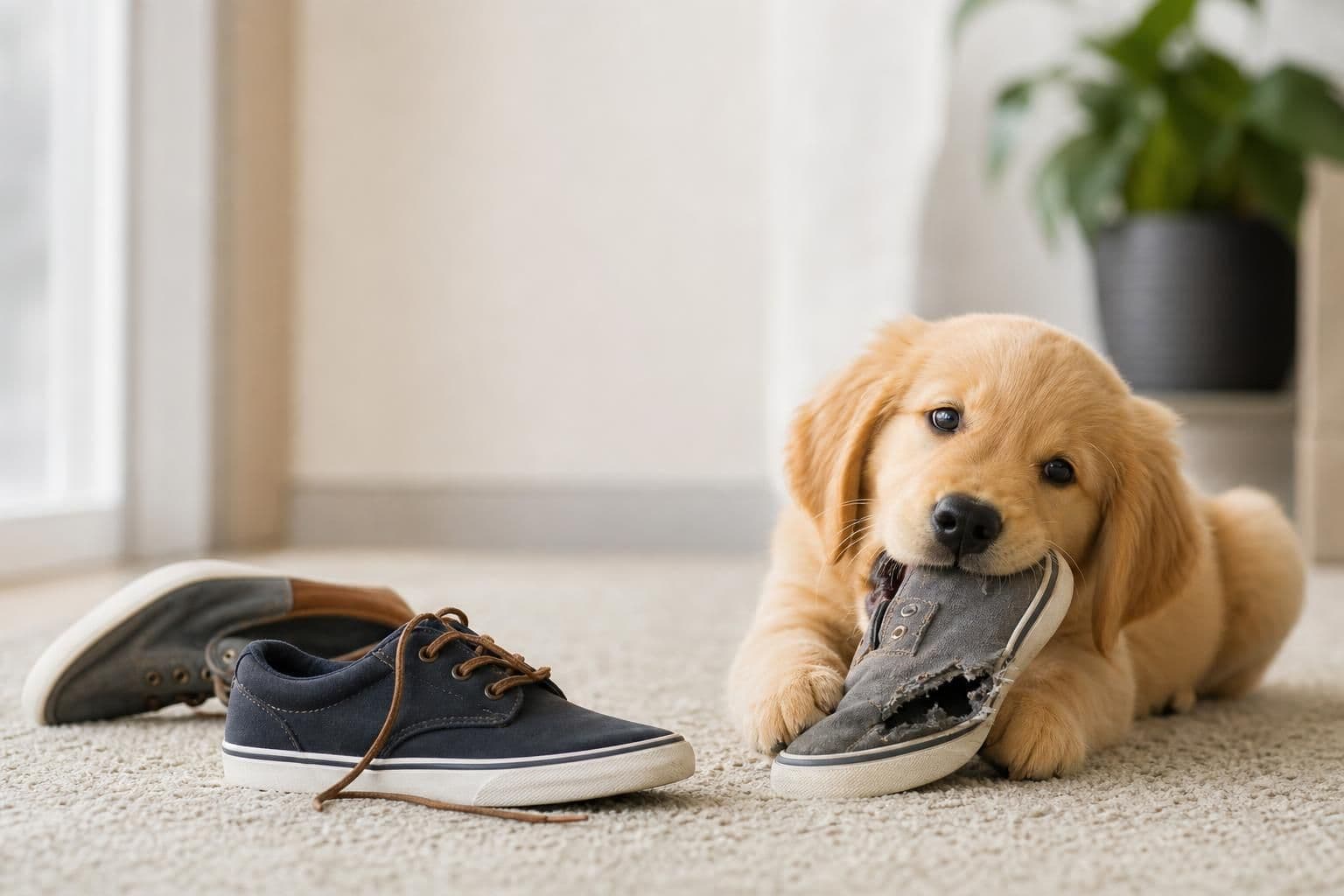
To stop a dog from chewing shoes, remove access to shoes, redirect the behavior onto an appropriately textured chew toy the moment you catch them starting, and address the underlying cause — teething, boredom, or anxiety — with more exercise, mental enrichment, or vet guidance. Consistency matters more than any single product: a dog that occasionally gets away with chewing a shoe will keep testing the boundary. Most cases improve within a few weeks once access and redirection are handled together.
Key takeaways
- Store shoes behind closed doors or in bins — out of reach beats out of sight.
- Redirect immediately to a same-texture chew toy instead of scolding after the fact.
- Persistent chewing despite training often signals boredom, anxiety, or a teething phase that needs its own fix.
Why dogs chew shoes in the first place
Shoes carry your scent concentrated in one spot, which makes them uniquely appealing to a dog's nose. Puppies chew heavily during teething, which the American Veterinary Medical Association notes typically runs from around three to six months old as adult teeth come in. Adult dogs chew for different reasons: leftover puppy habits, boredom, separation anxiety, or simply because a shoe is the most interesting texture within reach.
Knowing which category your dog falls into changes the fix. A four-month-old puppy gnawing on a loafer needs teething relief. A bored adult left alone for nine hours needs enrichment. An anxious dog destroying items near the door when you leave needs a calmer routine and possibly professional support.
Step 1: Make shoes physically unavailable
The fastest fix is also the simplest: dogs can't chew what they can't reach. Put shoes in a closet with a door that latches, a lidded bin, or a shelf above nose height. This isn't a lifetime solution, but it stops the damage while you work on training underneath it.
- Store shoes in a closed closet or bin, not an open rack
- Keep a "shoe-free zone" near the entryway during the training period
- Ask household members and guests to push shoes in, not just kick them off
Step 2: Redirect to the right texture, not just any toy
A soft plush toy rarely satisfies a dog that wants to chew leather or rubber — the texture doesn't match the itch. Look for a toy with some give and resistance, closer to what a shoe feels like, so the redirection actually competes for interest. The moment you see your dog sniffing or mouthing a shoe, calmly swap it for the toy and praise them the second they engage with it.
Timing is everything here. Correcting a dog after the fact — say, when you find a chewed shoe an hour later — teaches nothing, because dogs connect consequences to actions within seconds, not hours.
Step 3: Rule out (or manage) teething
If your dog is under eight months old, teething is the most likely explanation, and no amount of training will fully override the physical urge to relieve gum discomfort. Chilled (not frozen solid) rubber chew toys can numb sore gums the way a cold washcloth does for a human toddler. This phase passes; the goal during it is damage control plus redirection, not punishment.
Step 4: Add more physical and mental exercise
A tired dog chews less because chewing is often a release valve for pent-up energy. The exact right amount varies by breed and age, but a dog getting only a five-minute yard break each day has far more restless energy to burn than one getting structured walks or play sessions. Mental work tires dogs out too — a 10-minute training session or a food puzzle can be as draining as an extra walk.
- Add one additional walk or play session to the daily routine
- Rotate toys weekly so novelty stays high
- Use food puzzles or snuffle mats during high-risk hours (like right before you leave the house)
Step 5: Check for separation-related chewing
If shoe-chewing happens almost exclusively when you're gone, and especially if it's concentrated near doors, windows, or your side of the bed, separation anxiety may be the driver rather than boredom. Signs include pacing before you leave, excessive drooling, or vocalizing right after the door closes. The ASPCA describes separation anxiety as a distinct behavioral condition that often needs gradual desensitization to departures, not just more toys.
If you suspect this, start by practicing short, low-key departures (grabbing keys and sitting back down) to decouple the "leaving cues" from actual absences, and build up slowly.
Step 6: Pick chew toys built for your dog's size and strength
A toy that's too small is a choking risk; one that's too soft won't survive a determined chewer and can shred into pieces your dog swallows. Match toy size to your dog's mouth and chewing strength rather than grabbing whatever's cheapest. This is the same reasoning behind fitting any product to a dog's actual measurements rather than a generic label — the same principle we apply when we walk owners through measuring a dog accurately for clothing, since a poor fit causes problems whether it's a toy or a jacket.
Rotate two or three toys of appropriate size and check them weekly for cracks, loose parts, or pieces that could break off.
Step 7: Build a consistent daily routine
Dogs settle faster into new habits when the schedule around them is predictable — same walk times, same feeding times, same departure routine. Unpredictability itself can raise a dog's baseline stress, which shows up as more chewing, not less. If your dog also struggles to settle at night or during thunderstorms, a supportive resting space can help; we cover what actually works in our guide to a cozy bed designed for anxious dogs.
At Ziva Paws, our own cats Ai and Dudu test chew-adjacent enrichment toys before they're listed, mainly to make sure textures and small parts hold up the way they're supposed to.
When to talk to a professional
If shoe-chewing is severe, sudden, or paired with other new behaviors like appetite changes or lethargy, it's worth ruling out a medical cause with your veterinarian before assuming it's purely behavioral. Sudden-onset destructive chewing in an older dog that never did this before is a signal worth checking rather than ignoring.
Frequently Asked Questions
Q: Why does my dog only chew shoes when I'm not home?
This pattern often points to separation-related anxiety rather than simple boredom, especially if it's paired with pacing or drooling before you leave. Gradual departure desensitization tends to help more than adding toys alone.
Q: Is it normal for puppies to chew shoes during teething?
Yes — teething typically runs from around three to six months old, and chewing helps relieve gum discomfort during this period. Chilled rubber chew toys and consistent shoe storage manage the damage until it passes.
Q: Will punishing my dog after finding a chewed shoe stop the behavior?
No. Dogs link consequences to actions within seconds, so a correction delivered after the fact doesn't connect to the chewing itself and can just add confusion or fear.
Q: What's the fastest way to protect my shoes right now?
Move shoes into a closed closet, bin, or shelf out of reach — this stops damage immediately while you work on redirection and routine changes underneath it.
Q: Can boredom alone cause shoe chewing in adult dogs?
Yes, especially in dogs with excess energy and limited enrichment. Adding an extra walk, rotating toys, or introducing food puzzles during high-risk hours often reduces the behavior noticeably within a couple of weeks.