Why Do Cats Like Enclosed Beds?
Key takeaway
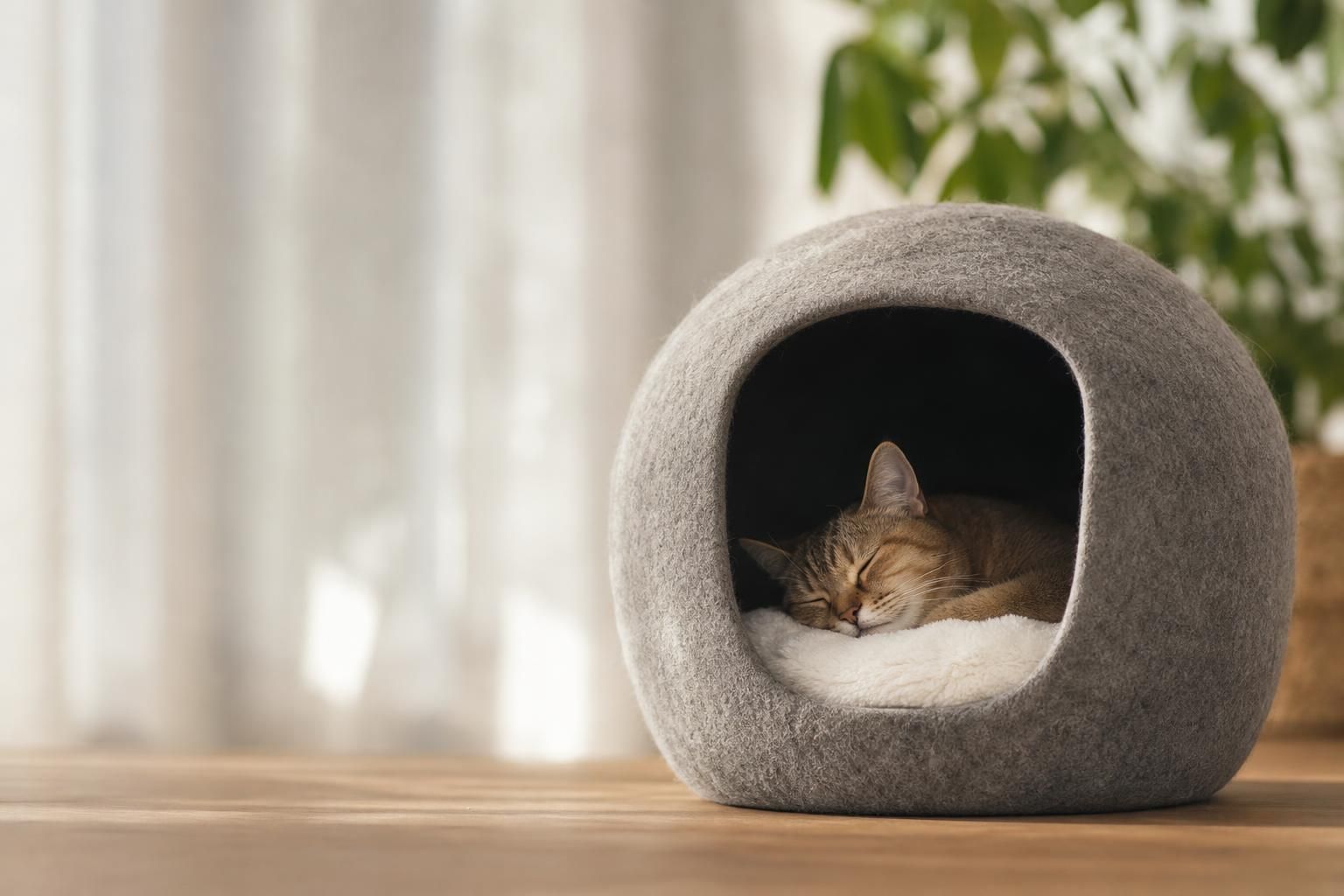
Cats like enclosed beds because the tight, covered space mimics a den, which makes them feel hidden from predators and reduces stress while they sleep. The walls also trap body heat, which matters since cats are most comfortable in warmer temperatures than most humans. On top of that, a covered bed limits visual stimulation from the rest of the room, helping an easily startled or anxious cat settle faster.
Key takeaways
- Enclosed beds satisfy a cat's instinct to sleep hidden from view, which lowers stress hormones during rest.
- The snug shape helps retain body heat, appealing to cats whose preferred resting temperature runs higher than ours.
- Pick a bed sized to your cat's curled-up body, not their standing length, so it actually feels snug rather than empty.
The Den Instinct Behind the Preference
Domestic cats descend from solitary desert ancestors that relied on small, concealed spaces to avoid larger predators and to ambush prey safely. That wiring hasn't disappeared just because a cat now lives on a couch. According to Cornell Feline Health Center, cats are both predator and prey in the wild, and this dual role drives much of their need to monitor surroundings while still feeling physically protected. An enclosed bed offers a compromise: the cat can doze while blocking exposure on three or four sides.
This is also why many cats choose boxes, bags, or the gap behind a couch over an open cushion — the structure itself is doing the emotional work, not the softness of the material.
Warmth and Body Temperature
Cats run warmer than humans, with a normal body temperature around 100.5–102.5°F, according to American Veterinary Medical Association resources on feline health norms. A bed with walls or a hood holds in radiant heat far better than a flat cushion, which is part of why cats gravitate toward hooded beds, covered nests, and even cardboard boxes in cooler rooms. If your home runs cold in winter, an enclosed bed placed away from drafts does more functional work than an open pad of the same size.
Stress Reduction and Hiding Behavior
Hiding is a well-documented coping behavior in cats, especially in multi-pet households or homes with young children, loud appliances, or frequent visitors. A cat that feels it has no safe retreat tends to stay more vigilant, which can show up as reduced appetite, overgrooming, or reluctance to use a litter box near open traffic areas. Giving a cat a covered space to retreat to — even for ten or fifteen minutes at a time — can measurably calm this vigilance, since the cat no longer has to watch every approach angle at once.
This same hiding instinct explains related behaviors owners often ask about, including why some cats paw and knead at their sleeping surface before settling in; you can read more in Why Does My Cat Scratch Her Bed?
Signs Your Cat Would Prefer an Enclosed Bed
Not every cat wants a cave-style bed, but several behaviors are strong hints:
- Regularly sleeping in boxes, bags, closets, or under furniture instead of open beds
- Startling easily at household noise or activity
- Living in a multi-cat or multi-pet home where competition for open space is common
- Seeking out small gaps even when a larger open bed is available nearby
- Preferring corners or wall-adjacent spots over the center of a room
If your cat shows two or more of these, a hooded or semi-enclosed bed is worth trying before assuming they simply dislike beds altogether.
Choosing the Right Enclosed Bed
Size matters more than style here. A cave bed that's too large stops functioning like a den and just becomes an open cushion with a flap; one that's too small won't let an adult cat turn around comfortably. Measure your cat curled up nose-to-tail rather than standing, and look for an opening just wide enough for easy entry and exit without feeling like a tunnel.
Material also affects how "enclosed" a bed feels. Soft-sided fabric nests, semi-domed hoods, and rattan-style enclosed nests each block sightlines differently, so a cat that's extremely shy may do better with a fully covered design, while a more confident cat might only need three solid sides. At Ziva Paws, the bedding and furniture collection includes hooded and nest-style options our own cats, Ai and Dudu, have slept in before the beds were listed — that hands-on test is often how we catch whether an opening is comfortably sized or a cover sheds too much warmth.
When an Open Bed Is Still the Better Choice
Enclosed beds aren't universally ideal. Senior cats with arthritis may struggle to climb into a raised or steep-sided cave, and cats that run hot or live in warm climates year-round may overheat in a fully covered design. Cats recovering from injury or surgery also often do better in open, easily monitored beds so owners can check on them without disturbing a cover. In these cases, a shallow, open bed placed in a quiet corner — rather than center of a busy room — can deliver some of the same security benefit without the heat retention or mobility issue.
Enclosed Beds vs. Other Hiding Spots
Owners sometimes wonder why a cat ignores an expensive enclosed bed in favor of a plain cardboard box. The answer usually comes down to size accuracy and smell. A box molds closely to the cat's body and carries neutral, non-synthetic scent cues, while a store-bought bed may be too roomy or still carry manufacturing odor when new. Letting a new bed air out for a day or two, and placing it in a spot the cat already frequents, usually resolves this faster than switching bed styles entirely.
Frequently Asked Questions
Q: Why do cats like enclosed beds instead of open cushions?
Enclosed beds mimic the small, hidden dens cats' wild ancestors used to avoid predators, which lowers a resting cat's need to stay visually alert. The walls also trap body heat, which most cats find comfortable since their preferred temperature range runs higher than a human's.
Q: Are enclosed beds bad for anxious cats?
No — enclosed beds often help anxious cats by giving them a retreat with limited sightlines, which reduces how much they need to monitor their surroundings. The main exception is a bed that's too small to turn around in, which can add stress rather than relieve it.
Q: What size enclosed bed does my cat need?
Measure your cat curled up, not standing, and choose a bed with an opening wide enough for easy, low-effort entry and exit. A bed that's too large loses its den-like security, and one that's too tight restricts normal repositioning during sleep.
Q: Do kittens and senior cats both like enclosed beds?
Kittens generally take to enclosed beds quickly since denning behavior starts young, but senior cats with joint stiffness may struggle with raised or steep-walled designs. For older cats, a low-entry covered bed or a shallow open bed in a quiet corner is often more practical.
Q: Can an enclosed bed get too hot for a cat?
Yes, in warm climates or heated rooms, a fully covered bed can trap more heat than a cat wants, especially for long-haired breeds. Placing the bed away from direct sun or heating vents, or choosing a semi-open design, usually solves the issue.