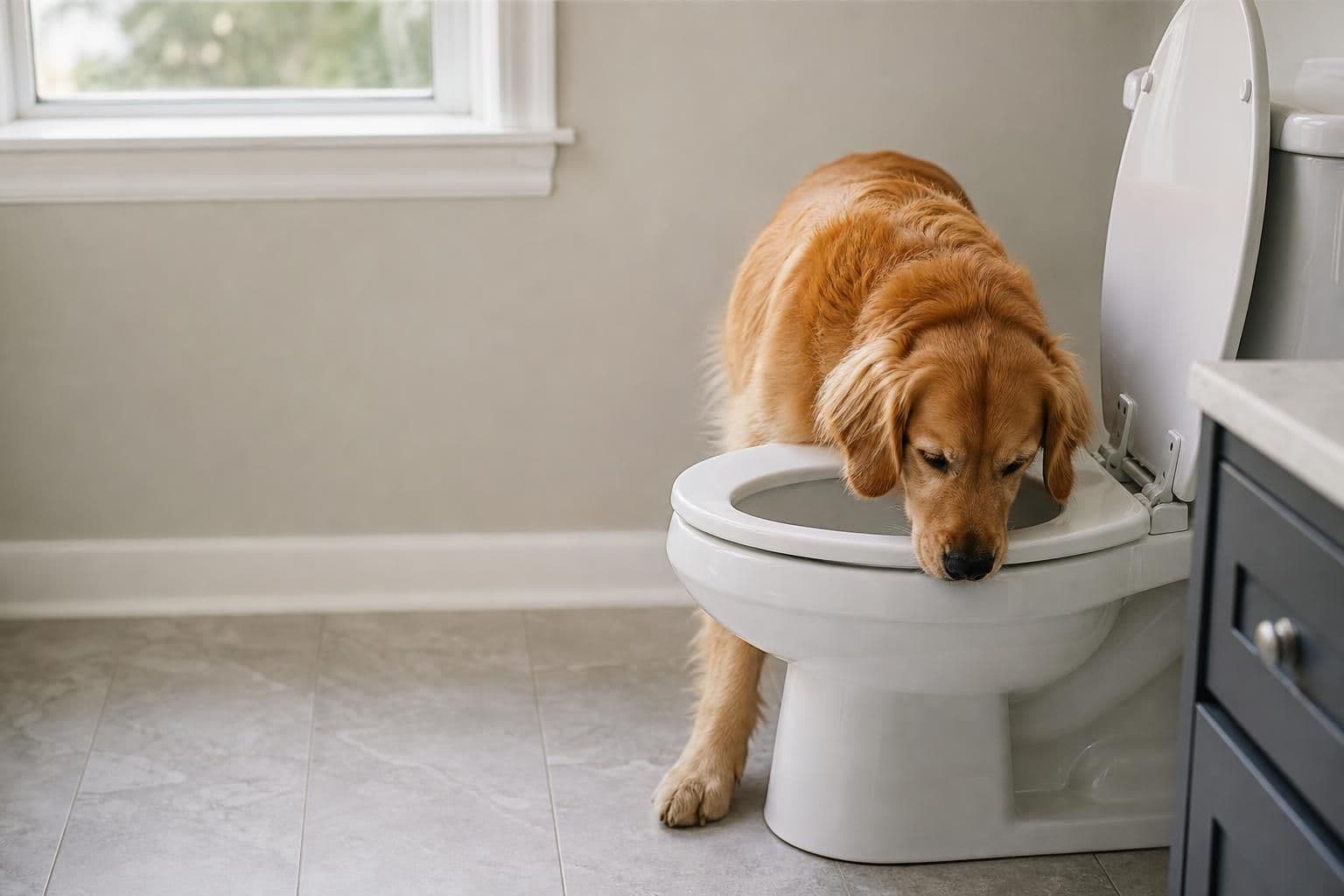
Why Does My Dog Only Drink From the Toilet?
Key takeaway
Dogs drink from the toilet mostly because the water is colder, fresher, and more oxygenated than what's sitting in a bowl, and the bowl itself may be dirty, poorly placed, or the wrong shape for comfortable drinking. It's rarely about defiance — it's usually a preference for moving or cooler water combined with an unappealing water station. Fixing the bowl setup solves the habit in most cases.
Key takeaways
- Toilet water is often cooler and less stagnant than bowl water, which is why dogs prefer it.
- Wash water bowls daily and refill with fresh water at least once or twice a day to compete with the toilet.
- A wide, shallow, whisker-friendly bowl placed away from food and foot traffic usually ends the habit.
The Real Reasons Behind Toilet-Drinking
Dogs have a strong preference for water that feels fresh, and a toilet bowl gets flushed and refilled constantly, keeping the water cooler than a bowl that's been sitting out for hours. Toilet water also tends to be still but recently replaced, which some dogs associate with cleanliness even though it isn't.
Bowl water can develop a biofilm — a thin, slimy layer of bacteria — within a day or two if it isn't washed, and dogs can smell and taste this even when it's invisible to us. A bowl that smells like plastic, old food, or soap residue is often enough to send a dog looking elsewhere. Stainless steel and ceramic bowls hold less bacterial residue than porous plastic, which is one reason many owners eventually switch materials.
Bowl Placement and Design Matter More Than People Expect
Where the water bowl sits changes how often a dog uses it. A bowl next to a noisy appliance, in a high-traffic hallway, or right beside the food bowl can feel less inviting than a quiet bathroom floor. Dogs also dislike "whisker fatigue" — the sensitivity some dogs feel when their whiskers repeatedly brush the sides of a narrow, deep bowl. A wide, shallow bowl lets a dog drink without that repeated contact.
Simple changes that often help:
- Wash the water bowl daily with dish soap, not just a rinse.
- Refill with fresh, cool water at least twice a day.
- Choose a wide, shallow bowl instead of a narrow, deep one.
- Move the bowl to a quiet, low-traffic spot away from the litter box or trash can.
- Add a second water station in another room so the dog always has an easy alternative.
If you're shopping for a better setup, a stainless slow feeder bowl or automatic dispenser keeps water circulating and cooler for longer than a static bowl, which can make it a more appealing option than the toilet.
Could It Be a Sign of Something Else?
Occasional toilet-drinking on its own is usually just preference. But if a dog suddenly drinks far more water than usual — from any source — it's worth paying attention, since increased thirst can be an early sign of conditions like kidney disease, diabetes, or Cushing's disease. The American Kennel Club notes that a noticeable jump in water intake alongside more frequent urination is a common early symptom vets look for during a checkup.
Toilet lids should also stay closed for reasons beyond hygiene: many toilet bowl cleaners and tank tablets are toxic if ingested, and the ASPCA Animal Poison Control Center lists chlorine- and bleach-based cleaners among common household hazards for pets. A dog drinking from a toilet treated with these products is at real risk, which is a strong reason to close the lid regardless of why the behavior started.
Water Temperature and Freshness Habits
Dogs, like people, tend to prefer cooler water. Studies on animal drinking behavior generally show that mammals drink more readily from cooler sources, which partly explains why toilet water — often several degrees cooler than a bowl left on a warm kitchen floor — feels more appealing. Rotating in cool, fresh water during warmer months, or adding an ice cube occasionally, can make the bowl more competitive with the toilet.
This same appeal for movement and freshness is part of why some cats also avoid still bowl water; the same logic that applies to why a cat won't use its water fountain often applies in reverse to dogs seeking the toilet instead.
Building a Routine That Sticks
Consistency matters more than any single product change. Refill and wash bowls on a fixed schedule — for example, morning and evening — so the water never gets a chance to sit long enough to smell stale. Keep the toilet lid down as a standing house rule rather than an occasional reminder, since dogs will default back to the easiest available source of fresh water.
If a dog associates the bathroom with a "better" water source specifically because it's cooler and away from a noisy kitchen, moving a water bowl into a similarly quiet spot — even a laundry room or hallway — can redirect that preference without any behavior training at all.
Frequently Asked Questions
Q: Why does my dog prefer toilet water over the bowl?
Toilet water is usually cooler and gets replaced more often than bowl water, and it's free of the biofilm that can build up in a bowl within a day or two. Moving the bowl location and washing it daily often removes the appeal.
Q: Is it dangerous for dogs to drink from the toilet?
It can be, mainly because of cleaning chemicals like bleach or automatic bowl tablets that leave residue in the water. It's safest to keep the lid closed at all times rather than assessing risk case by case.
Q: How often should I change my dog's water bowl?
Refill with fresh water at least twice a day and wash the bowl with soap daily, since bacteria and mineral residue build up quickly even if the water looks clear.
Q: Does bowl shape really affect whether a dog drinks from it?
Yes — narrow, deep bowls can cause whisker irritation in some dogs, making a wide, shallow bowl a more comfortable option that's used more consistently.
Q: Should I worry if my dog suddenly drinks a lot more water than usual?
A sudden, sustained increase in thirst is worth a vet visit, since it can be an early sign of kidney issues, diabetes, or other conditions rather than simple preference.