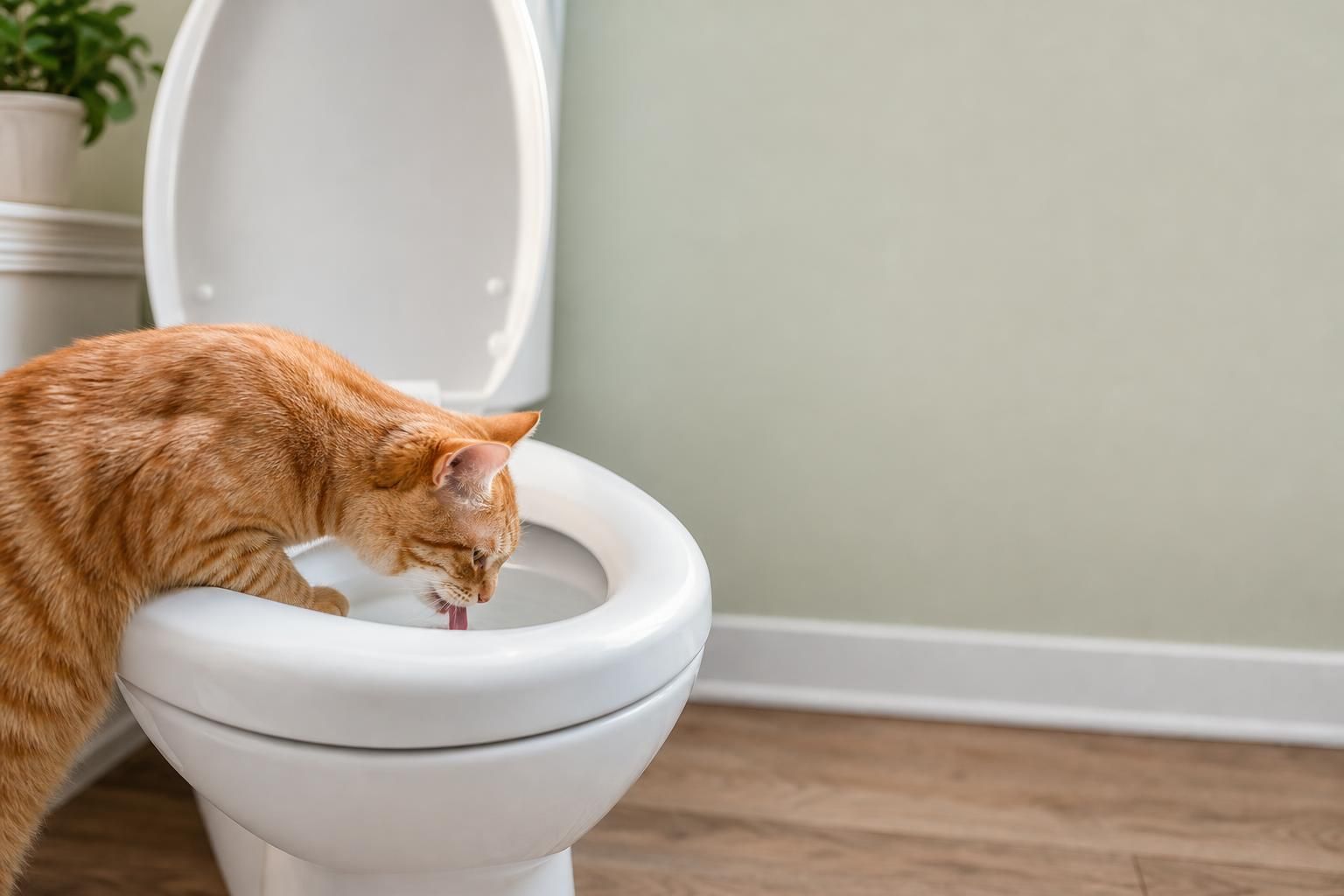
Why Does My Cat Drink From the Toilet?
Key takeaway
Cats drink from the toilet mainly because the water there is cooler, moves when the bowl is flushed, and sits in a wide open container that doesn't trap their whiskers the way a narrow food-and-water bowl can. It's rarely about preferring "dirty" water — it's about temperature, freshness, and bowl shape. The fix is usually simple: give your cat a better water source somewhere else, and the toilet habit typically fades on its own.
Key takeaways
- Cats are drawn to the toilet for cool, fresh-tasting, moving water — not because they like it dirty.
- Whisker fatigue from narrow, deep bowls pushes many cats toward wider, open water sources like a toilet bowl.
- Switching to a wide ceramic or stainless bowl, or a flowing fountain, placed away from food usually ends the habit within days.
What's actually attracting your cat to the bowl
Toilet water is often several degrees cooler than water that's been sitting out in a bowl, especially in a warm house. Cats also evolved to seek out moving water in the wild as a cue that it's fresh and less likely to carry bacteria, which is part of why a flushing toilet or a dripping faucet catches their attention. The bowl shape matters too: toilets are wide and shallow at the rim, so a cat can drink without its whiskers brushing the sides — something that happens constantly with tall, narrow glasses or deep plastic bowls.
This sensation, sometimes called whisker fatigue, isn't a diagnosed medical condition, but vets and behaviorists commonly point to it as a reason cats avoid certain bowls. The Cornell Feline Health Center notes that cats are naturally particular about water freshness and placement, which lines up with why a toilet bowl — cool, open, and far from food — can look more appealing than what's in the kitchen.
Is it actually safe for a cat to drink toilet water?
It's not ideal, even if it's not usually an emergency. Toilet water can carry toilet bowl cleaner residue, limescale remover, or bleach-based tablets, all of which are genuinely harmful if ingested repeatedly. There's also a small risk of bacterial exposure from the bowl itself, and if the lid falls while a cat is drinking or investigating, there's a real injury risk.
Practical safety steps:
- Stop using drop-in toilet bowl cleaners or tablets if your cat has toilet access.
- Keep the lid down as a default habit, especially overnight.
- Watch for vomiting, drooling, or lethargy after toilet exposure, which can signal chemical exposure and warrants a vet call.
Why your cat's regular water bowl isn't cutting it
If a cat consistently bypasses its own bowl for the toilet, the bowl is usually the problem, not the cat. Common issues include:
- Bowl placement next to food — cats in the wild don't eat and drink in the same spot, since contaminated water near a carcass was a survival risk. Many cats instinctively avoid water bowls set right next to their food dish.
- Stagnant water — water left out for a day or more loses its appeal fast, even if it looks clean.
- Material and depth — plastic can hold odors and taste, and deep, narrow bowls trigger whisker fatigue.
- Low water volume — a bowl that's barely filled discourages drinking altogether.
Moving the water bowl a few feet from the food bowl, refreshing the water daily, and switching to a wide, shallow stainless steel or ceramic dish solves this for most cats within a week.
When toilet-drinking signals a bigger problem
Occasional curiosity about the toilet is normal cat behavior. But if a cat suddenly starts drinking far more water than usual — from any source — it's worth paying attention, since increased thirst is a classic early sign of conditions like kidney disease, diabetes, or hyperthyroidism in cats. The American Veterinary Medical Association lists increased thirst and urination among the general warning signs owners should bring up with a vet, particularly in cats over seven years old.
If your cat is drinking excessively regardless of source, losing weight, or using the litter box more often, a vet visit is the right next step rather than a bowl swap. This is also worth connecting to appetite changes — cats that are throwing up after eating alongside drinking more water should be evaluated together rather than treated as separate quirks.
Fixes that actually work
- Switch to a wide, shallow bowl. Stainless steel or ceramic resists bacteria buildup better than plastic and won't hold onto odors the way plastic can over time.
- Add a pet water fountain. The circulating water mimics the movement cats are drawn to in a toilet bowl, and it stays cooler than standing water.
- Separate food and water stations. Even a few feet of distance can make a bowl more appealing.
- Refill daily, rinse often. A bowl that's topped off instead of fully refreshed can develop a film cats notice before humans do.
- Keep the lid down. This removes the option entirely while the new setup gets established.
At Ziva Paws, Ai and Dudu — the two cats who test products before they're listed — reliably ignored a plain bowl on hot days until it was swapped for a wider, shallower one kept away from their food; the toilet-lid habit in the house dropped off within about a week of that change. A reliable feeding and water setup from the feeding collection — including wide bowls and automatic dispensers that keep water circulating — covers both the freshness and the shape problem at once.
Related water and appetite habits worth watching
Toilet-drinking often shows up alongside other water-related quirks. Dogs can have the opposite problem — refusing water altogether — which is covered in why some dogs stop drinking water normally. On the eating side, cats that gulp food quickly or drink right after meals are sometimes also prone to vomiting, discussed in more detail in the article on cats throwing up after eating. If overeating is part of the picture too, portion and pacing strategies for cats can help address the root cause rather than just the symptom.
Frequently Asked Questions
Q: Is it bad for a cat to drink toilet water occasionally?
An occasional sip from a clean toilet bowl with no chemical cleaners isn't usually harmful. The bigger risks come from cleaning products, limescale tablets, or repeated exposure becoming the cat's main water source instead of its bowl.
Q: Why does my cat prefer the toilet over its water bowl?
Toilet water is typically cooler, refreshed often by flushing, and sits in a wide bowl that doesn't press against the cat's whiskers the way a narrow dish can. Moving and open water also matches a cat's natural instinct to seek fresher-tasting sources.
Q: Does drinking from the toilet mean my cat isn't getting enough water?
Not necessarily — it's usually a preference issue tied to bowl shape, water freshness, and placement rather than a sign of dehydration. If your cat is also drinking noticeably more overall, that's a separate signal worth mentioning to a vet.
Q: How do I stop my cat from drinking out of the toilet?
Keep the toilet lid down consistently, and replace it with a more appealing option: a wide, shallow bowl refreshed daily, placed away from food, or a circulating water fountain. Most cats shift their habit within a week once a better source is available.
Q: Can toilet bowl cleaners actually harm my cat?
Yes — many toilet bowl cleaners and automatic drop-in tablets contain chemicals that are toxic if a cat drinks the water or grooms residue off its paws. If your cat has toilet access, it's safest to avoid these products or keep the lid closed at all times.