How to Stop a Cat From Overeating
Key takeaway
To stop a cat from overeating, measure food by weight or cup instead of free-feeding, switch to a slow feeder or puzzle bowl that limits how fast they can eat, and split the daily total into two or three scheduled meals rather than leaving a full bowl out all day. Most overeating in cats comes from boredom, competition with other pets, or a bowl that's never empty — not hunger. Addressing the feeding setup usually works faster than trying to use willpower on the cat.
Key takeaways
- Replace free-feeding with 2-3 measured meals at set times each day.
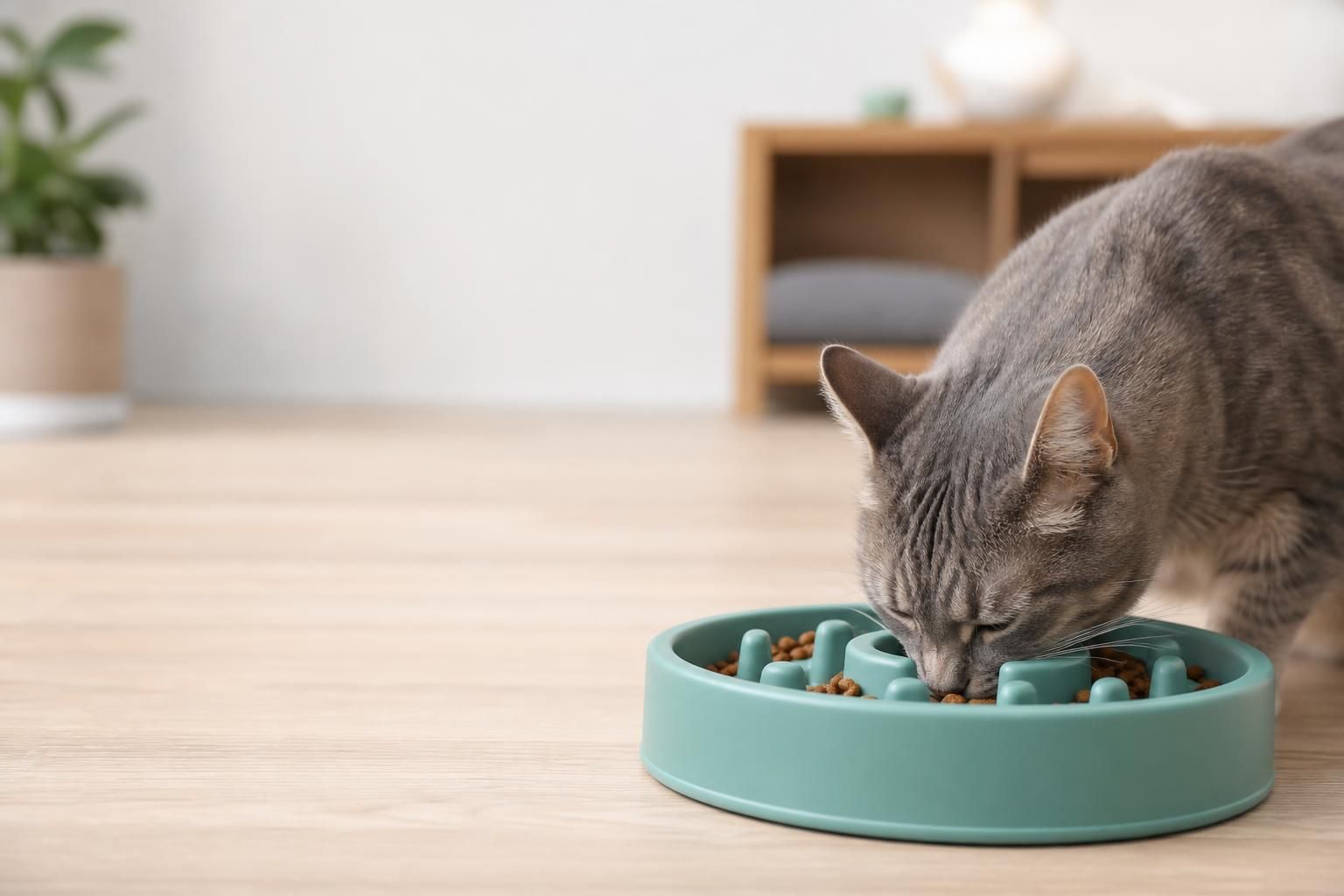
- Use a slow feeder, puzzle bowl, or maze dish to slow down gulping and reduce total intake.
- Weigh food on a kitchen scale rather than eyeballing a cup, since cup sizes and kibble density vary widely.
Why Cats Overeat in the First Place
Cats evolved to eat many small meals a day while hunting, not one or two large servings, so a bowl that's always full removes the natural pacing that would otherwise limit intake. Multi-cat households add another layer: a faster or more dominant cat may eat its portion and then move in on a housemate's bowl, which looks like overeating but is really food competition. Boredom and stress eating are also common in indoor cats with limited enrichment, since eating is one of the few self-rewarding activities available to them.
A cat carrying extra weight is also more likely to keep overeating, because excess body fat changes how the body regulates hunger hormones like leptin, making "I'm full" signals less reliable. The American Veterinary Medical Association notes that obesity is one of the most common nutritional disorders seen in companion animals, which makes early portion control more useful than trying to reverse weight gain later.
Measure Food Instead of Guessing
The single biggest shift that stops overeating is switching from a filled bowl to a measured portion. A standard 8-ounce measuring cup is not the same as the scoop that comes in a bag of cat food, and kibble density varies by brand, so "half a cup" can mean very different calorie counts from one food to another. A digital kitchen scale removes that guesswork — weigh the recommended daily amount from the food label, then split it across meals.
Practical steps:
- Check the feeding guideline on the food bag, which is usually listed by body weight.
- Weigh out that amount once a day rather than refilling on sight.
- Divide it into 2-3 servings instead of one large bowl.
- Adjust gradually (by about 10% every week or two) if the cat is still gaining or losing weight, and confirm changes with a vet for cats with health conditions.
Slow Down Mealtime With the Right Bowl
Gulping food quickly is linked to overeating because the stomach's fullness signal takes time to reach the brain — a cat that finishes a bowl in 90 seconds hasn't given that signal a chance to register before going back for more. Slow feeder bowls use raised ridges, mazes, or compartments to make the cat work for each bite, which stretches a meal from under two minutes to five or ten. Puzzle feeders go a step further by turning mealtime into a physical and mental task, which also helps with the boredom-eating pattern common in indoor cats.
Ziva Paws' feeding collection includes slow feeder bowls and puzzle-style dispensers designed around this exact mechanism, alongside automatic feeders that can portion out scheduled meals so no one forgets or over-pours. Ai and Dudu, the two cats who test products before they're listed, were noticeably slower and calmer at the bowl once meals moved from a wide dish to a ridged slow feeder.
Set a Feeding Schedule, Not a Standing Buffet
Free-feeding (leaving dry food out all day) is convenient but makes portion control almost impossible to track, since multiple small nibbles add up without anyone noticing. Moving to scheduled meals — commonly two meals a day, sometimes three for very food-motivated cats — gives a clear point to measure, observe appetite changes, and intervene if something's off. Scheduled feeding also makes it easier to spot a sudden drop in appetite early, which can be a sign of illness in cats and is worth flagging to a vet quickly since cats can develop serious liver complications from not eating for even a few days.
If a cat was recently switched to a new food, keep an eye on portion sizes during the transition too, since appetite and stool consistency can shift together and make it harder to judge whether a cat is actually overeating or just adjusting.
Manage Multi-Cat Competition
In homes with more than one cat, overeating is often really about access, not appetite. A confident cat may guard the food area or eat from both bowls if they're placed close together. Separating feeding stations by room, or using a microchip-activated or timed feeder that only opens for one cat, removes the incentive to rush or steal food. Feeding cats in separate rooms at the same time also reduces the stress-eating that comes from feeling like food is scarce or contested.
When Overeating Points to Something Else
Occasionally, a sudden increase in appetite isn't behavioral — it can be linked to conditions like hyperthyroidism, diabetes, or intestinal parasites, especially in middle-aged or senior cats. The Cornell Feline Health Center notes that unexplained weight changes alongside increased hunger warrant a veterinary visit rather than just a stricter feeding schedule. If portion control and slow feeders don't reduce food-seeking behavior within a few weeks, or if weight keeps climbing despite consistent measured meals, it's worth ruling out a medical cause before assuming it's purely a habit.
On the flip side, if a cat is underweight and food-focused for different reasons, the approach looks different — that's covered in more detail in this guide to helping an underweight cat gain weight, since pushing more food isn't always the right fix either.
Frequently Asked Questions
Q: How much food should an average adult cat eat per day?
It depends on the cat's weight, activity level, and the specific food's calorie density, so the feeding guideline printed on the food bag (based on body weight) is the most reliable starting point. A vet can help fine-tune the amount for cats that are overweight, underweight, or have health conditions.
Q: Will a slow feeder bowl actually stop a cat from overeating?
A slow feeder won't reduce the amount of food in the bowl, but it stretches out how long it takes to eat it, which gives the body's fullness signals time to catch up. This often reduces begging for more food right after a meal.
Q: Is free-feeding always bad for cats?
Free-feeding works for some lean, active cats that naturally self-regulate, but it makes portion tracking difficult and isn't recommended for cats prone to weight gain or living in multi-cat households. Scheduled, measured meals give more control and make problems easier to spot early.
Q: Why does my cat act hungry right after eating a full meal?
This is often behavioral — linked to boredom, habit, or gulping food too fast to register fullness — rather than true hunger. If it's a new or sudden change in behavior, it's worth checking with a vet to rule out a medical cause.
Q: Can overeating cause health problems in cats?
Yes — consistent overeating contributes to obesity, which is linked to joint strain, diabetes risk, and reduced mobility in cats. Managing portions early is easier than managing weight loss later.