How to Stop a Dog Eating Too Fast
Key takeaway
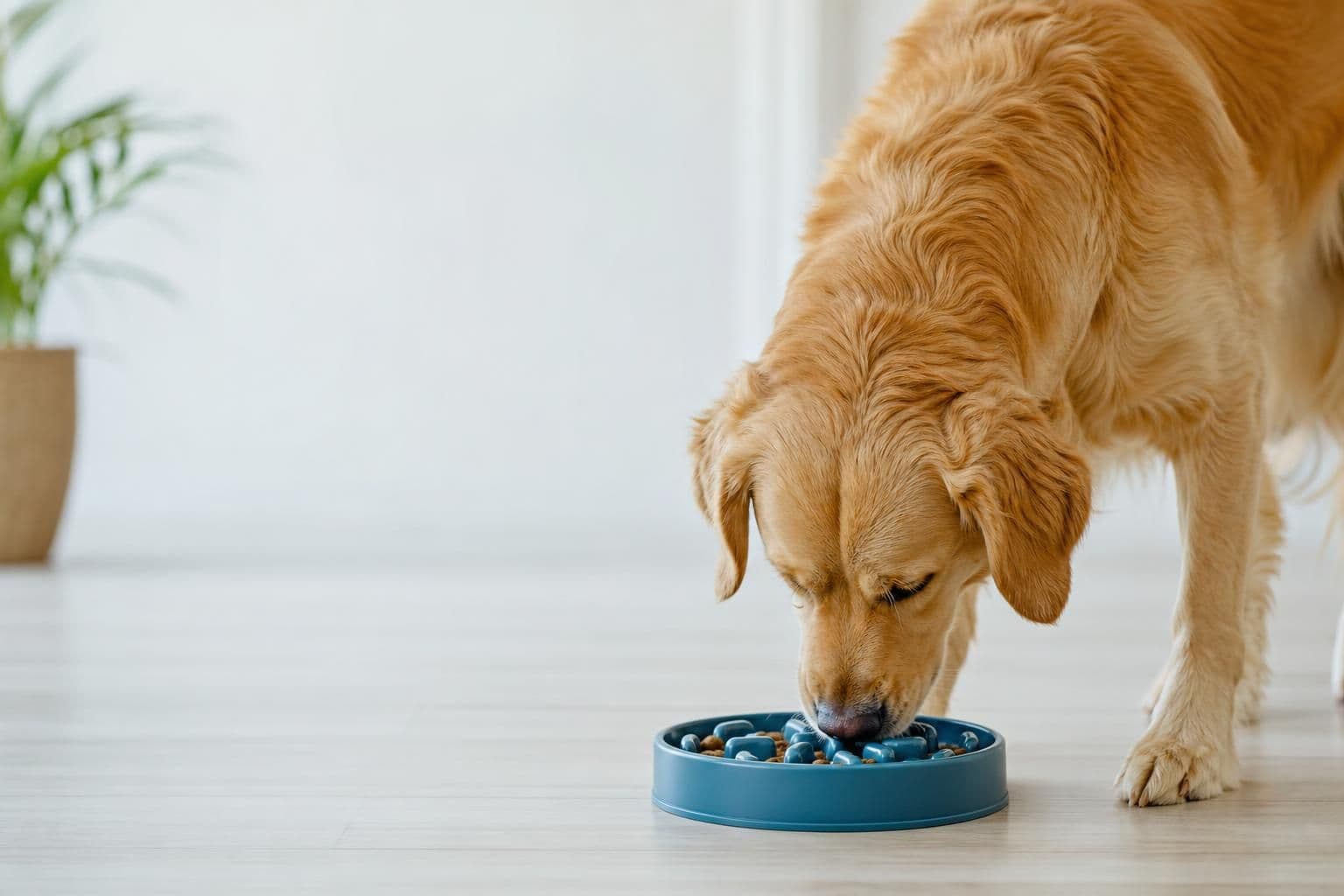
The fastest way to stop a dog eating too fast is to change the mechanics of the meal itself — using a slow feeder bowl, a puzzle feeder, or spreading food across a flat surface so the dog has to work for each bite instead of inhaling the whole portion in seconds. Splitting meals into smaller, more frequent portions and removing competition from other pets also slows the pace significantly. Most dogs adjust to a slow feeder within the first few meals, with no training required.
Key takeaways
- Swap a regular bowl for a slow feeder bowl or puzzle feeder — this alone slows most dogs down immediately.
- Feed smaller portions 3-4 times a day instead of one or two large meals.
- Separate pets at mealtime if competition or resource guarding is driving the speed.
Why Dogs Gulp Their Food
Fast eating is usually a mix of instinct and habit. Dogs descended from opportunistic scavengers, and many still eat as though a meal could disappear, especially if they were raised in a shelter, a large litter, or a multi-dog household where food felt scarce or contested. Some breeds — particularly deep-chested, large dogs like Great Danes, Labradors, and German Shepherds — are also physically prone to gulping air along with food, which raises their risk of bloat (gastric dilatation-volvulus), a life-threatening emergency according to the American Veterinary Medical Association. Recognizing whether the cause is behavioral or physical helps you choose the right fix.
Slow Feeder Bowls and Puzzle Feeders
These tools use raised ridges, mazes, or compartments so a dog physically cannot scoop a large mouthful at once. A dog that finishes a regular bowl in under a minute often takes five to ten minutes with a well-designed slow feeder, simply because each bite has to be worked around a barrier. Look for a bowl with a non-slip base so it doesn't skid across the floor mid-meal, and choose a pattern depth that matches your dog's snout shape — flat-faced breeds generally do better with shallower ridges. Ziva Paws' feeding collection includes slow feeder bowls and stainless options sized for different breeds, and Ai and Dudu — the two cats who test products in-house before anything goes up for sale — have gone through more than a few feeder redesigns for texture and durability.
Portion and Frequency Changes
Reducing meal size while increasing frequency removes the "last chance" urgency that drives gulping. Instead of two large bowls a day, try three to four smaller portions. This has a secondary benefit: it can reduce the stomach distension linked to bloat risk, since the stomach never fills as dramatically at once. For dogs on a vet-prescribed diet, keep the total daily calories the same and simply divide it across more sittings rather than adding extra food.
Physical Tricks That Cost Nothing
Not every solution requires a purchase:
- Spread kibble across a large flat cookie sheet or muffin tin instead of piling it in a bowl.
- Place a few tennis balls or a large, food-safe rock in the bowl so the dog has to eat around them.
- Hand-feed a portion of the meal in small handfuls if the dog is small enough and food-motivated enough to tolerate it.
- Freeze wet food or broth into a mold so the dog has to lick and gnaw rather than swallow it whole.
These work well as a bridge while you decide whether to invest in a dedicated slow feeder.
Managing Multi-Pet Mealtime Competition
If fast eating only happens when another dog or cat is nearby, competition is likely the driver, not appetite. Feeding pets in separate rooms, using baby gates, or staggering feeding times so one animal finishes before the next starts can eliminate the behavior almost overnight. Watch body language at the bowl — a dog who glances up repeatedly, stiffens, or eats with lowered ears is likely eating defensively rather than simply enjoying the food.
When Fast Eating Signals a Bigger Problem
Occasional fast eating is normal, but a sudden change in pace, especially paired with a distended abdomen, unproductive retching, restlessness, or drooling after meals, warrants an urgent vet visit — these are classic signs of bloat, which the Cornell University College of Veterinary Medicine lists among the top true emergencies in dogs, particularly in large and giant breeds. Fast eating in cats is less often linked to bloat but can still cause vomiting shortly after meals; slow feeder bowls sized for cats address this the same way.
Enrichment as a Long-Term Fix
Dogs that gulp food out of boredom or excess energy often benefit from converting mealtime into a mental task rather than a reflex. Snuffle mats, treat-dispensing puzzle toys, and rotating a few interactive toys into daily routine give a dog an outlet that isn't tied to raw speed. If your dog also tends to be anxious around mealtimes or shows stress signals in its resting spots, it's worth looking at what actually helps an anxious dog settle, since stress and fast eating often travel together.
Fit Matters Too, Even at Mealtime
Dogs wearing bulky or ill-fitting coats and harnesses sometimes eat awkwardly because the garment restricts head or neck movement toward the bowl. If your dog eats in outerwear during colder months, checking that a coat or sweater is properly measured — using actual chest, neck, and back-length numbers rather than a generic S/M/L label — prevents this kind of friction. A step-by-step measuring guide can help you get those numbers right before you order.
Frequently Asked Questions
Q: Is it dangerous for a dog to eat too fast?
Yes, in some cases. Fast eating increases the risk of choking, vomiting, and in deep-chested breeds, bloat (gastric dilatation-volvulus), a medical emergency that requires immediate veterinary attention.
Q: How long should a meal take with a slow feeder bowl?
Most dogs take roughly five to ten minutes to finish a meal in a well-designed slow feeder bowl, compared to under a minute with a standard flat bowl.
Q: Do slow feeder bowls work for cats too?
Yes. Cats that gulp food and then vomit shortly after eating often benefit from the same raised-ridge or maze-style bowls used for dogs, just in a smaller size.
Q: Can competition with other pets cause fast eating?
Yes. Dogs and cats that eat around other animals often speed up out of instinct to protect their food, and separating pets at mealtime frequently resolves it without any equipment needed.
Q: What breeds are most at risk from eating too fast?
Large, deep-chested breeds such as Great Danes, Labradors, and German Shepherds are most associated with bloat risk tied to fast eating and air-gulping, according to veterinary emergency guidance.