Why Does My Dog Bloat After Eating? Causes & Warning Signs
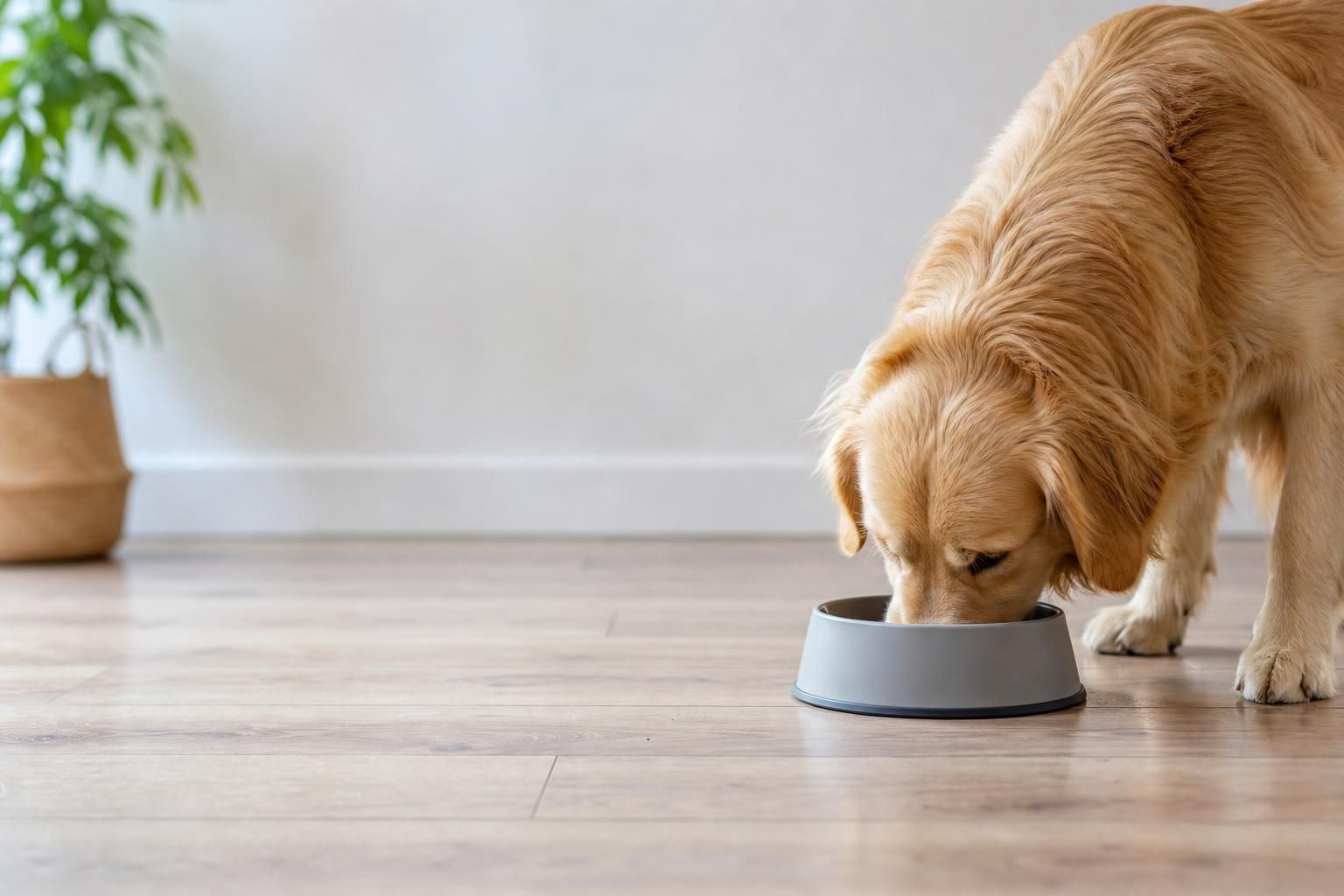
Key takeaway
A dog's stomach normally stretches after a meal, which can look like mild bloating, especially in deep-chested breeds that gulp food or air quickly. True "bloat," medically called gastric dilatation-volvulus (GDV), is different and dangerous: the stomach fills with gas and can twist on itself, cutting off blood flow within hours. Knowing the difference between a full belly and a medical emergency can save your dog's life.
Key takeaways
- Mild post-meal distension is common and usually resolves within an hour; GDV does not resolve and gets visibly worse.
- Fast eating, large meals, and vigorous exercise right after eating are the biggest controllable risk factors.
- A hard, swollen abdomen combined with unproductive retching or pacing is an emergency — go to a vet immediately, not in the morning.
Normal Fullness vs. Dangerous Bloat (GDV)
After a big meal, a dog's stomach physically expands to hold food and swallowed air, which can make the belly look rounder for 30–60 minutes. This is a normal digestive process and usually comes with calm behavior, maybe some lying down or light panting.
GDV is a structural emergency, not digestion. The stomach overfills with gas, can rotate 180–360 degrees, and traps blood flow to the stomach wall and spleen. According to the American College of Veterinary Surgeons, GDV can become fatal within hours without emergency surgery, and dogs that show symptoms need to be seen immediately rather than monitored at home.
What Actually Causes a Dog's Stomach to Bloat
Several everyday habits and traits combine to make bloating more likely:
- Eating too fast — gulping food pulls in excess air along with it, called aerophagia.
- One large meal a day instead of two or three smaller ones increases stomach volume and gas production at once.
- Exercise right before or after eating — jumping, running, or rolling on a full stomach makes it easier for the stomach to shift position.
- Raised feeding bowls — some research has questioned elevated feeders as a risk factor in deep-chested breeds, though the mechanism isn't fully settled.
- Breed and body shape — deep-chested, narrow-waisted breeds like Great Danes, Standard Poodles, and German Shepherds have more room for the stomach to rotate.
- Stress or anxious eating, which often overlaps with fast gulping.
If your dog seems to refuse food one day and then bolt it the next, inconsistent eating patterns themselves can also contribute to gulping. That kind of irregular appetite is worth tracking — see common reasons dogs skip meals for what else might be going on.
Warning Signs That Mean It's an Emergency
GDV progresses fast, often within one to three hours of eating. Watch for this combination rather than any single sign alone:
- A visibly swollen, drum-tight abdomen
- Repeated attempts to vomit with little or nothing coming up (unproductive retching)
- Restlessness, pacing, or an inability to get comfortable
- Excessive drooling
- Rapid breathing or a racing heart rate
- Collapse or pale gums in advanced cases
The American Veterinary Medical Association lists GDV as one of the few true digestive emergencies in dogs because of how quickly the twisted stomach cuts off blood supply. If you see two or more of these signs together, treat it as an emergency vet visit, not a "wait and see" situation — even overnight or weekend emergency clinics are built for exactly this.
Which Dogs Are Most at Risk
Bloat isn't random. Veterinary surgical literature consistently points to a few shared traits in dogs diagnosed with GDV:
- Large or giant breeds with deep chests (Great Dane, Saint Bernard, Weimaraner, Standard Poodle)
- Dogs over 7 years old
- Dogs that eat quickly or compete with other pets at mealtime
- Dogs fed one large daily meal rather than split portions
- A family history of GDV, since there appears to be a genetic component in high-risk breeds
Smaller and flat-chested breeds can still experience mild post-meal bloating or gas discomfort, but true GDV is far less common in them.
Practical Ways to Reduce the Risk
None of these guarantee prevention, but they address the mechanisms veterinarians point to most often:
- Split meals into two or three smaller portions instead of one large bowl a day.
- Slow down fast eaters with a slow feeder bowl that has raised ridges, forcing smaller bites and less gulped air.
- Rest before and after meals — avoid vigorous play, running, or car rides for roughly an hour on either side of eating.
- Keep water available but not forced in large amounts right after a big meal.
- Separate dogs at mealtime if competition is causing anyone to bolt their food.
When we tested slow feeder bowls with our own cats, Ai and Dudu, before adding them to Ziva Paws' feeding collection, the biggest difference was simply how much slower they ate once the bowl had raised patterns to navigate around — the same principle applies to fast-eating dogs. A slow feeder won't prevent GDV on its own, but reducing gulped air is one of the few mealtime habits owners can actually control.
Should You Call the Vet or Wait It Out?
If your dog seems a little full and sleepy after dinner but is otherwise acting normal — walking fine, breathing normally, no retching — it's reasonable to simply monitor them for the next hour. But if the abdomen looks swollen and firm, or your dog is restless, drooling, or trying unsuccessfully to vomit, don't wait to see if it passes. GDV surgery outcomes are significantly better the earlier a dog is treated, which is why emergency vets treat any suspected case as time-sensitive.
Frequently Asked Questions
Q: How long after eating does bloat (GDV) usually happen?
Most GDV cases develop within one to three hours after a meal, though it can occasionally occur later. The key signal isn't timing alone — it's a swollen, hard abdomen paired with unproductive retching.
Q: Can small dogs get bloat too?
Small and flat-chested dogs can experience normal post-meal distension, but true GDV is uncommon in them since it's strongly linked to deep-chested, narrow-waisted body shapes.
Q: Will burping or passing gas relieve bloat?
Normal gas or a burp can relieve mild fullness, but true GDV traps gas inside a stomach that may already be twisted, so it won't resolve on its own and requires veterinary treatment.
Q: Does slow feeding actually prevent bloat?
Slow feeders reduce gulped air and the speed of eating, both of which are considered contributing factors, but they aren't a guaranteed prevention method on their own.
Q: Is bloat the same thing as gas or an upset stomach?
No. Ordinary gas or a mild upset stomach typically resolves within an hour and doesn't cause visible, firm swelling, while GDV is a structural emergency that worsens rapidly without treatment.