Why Does My Dog Pee on His Bed? Causes & Fixes
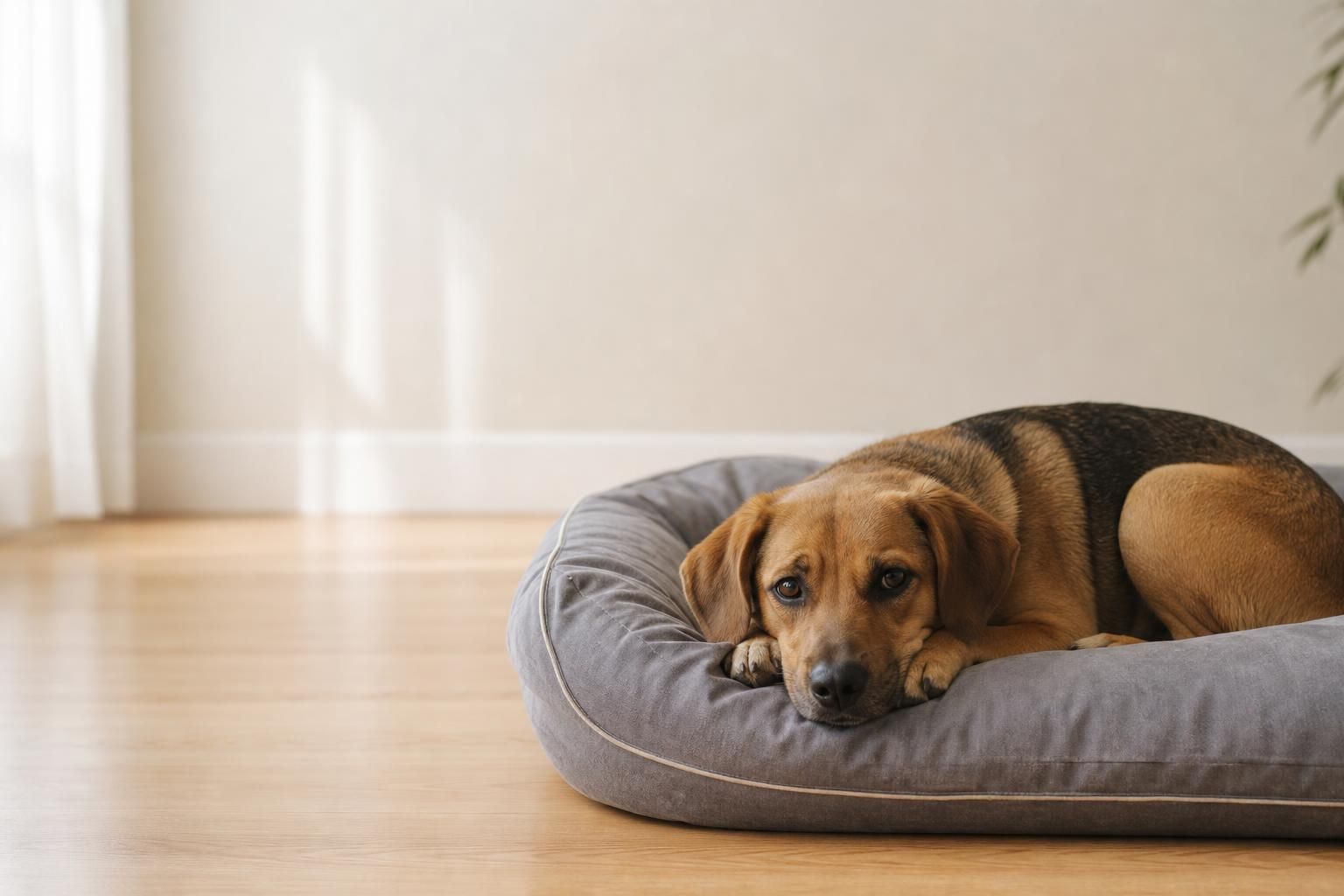
Key takeaway
Dogs pee on their beds most often because of a medical issue (urinary tract infection, bladder stones, or incontinence), submissive or excitement urination, anxiety, or because the bed itself has become a habitual bathroom spot due to lingering odor. A vet visit to rule out infection or hormonal incontinence should always come before behavioral fixes, since punishing a dog with a physical cause for accidents won't solve anything and can make anxiety-driven urination worse.
Key takeaways
- Rule out medical causes first — UTIs, bladder stones, and spay-related incontinence are common and treatable.
- Senior and spayed female dogs are more prone to involuntary leaking while sleeping, which looks different from a deliberate accident.
- Odor left behind from a previous accident can pull a dog back to the same spot, so full enzymatic cleaning of the bed matters as much as training.
Medical Causes Come First
A dog that suddenly starts wetting his bed after being previously house-trained is sending a signal, and that signal is usually physical before it's behavioral. Urinary tract infections cause inflammation that makes it hard for a dog to hold urine, even overnight. Bladder stones, diabetes, kidney disease, and Cushing's disease can all increase urine volume or urgency past what a dog can control.
Spayed female dogs are also known to develop urinary sphincter incontinence later in life, where urine leaks out during sleep because the muscle that normally holds it closed relaxes too much. This is a recognized condition in veterinary medicine, not a training failure, and it's treatable with medication in many cases. The American Veterinary Medical Association and veterinary reference sources both note that sudden-onset house soiling in an adult dog warrants a veterinary exam before any behavior plan, because treating the underlying cause often resolves the accidents on its own.
Behavioral and Emotional Triggers
Once medical causes are ruled out, several behavioral patterns commonly explain bed-wetting:
- Submissive or excitement urination — some dogs, especially puppies and shy adults, leak a small amount of urine when greeted, scolded, or overly excited. This is involuntary and tied to body language, not disobedience.
- Separation anxiety — a dog left alone for long stretches may urinate on bedding as a stress response, often alongside pacing, chewing, or whining.
- Territorial marking — intact males in particular may mark a bed with small amounts of urine, distinct from a full bladder emptying.
- Learned association — if a bed was ever used as the designated potty area (common with young puppies before house-training was complete), the habit can linger.
Anxiety-driven accidents often overlap with other sleep issues. If your dog also resists settling in a crate or seems restless at night, it may be worth reading about why some dogs refuse to sleep in a crate, since crate stress and bed accidents frequently share the same root cause.
Age-Related and Hormonal Factors
Senior dogs lose some bladder muscle tone over time, similar to incontinence patterns seen in aging humans. A dog that's slept through the night for years but now wakes up on a wet bed may simply be experiencing the normal effects of aging bladder muscles combined with deeper, less interruptible sleep. The Merck Veterinary Manual lists hormone-responsive incontinence and age-related sphincter weakness among the most common causes of urinary leakage in otherwise healthy older dogs, and both typically respond to veterinary treatment.
Puppies, on the other hand, have smaller bladders and less developed control. A general guideline from veterinary house-training resources is that puppies can usually hold their bladder roughly one hour for every month of age, up to about eight hours, so a three-month-old puppy may genuinely need a bathroom break overnight.
The Bed Itself Can Be Part of the Problem
Dogs rely heavily on scent to decide where it's acceptable to eliminate. If urine isn't fully removed from fabric and padding, residual odor compounds (even after a visible stain is gone) can repeatedly draw a dog back to the same spot. Standard detergent alone often doesn't break down the uric acid crystals in dried urine; an enzymatic cleaner designed for pet accidents is usually needed to fully neutralize the scent trail.
This is also where bed choice matters. A washable cover with a removable liner makes it realistic to clean thoroughly after every accident, instead of trying to spot-treat a bed that can't be laundered. Our two resident cats, Ai and Dudu, test bedding fabrics before they're listed, and washable, easy-to-rinse covers consistently hold up better to repeated cleaning than bonded foam or non-removable covers. If you're shopping for a replacement, our guide to choosing a dog nest bed covers what to look for in washable, supportive options at zivapaws.com/collections/home-bedding.
What to Do Right Now
- Book a vet visit if the behavior is new, sudden, or paired with increased thirst, straining, blood-tinged urine, or lethargy.
- Track the pattern — note time of day, whether your dog is asleep or awake, and what happened right before (excitement, being scolded, being left alone).
- Fully strip and wash bedding with an enzymatic cleaner, not just the top layer, since odor can soak into foam or stuffing.
- Add supervised bathroom breaks before bed and first thing in the morning, especially for puppies and seniors.
- Avoid punishment — scolding a dog for submissive urination or incontinence typically increases anxiety and worsens the behavior.
If reduced water intake seems linked to the issue, or your dog's drinking habits have changed alongside the accidents, it's worth looking at why a dog might refuse to drink water, since both over- and under-drinking can point to the same underlying conditions.
When Sizing and Comfort Play a Role
For dogs who associate their crate or coat with stress, bed accidents sometimes cluster around moments of physical discomfort — a coat that's too tight, a collar that rubs, or a crate too small to turn around in comfortably. Ziva Paws uses inch-based chest, neck, and length measurements rather than generic S/M/L labels across its clothing line, specifically because poor fit is a common hidden stressor that owners don't always connect to bathroom accidents.
Frequently Asked Questions
Q: Is it normal for an older dog to suddenly start peeing on his bed?
It's common but not something to ignore — age-related bladder muscle weakness and hormone-responsive incontinence both become more frequent in senior dogs and usually respond well to veterinary treatment.
Q: Can anxiety alone cause a dog to pee on his bed?
Yes, separation anxiety and general stress can trigger involuntary urination, often alongside pacing, whining, or destructive behavior when left alone.
Q: Will a washable dog bed actually help stop the accidents?
It won't fix a medical cause, but a fully washable bed lets you remove urine odor completely with an enzymatic cleaner, which reduces the scent cues that pull a dog back to the same spot.
Q: Should I punish my dog for peeing on the bed?
No — punishment doesn't address medical causes and tends to increase anxiety-related urination, making the problem worse rather than better.
Q: When should I see a vet about this?
See a vet promptly if the accidents are sudden, frequent, or paired with increased thirst, straining, blood in the urine, or lethargy, since these can signal an infection or other medical condition needing treatment.