Hidden Camera Detector vs Body Camera: What's the Difference?
Key takeaway
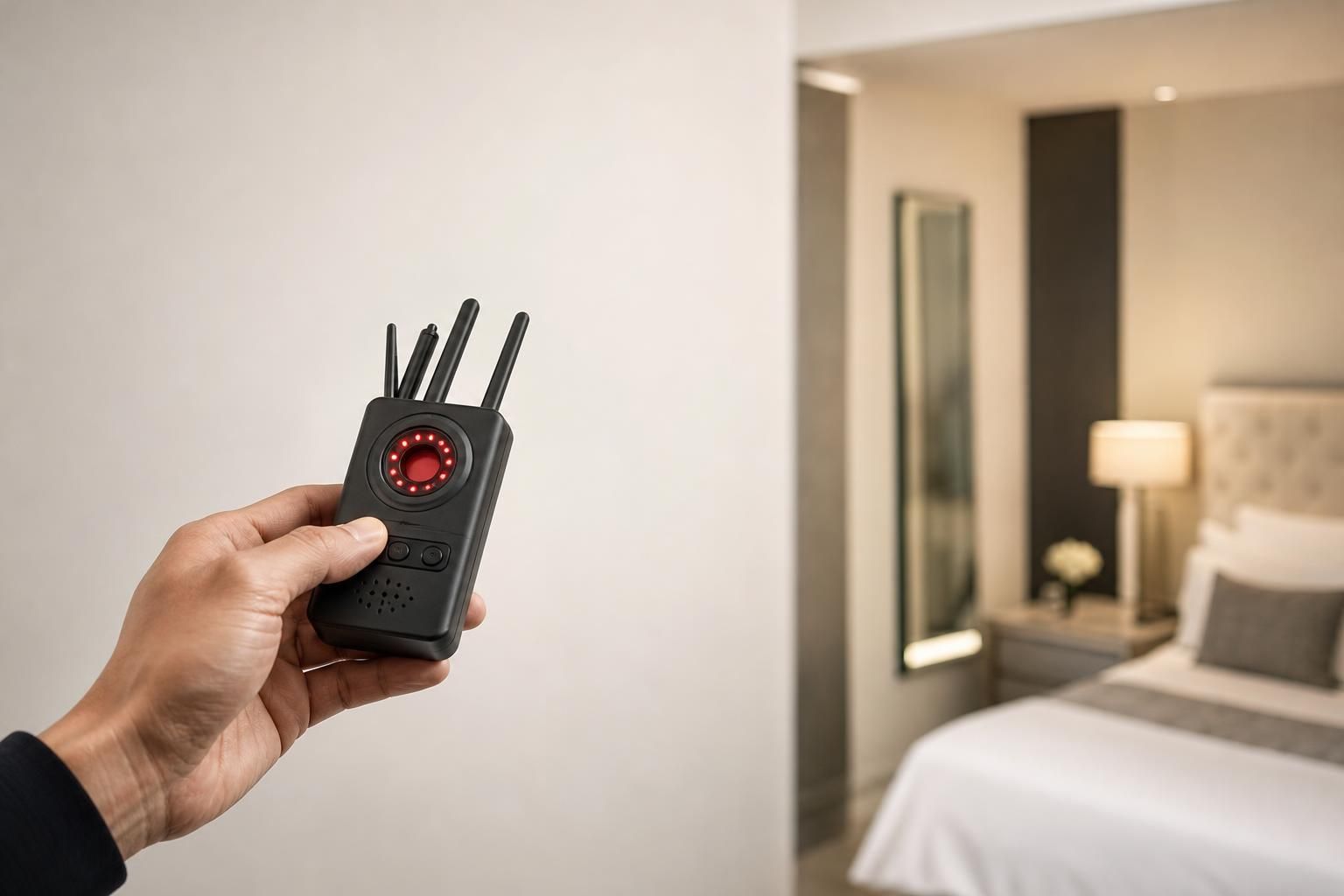
A hidden camera detector finds lenses and RF signals that someone else has planted in a space, while a body camera is a wearable device you use to record your own point of view openly. One is a defensive scanning tool; the other is a recording tool you control. They solve opposite problems and most people only need one, not both.
Key takeaways
- A hidden camera detector scans for existing lenses or wireless signals in a room you're entering, like a rental or hotel.
- A body camera records your own activity from a wearable position and is meant for open, not covert, use.
- Check your state and local laws before recording anyone, since consent rules differ by jurisdiction.
What a Hidden Camera Detector Actually Does
A hidden camera detector works by one of two methods: scanning for the glint of a camera lens using an LED light array, or scanning for the RF (radio frequency) signals that wireless spy cameras transmit. Valenza's Hidden Camera Detector is built for this exact use — sweeping a room, like an Airbnb bedroom or a changing area, to check for lenses hidden in everyday objects such as smoke detectors, clocks, or outlets.
These tools don't record anything themselves. They're a one-way scan: point, sweep, check. That makes them fundamentally different from a camera you wear to capture your own footage.
What a Body Camera Actually Does
A body camera is worn on clothing or gear and records from the wearer's own perspective, in the open, typically for documentation, work, or personal safety reasons. The 4K Rotatable Body Camera records in 4K and has a rotatable body so you can adjust the recording angle without repositioning the whole unit — useful for anyone who needs a hands-free, wearable way to document their day.
Body cameras are meant to be visible and known to the people around the wearer, not concealed to capture someone without their knowledge. If you're comparing it against other recording options, this breakdown of body cams versus action cameras covers how the two formats differ in mounting and intended use.
Side-by-Side Comparison
| Feature | Hidden Camera Detector | 4K Rotatable Body Camera |
|---|---|---|
| Primary function | Finds lenses/RF signals in a space | Records the wearer's own point of view |
| Direction of use | Defensive — scans a room | Active — captures footage you choose |
| Typical setting | Rentals, hotel rooms, changing areas | Work, errands, commuting, daily documentation |
| Output | No recording produced | 4K video file |
| Form factor | Handheld scanning device | Wearable, rotatable body |
| Legal consideration | Generally used to protect your own privacy | Subject to consent/recording laws by state |
When You'd Want a Detector Instead of a Camera
If your concern is "is someone recording me without my knowledge," a detector is the relevant tool, not a body camera. Common situations include:
- Checking a short-term rental or hotel room before unpacking
- Scanning a fitting room or shared space when something feels off
- Sweeping a rented office or co-working desk
None of these involve you recording anyone — they're about confirming a space is free of unwanted lenses before you settle in.
When You'd Want a Body Camera Instead of a Detector
A body camera makes more sense when you want your own record of events you're part of — deliveries, rideshare driving, dog walking, contractor visits, or general daily documentation. Because the camera is rotatable, the angle can be adjusted for a better view without changing how it's worn. If you're narrowing down what matters most in a unit, this guide to body camera features walks through the criteria worth comparing, and the product page has the specific details for this model.
For workplace-specific questions, including recording coworkers or supervisors, see what to know before recording at work before pressing record.
The Legal Line Both Devices Share
Neither device changes the legal rules around recording people. In the United States, some states require all-party consent to record a conversation, while others only require one-party consent, and these rules can also depend on whether there's a "reasonable expectation of privacy" in the location. The Reporters Committee for Freedom of the Press maintains state-by-state recording law summaries, and general legal explainers are available through Justia and FindLaw. The Bureau of Justice Assistance also publishes resources on body-worn camera policy for context on how these devices are used in professional settings.
This is general information, not legal advice — rules vary by state and country, and you should check local law before recording in any specific situation. Neither a hidden camera detector nor a body camera should be used to record someone covertly; a detector is for checking a space, and a body camera is meant to be worn openly.
If you're picking a body camera as a gift rather than for personal use, this gift guide broken down by budget gives some practical angles to consider, and general buying checklist covers what to look for before you buy.
Frequently Asked Questions
Q: Can a hidden camera detector find every type of spy camera?
Detectors work by spotting lens glare or RF signals, so they're most effective against cameras using those signatures; a camera that's offline or uses a non-standard signal may be harder to catch with a basic sweep. No single tool guarantees detection of every possible device.
Q: Is it legal to use a body camera in public?
Recording in public is generally more permissive than recording in private spaces, but rules on audio consent still vary by state and country. Check a source like the Reporters Committee for Freedom of the Press for your specific location before recording.
Q: Do I need both a hidden camera detector and a body camera?
Most people only need one, depending on the problem: a detector protects your privacy in spaces you don't control, while a body camera documents your own activity. Some travelers and gig workers carry both for different reasons, but it's not a requirement.
Q: Does the 4K Rotatable Body Camera include night vision or Wi-Fi?
Specific features like night vision, Wi-Fi, or storage capacity aren't listed here — check the 4K Rotatable Body Camera product page for the current, confirmed specifications before buying.
Q: Where is a body camera not appropriate to use?
Avoid using a body camera anywhere recording would violate someone's reasonable expectation of privacy, such as restrooms, changing rooms, or private homes without consent, and avoid using it to record covertly. For workplace scenarios specifically, see this guide on recording at work.