How Do Portable Blenders Work? A Simple Breakdown
Key takeaway
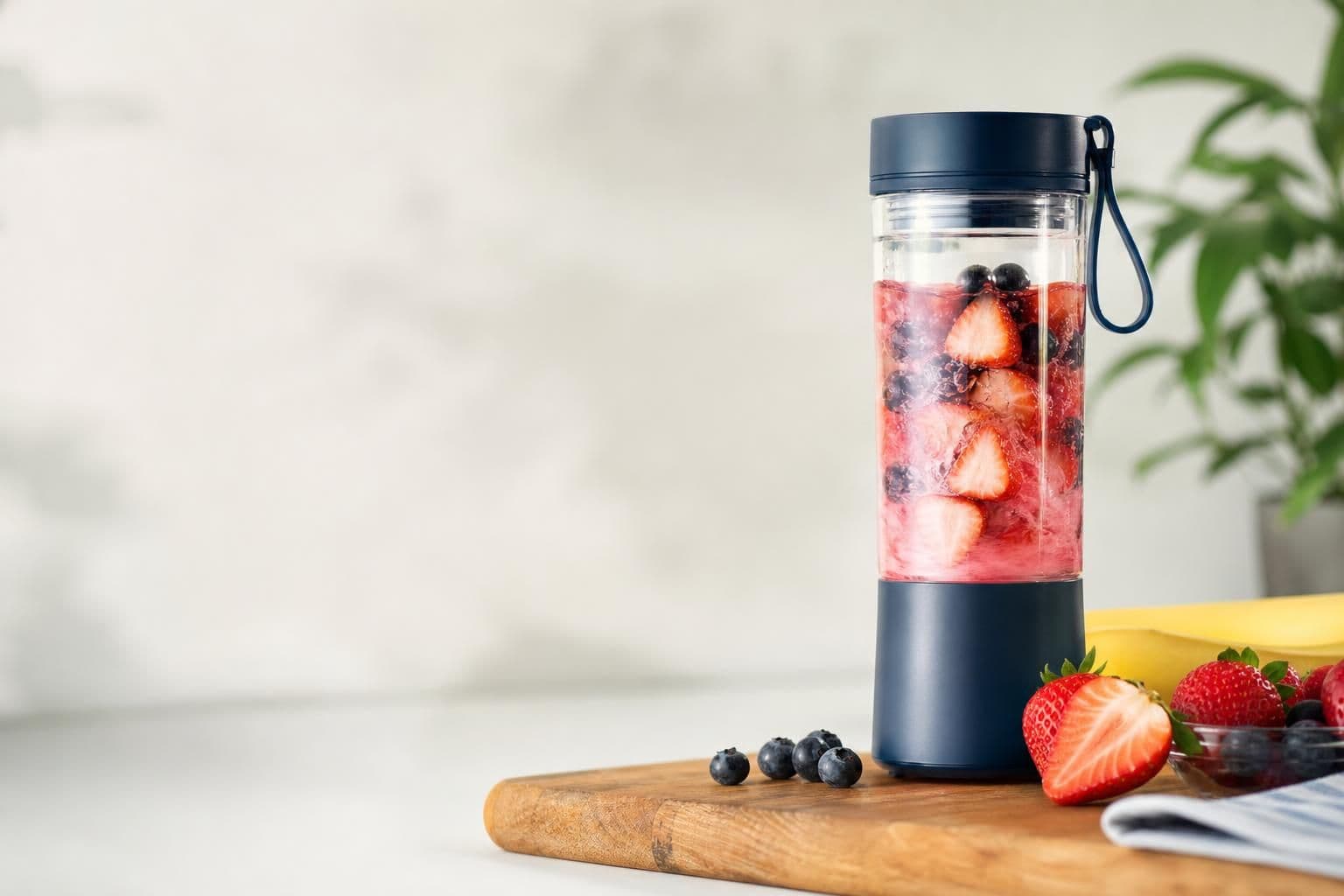
A portable blender works by pairing a small rechargeable battery with a compact DC motor that spins a blade assembly at the base of the cup, letting you blend smoothies, shakes, or soft fruits without being plugged into a wall outlet. Most models charge over USB, run for roughly 10-15 blending cycles per charge, and use a sealed, leak-resistant base so the cup can double as a travel bottle. The tradeoff for that convenience is lower power than a countertop blender, which affects what you can blend well.
Key takeaways
- Portable blenders run on rechargeable lithium-ion batteries and small DC motors, not wall power, which limits their torque compared to countertop models.
- They work best with soft or pre-cut ingredients like frozen fruit, yogurt, and liquids — ice cubes and fibrous vegetables usually stall the blade.
- USB-C charging means you can top one up from the same charger you use for your phone, usually in a couple of hours.
The Core Mechanism: Motor, Blade, and Battery
Inside the base of a portable blender sits a small electric motor, a set of stainless steel blades, and a rechargeable battery pack. When you press the power button, the battery sends current to the motor, which spins a shaft connected to the blades at the bottom of the cup. Because the whole unit is cordless, the motor has to be compact and battery-efficient, which is why portable blenders are generally rated at a fraction of the wattage of a plug-in blender. That lower wattage is the main reason they're suited to smoothies and shakes rather than crushing ice or grinding nuts.
The base is sealed with a rubber gasket so liquid can't reach the motor or battery compartment. This sealing is also what allows many portable blenders to be inverted or carried in a bag without leaking, which is part of why people keep them in a gym bag or car console.
How Charging and Battery Life Work
Nearly all current portable blenders charge through a USB cable, often USB-C, the same connector standard used for phones, tablets, and many laptops today. The USB Implementers Forum maintains the USB-C specification that most of these chargers follow, which is why a single cable can often charge your blender, your phone, and your earbuds.
A full charge typically powers several short blending cycles rather than continuous use — the battery is sized for convenience, not endurance. If you're someone who blends once a day, charging overnight or during a commute is usually enough to keep it ready. Because these devices use lithium-ion cells, the U.S. Consumer Product Safety Commission recommends avoiding extreme heat, not leaving batteries charging unattended for long periods, and stopping use if a battery swells or feels unusually hot — the same precautions that apply to phone and laptop batteries.
What Blends Well (and What Doesn't)
Portable blenders are built around soft-ingredient recipes. A quick list of what tends to work:
- Frozen or fresh soft fruit (banana, berries, mango)
- Yogurt, milk, or plant-based milk
- Protein powder mixed into liquid
- Soft-cooked vegetables like spinach or cooked carrot
What usually struggles:
- Whole ice cubes (better to use crushed ice or frozen fruit instead)
- Raw hard vegetables like carrots or beets
- Nuts, seeds, or anything meant to be ground to a powder
If a recipe calls for ice, pre-crushing it or swapping in frozen fruit reduces strain on the motor and shortens blending time. This single habit is the most common fix for people who feel their portable blender "isn't strong enough."
Cleaning and Everyday Care
Because the motor and battery are sealed off from the blending chamber, most portable blenders are cleaned by adding water and a drop of dish soap, then running a short blend cycle before rinsing. The blade assembly usually detaches or the cup unscrews from the base so you can rinse both halves without submerging the electronics. Food-contact plastics used in blender cups are generally required to meet safety standards reviewed by the U.S. Food and Drug Administration, which covers materials that touch food or beverages.
Letting a cup sit with blended residue for hours makes cleanup harder and can affect the seal over time, so a quick rinse right after use is the simplest way to keep one working well. The same logic applies to other small kitchen tools — keeping gear rinsed and put away right after use is a theme covered in more detail in this guide on storing kitchen tools without a renovation.
Portable Blenders vs. Countertop Blenders
The main difference comes down to power source and purpose. A countertop blender plugs into a wall outlet and can draw far more wattage, which is why it can crush ice and handle tougher ingredients. A portable blender trades that power for size and battery independence — it fits in a bag, a car cupholder, or a desk drawer, and it's meant for single servings rather than batch blending for a family.
If you travel often or keep snacks and drinks in the car, a portable blender's small footprint pairs naturally with how people already organize car storage — something explored in this piece on setting up a car trunk for road trips.
Choosing One for Your Routine
Think about where you'll actually use it. Desk smoothies at the office call for something quiet and quick to rinse in a break room sink. Gym-goers often want a cup that doubles as the bottle they drink from directly. Road-trippers want something that charges from a car USB port or power bank. None of these needs require a particularly powerful motor — they require convenience, which is the whole point of the portable format.
Valenza's catalogue doesn't currently carry a portable blender, but if what you're after is a quick way to make a single beverage at your desk or kitchen counter without extra bulk, the 3-in-1 Espresso Maker covers a similar "one-serving, countertop-friendly" niche for coffee drinkers.
Frequently Asked Questions
Q: How long does a portable blender battery last on one charge?
Most portable blenders are designed for roughly 10-15 short blending cycles per full charge, though this varies by model and how thick the ingredients are. Thicker mixes draw more power and shorten the number of cycles you get.
Q: Can a portable blender crush ice?
Most portable blenders struggle with whole ice cubes because their motors are lower-powered than countertop models. Using crushed ice or frozen fruit instead gives smoother results without straining the motor.
Q: Is it safe to leave a portable blender charging overnight?
Lithium-ion batteries, like the ones in portable blenders, are generally safe to charge but shouldn't be left charging unattended for extended periods in hot environments, per general guidance from the U.S. Consumer Product Safety Commission. Unplugging once charged is a simple habit that reduces risk.
Q: What's the difference between a portable blender and a smoothie cup blender?
They're largely the same category — a cordless blender with a motorized base and a cup you can drink directly from. The terms are used somewhat interchangeably by manufacturers and retailers.
Q: Do portable blenders need special cleaning products?
No special products are needed. A rinse with water and a small amount of dish soap, followed by a short blend cycle, clears most residue since the blade and cup are the only parts exposed to food.