How to Store Kitchen Tools Efficiently (No Renovation Needed)
Key takeaway
The fastest way to store kitchen tools efficiently is to group them by how often you use them, keep daily tools within one arm's reach of where you cook, and move everything else to vertical space — walls, cabinet doors, or the backs of drawers. This "zone and reach" approach cuts down on digging through drawers and works whether you have a galley kitchen or a full pantry wall.
Key takeaways
- Keep only daily-use tools (spatula, knife, tongs) within one step of the stove; store everything else by category elsewhere.
- Use vertical space — wall rails, magnetic strips, and cabinet door racks — before buying new cabinets.
- Re-sort your tool drawer every few months; tools you haven't touched in 90 days usually belong in a lower-priority zone.
Start by Sorting Tools Into Three Zones
Before buying any organizer, separate your tools into three groups: daily-use (spatulas, tongs, a chef's knife), weekly-use (measuring cups, whisks, peelers), and occasional-use (turkey baster, specialty graters). This single step solves most clutter problems because it stops you from storing a melon baller in the same prime drawer space as your everyday spoon.
A simple test: if you haven't touched a tool in the last three months, it moves to the occasional-use zone — a high shelf, a back cabinet, or a bin in the pantry. Daily tools should live within arm's reach of the stove or prep counter, since the point of kitchen storage is reducing steps during cooking, not just hiding clutter.
Use Drawer Dividers for Small Tools
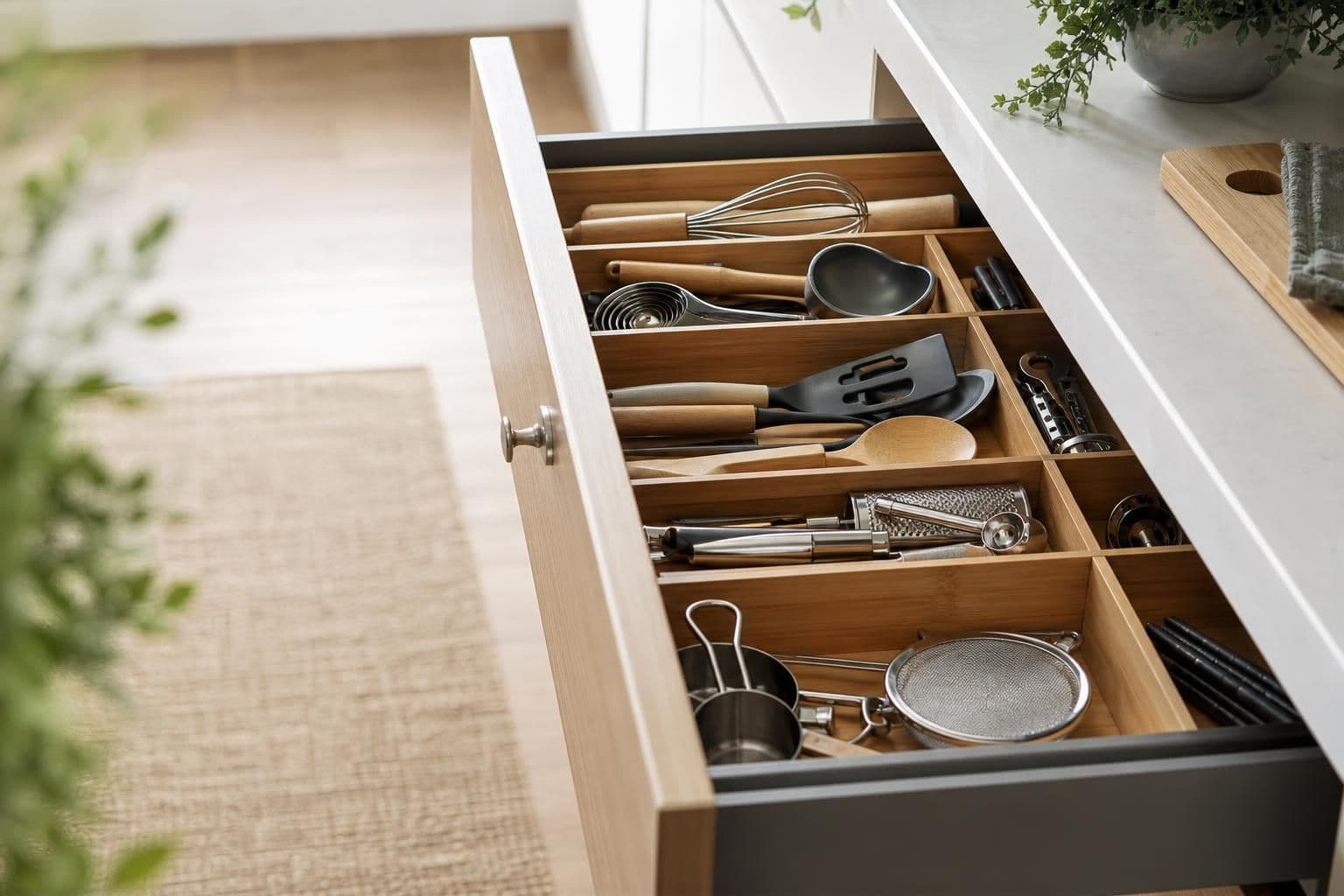
Loose drawers are the number one source of kitchen chaos because tools shift every time the drawer opens. Expandable or grid-style drawer dividers (often adjustable in 1-inch increments) create fixed lanes so a spatula doesn't end up tangled with a cheese grater. Standard kitchen drawers run about 20 to 24 inches wide, which is usually enough for 4 to 6 divided lanes — plenty for daily tools without crowding.
If you're also managing a mess of charging cords or small electronics near the kitchen counter, the same divider logic applies; our guide on keeping cables tidy at home covers a similar zone-based method that works for any small, tangle-prone items.
Go Vertical With Wall and Cabinet Space
Counter and drawer space is limited, but wall space rarely gets used. A magnetic strip mounted near the stove holds knives and metal tools without taking up a single inch of drawer room — just make sure it's mounted at least a few inches above the counter so blades don't bump surfaces. Wall-mounted rails with S-hooks work well for frequently used utensils like ladles and slotted spoons, keeping them visible and dry between uses.
Cabinet doors are another overlooked zone. Over-the-door racks or adhesive hooks can hold cutting boards, lids, or measuring spoons that would otherwise clog a drawer. The National Kitchen & Bath Association has long promoted the "work triangle" concept — keeping the stove, sink, and refrigerator in close proximity — and the same logic applies to tool storage: keep what you touch most during cooking closest to that triangle.
Store Knives Safely, Not Just Neatly
Loose knives in a drawer are a common cause of kitchen cuts, since you can't see the blade before reaching in. The U.S. Consumer Product Safety Commission tracks household injury data and consistently notes that kitchen knives are among the most frequent causes of home cutting injuries, which is why safety guides recommend blade guards, a knife block, or a magnetic strip over loose drawer storage. If drawer storage is your only option, use a dedicated knife tray that keeps blades pointed in one direction and separated from other tools.
Make Small Kitchens Work Harder
In a small apartment kitchen, every tool competes for the same few inches of counter and cabinet space. Two strategies help the most:
- Stack by category, not by size. Grouping all baking tools together (even if they're different shapes) is easier to search than stacking by height.
- Choose multi-function tools over single-use ones. A single tool that replaces three reduces both clutter and the number of drawers you need.
This is also where appliance choice matters. A compact multi-function appliance can replace several single-use machines on a counter — our guide on choosing an espresso machine for home use walks through picking one that fits a small kitchen footprint instead of adding another single-purpose gadget to the counter.
Maintain the System So It Doesn't Slide Back
Organization fails most often not at setup, but at maintenance. Set a recurring 10-minute check every couple of months: pull everything out of the main tool drawer, wipe it down, and re-sort based on what you've actually reached for lately. Appliances need the same kind of light maintenance — for example, routine descaling keeps a multi-function espresso maker working properly, as outlined in our step-by-step descaling guide, and the same "clean it before it becomes a problem" habit applies to utensil crocks and drawer liners that collect crumbs and grease over time.
Frequently Asked Questions
Q: What's the best way to store kitchen tools in a small kitchen?
Sort tools into daily, weekly, and occasional-use groups, then keep only the daily group on the counter or in the top drawer. Use wall space — magnetic strips, hooks, or cabinet-door racks — for everything else so counter space stays clear.
Q: Should knives be stored in a drawer or on a wall strip?
A magnetic wall strip or a dedicated knife block is generally safer than loose drawer storage because the blade stays visible and separated from other tools. The U.S. Consumer Product Safety Commission notes that kitchen cuts are among the most common household injuries, often linked to reaching into drawers without seeing the blade first.
Q: How often should I reorganize my kitchen tool drawers?
Every couple of months is enough for most households. Pull everything out, wipe the drawer, and move anything you haven't used in 90 days to a lower-priority storage zone.
Q: Do drawer dividers actually help, or are they just for looks?
They genuinely help because they stop tools from sliding and tangling every time the drawer opens, which is the main reason drawers become messy in the first place. Adjustable dividers let you resize lanes as your tool collection changes.
Q: What's a simple first step if my kitchen tools feel completely disorganized?
Empty one drawer completely, sort the contents into daily, weekly, and occasional piles, and only put the daily pile back. This single sorting pass usually reveals which storage method — dividers, a wall rail, or a cabinet rack — fits your specific tools best.