How to Charge a Power Bank Properly (Without Ruining It)
Key takeaway
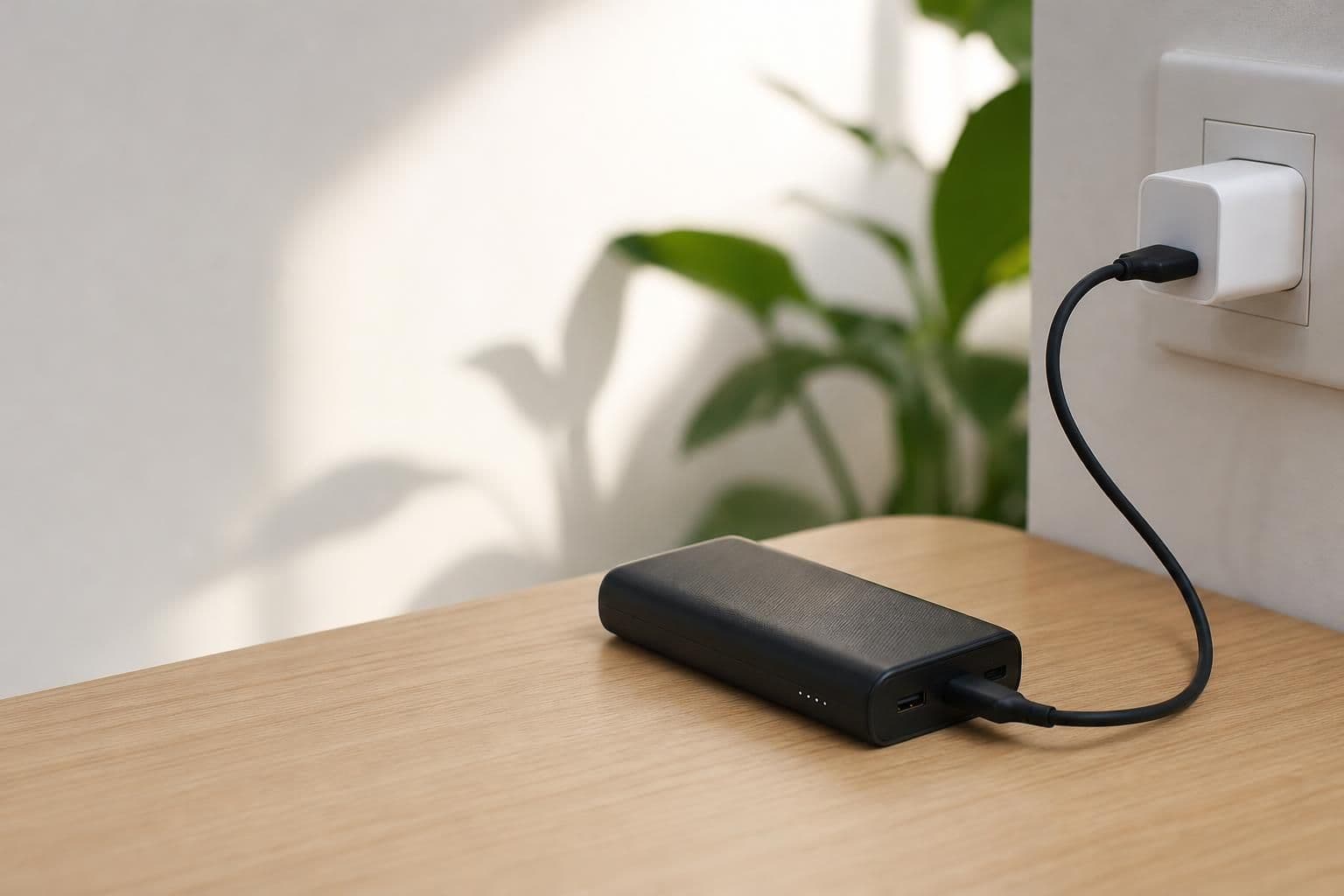
To charge a power bank properly, plug it into a wall outlet (not a laptop USB port) using the cable and charger it came with or one that matches its voltage rating, charge it to full before first use, and unplug it once it hits 100% rather than leaving it topped off overnight. Avoid charging it in direct sunlight, a hot car, or under a pillow, since heat is the main thing that degrades lithium-ion batteries over time. Most power banks take 2–4 hours to fully charge from empty, depending on their capacity and the charger's output.
Key takeaways
- Use a wall charger rated close to the power bank's input voltage — weak chargers slow charging, overpowered ones generate excess heat.
- Keep the battery between 20% and 80% for daily use if you want to maximize its usable lifespan, and only run it to 0% occasionally.
- Store a power bank at roughly half charge if it won't be used for a few weeks, not empty or completely full.
Why Charging Method Actually Matters
Power banks use lithium-ion or lithium-polymer cells, the same chemistry found in phones and laptops. These batteries degrade through chemical wear every time they're charged and discharged, and that wear speeds up with heat, overcharging, and deep discharges. The U.S. Consumer Product Safety Commission has documented that damaged or improperly charged lithium batteries are a leading cause of overheating incidents in consumer electronics, which is why charging habits matter more than people assume.
Step-by-Step: Charging a Power Bank the Right Way
- Charge it fully before first use. New power banks often ship at a partial charge to protect the cells during shipping.
- Use a wall outlet, not a USB port on a laptop or monitor. Laptop ports often deliver less current, which just means slower charging, but a dedicated wall charger is more consistent.
- Match the charger to the power bank's rated input. Check the small print near the input port (usually listed in volts and amps) and use a charger close to that spec.
- Unplug once it reaches 100%. Most modern power banks have a cutoff circuit, but leaving any lithium battery on trickle charge for hours adds unnecessary heat.
- Let it cool before recharging if it feels warm. Charging a hot battery accelerates degradation.
How Long Should It Take?
Charging time depends on two things: the power bank's capacity (measured in mAh) and the charger's output (measured in amps). A small 5,000mAh bank might charge in under two hours with a fast charger, while a 20,000mAh bank can take 4–6 hours on a standard charger. If a full charge is taking far longer than that, the charger or cable is likely underpowered rather than the power bank being faulty.
Common Mistakes That Shorten Battery Life
- Leaving it plugged in for days at a time. Even with built-in protection circuits, prolonged full-charge storage stresses the cells.
- Charging it in a hot car or near a heater. Heat is the single biggest factor in battery aging, more than charge cycles themselves.
- Letting it drain to 0% repeatedly. Deep discharges wear lithium cells faster than partial ones.
- Using a frayed or mismatched cable. A worn cable can cause voltage drops that make charging slower and less stable.
If your cables are tangled in a drawer somewhere, it's worth keeping charging cables organized at home so you can actually find the right one when you need to charge a power bank quickly.
Charging a Power Bank for Travel
If you're charging a power bank before a road trip or flight, plan ahead rather than topping it off at the last minute. Airlines generally require power banks to be carried in cabin baggage rather than checked luggage, and the Federal Aviation Administration has specific guidance on carrying spare lithium batteries onboard. For car trips, it also helps to have a dedicated spot for your power bank and cables so they're not rolling around loose — something covered in more detail in this guide to organizing a car trunk for road trips.
Storing a Power Bank You're Not Using
If a power bank is going to sit unused for more than a few weeks — say, a backup one kept in a desk drawer — charge it to around 50% before storing it. Storing it at 0% risks the battery dropping into a state it can't recover from, while storing it at 100% keeps the cells under more stress than necessary during long idle periods. Check it every couple of months and top it back up to 50% if it's dropped noticeably.
For anyone who keeps a power bank at their desk for charging a phone or laptop during the workday, it's also worth thinking about where it lives day to day — a tidier desk setup makes it easier to charge devices without cables tangling together, as covered in this guide on making a small office more comfortable.
Frequently Asked Questions
Q: Can I leave my power bank charging overnight?
It's better not to. Most power banks have a cutoff circuit that stops charging once full, but leaving it plugged in for hours after that adds heat and stress to the battery over time.
Q: Does it matter which cable I use to charge a power bank?
Yes — a cable that doesn't match the power bank's charging standard (like USB-C PD vs. standard USB-A) can charge it more slowly or less efficiently. Using the cable it came with, or one with a similar rating, is the safest bet.
Q: Why does my power bank feel warm while charging?
Mild warmth is normal, especially with fast charging. If it feels hot to the touch or swells at all, stop using it and let it cool, since that can indicate battery damage.
Q: How often should I fully charge and discharge my power bank?
You don't need to run it to 0% and back to 100% regularly. Keeping it between roughly 20% and 80% for everyday use reduces strain on the cells, with an occasional full cycle being fine.
Q: Is it bad to charge a power bank with a phone charger?
Not necessarily, as long as the output voltage and current are close to what the power bank expects. A charger that's significantly underpowered will just charge it more slowly.