Must-Have Gadgets for College Students: A Practical Checklist
Key takeaway
The must-have gadgets for college students are the ones that solve a specific dorm or classroom problem: limited space, shared laundry lines, uncomfortable seating, and the need to keep a phone charged and visible during long study sessions. The best picks are compact, multi-purpose, and priced to survive four years of moves, not just one semester.
Key takeaways
- Prioritize gadgets that solve space or time problems — small laundry units and foldable seating matter more in a dorm than extra screens.
- Multi-use items (a phone stand that also charges, an espresso maker that also steams milk) save desk space, which is usually the tightest resource in a dorm room.
- Budget for durability over novelty — a $15 gadget that breaks in a month costs more than a $40 one that lasts the semester.
Laundry and Cleaning Without the Wait
Shared laundry rooms are one of the most common dorm complaints, and wait times during peak hours (typically evenings and Sunday afternoons) can stretch past an hour per load. A rechargeable mini washing machine handles small loads — gym clothes, underwear, a stained shirt before class — without needing a trip to a communal machine or a roll of quarters. It's not a replacement for weekly laundry runs, but it cuts down how often students need one.
According to the U.S. Department of Education, more than half of first-year students at four-year institutions live in on-campus housing, where shared amenities like laundry rooms are the norm rather than the exception. Anything that reduces dependence on shared, often crowded facilities tends to get used daily rather than sitting in a closet.
Desk Setup That Doesn't Eat Your Space
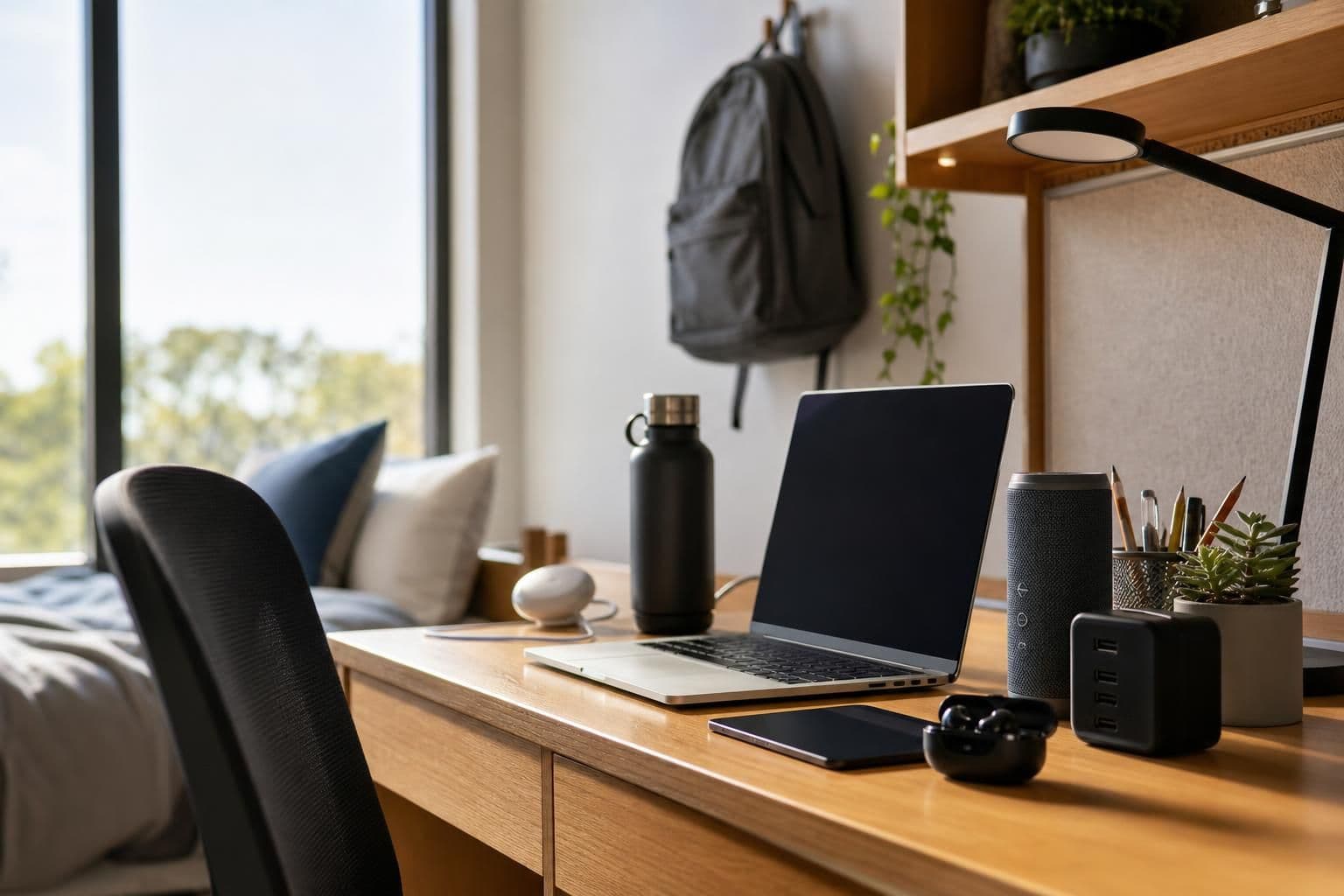
Dorm desks are small, and most students are juggling a laptop, phone, notebook, and sometimes a coffee mug on a surface that's 24 inches wide or less. A 5-in-1 magnetic phone stand keeps a phone upright and charging without a tangle of cables taking up desk real estate — useful for video calls with professors, group project check-ins, or just keeping notifications visible during a study block. For students who want a deeper look at what to check before buying any phone stand, this guide on choosing the right phone stand for a desk covers grip strength, compatibility, and angle adjustment.
Coffee is the other recurring desk need. A 3-in-1 espresso maker replaces a drip machine, a milk frother, and a trip to the campus coffee shop with one countertop unit — handy for early classes or late study nights when the dining hall isn't open. For students deciding between machine types, this breakdown of how to choose an espresso machine for home use explains the tradeoffs between pod-based and manual systems.
Seating and Comfort for Small Rooms
Standard dorm furniture is built for one occupant, which becomes a problem the moment three friends want to watch a movie or study together. A collapsible seat folds flat for storage under a bed or in a closet and pops out for study groups, dorm hangouts, or even outdoor events like tailgates and orientation week activities. It solves the "not enough chairs" problem without committing permanent floor space to furniture that's only needed occasionally.
Staying Organized Between Classes and the Gym
Many students juggle a gym bag, a backpack, and sometimes a change of clothes between classes, practice, and the dining hall. A magnetic gym bag with separated compartments keeps shoes away from clean clothes and books, which matters when a bag gets tossed into a shared common room or a locker. For students comparing bag styles and compartment layouts before buying, this guide on choosing a gym bag with a shoe compartment breaks down what to look for.
A reliable elastic belt also solves a smaller but constant annoyance: dress code events, interviews, and job fairs where a traditional buckle belt digs in or doesn't fit under a blazer. The BeltBro no buckle elastic belt is a low-cost, low-maintenance option for those occasions without needing a full wardrobe upgrade.
Keeping a Phone Charged on Campus
Long days — back-to-back classes, library sessions, part-time shifts — drain a phone fast, especially with GPS and messaging apps running constantly. Battery capacity and charging speed matter more than brand name here; for a closer look at what actually affects performance on the go, see this guide to choosing a power bank for travel, which applies just as well to a campus backpack as a suitcase.
Privacy and Safety in Shared Living Spaces
Dorms, shared apartments, and sublets raise legitimate privacy questions, especially for students moving into a new rental each year. A hidden camera detector can help a student check a new room or short-term rental for undisclosed recording devices before settling in — a reasonable step given how common hidden camera incidents in short-term rentals have become in media reports. Laws about recording and surveillance vary by state and country, so students with specific concerns should check local statutes or consult their campus housing office; the Federal Trade Commission publishes general consumer guidance on privacy and electronic surveillance. A detector is a tool for checking a space, not for monitoring another person, and it should never be used to record someone without their knowledge.
What to Skip (And Why)
Not every trending gadget earns a spot in a packing list. Items worth skipping for most students include:
- Large kitchen appliances that duplicate what a dining hall or small multi-use device already covers.
- Anything requiring a fixed installation (wall mounts, built-in shelving) in housing where students typically sign a one-year lease.
- Single-purpose electronics when a multi-use alternative — like a combined phone stand and charger — does the same job in less space.
Frequently Asked Questions
Q: What are the most useful gadgets for a dorm room specifically?
Compact, multi-use items that address space constraints work best — a mini washing machine for small loads, a collapsible seat for extra guests, and a phone stand that also charges are common dorm picks because they solve space and convenience problems directly.
Q: How much should a college student budget for gadgets before move-in?
There's no fixed rule, but prioritizing two or three high-use items (laundry, charging, seating) over a long list of novelty gadgets tends to give better value, since dorm storage space is limited and budgets are tight for most first-year students.
Q: Is it legal to use a hidden camera detector in a dorm or rental?
Checking a room you're renting or living in for hidden recording devices is generally for personal safety, but recording laws and consent requirements vary by state and country, so students with specific legal questions should check local regulations or their school's housing policies.
Q: Do students really need a separate coffee maker if the dining hall has coffee?
Dining hall hours are often limited and don't cover early mornings or late-night study sessions, which is why a compact espresso maker is a common dorm purchase for students who need caffeine outside standard meal hours.
Q: What's the biggest mistake students make when packing gadgets for college?
Overpacking single-purpose electronics that duplicate functions — bringing a separate alarm clock, phone stand, and charging dock, for example, when one multi-use stand can cover all three — is one of the more common space-wasting mistakes in small dorm rooms.