Affordable Alternatives to Granite Countertops in Hawaii
Key takeaway
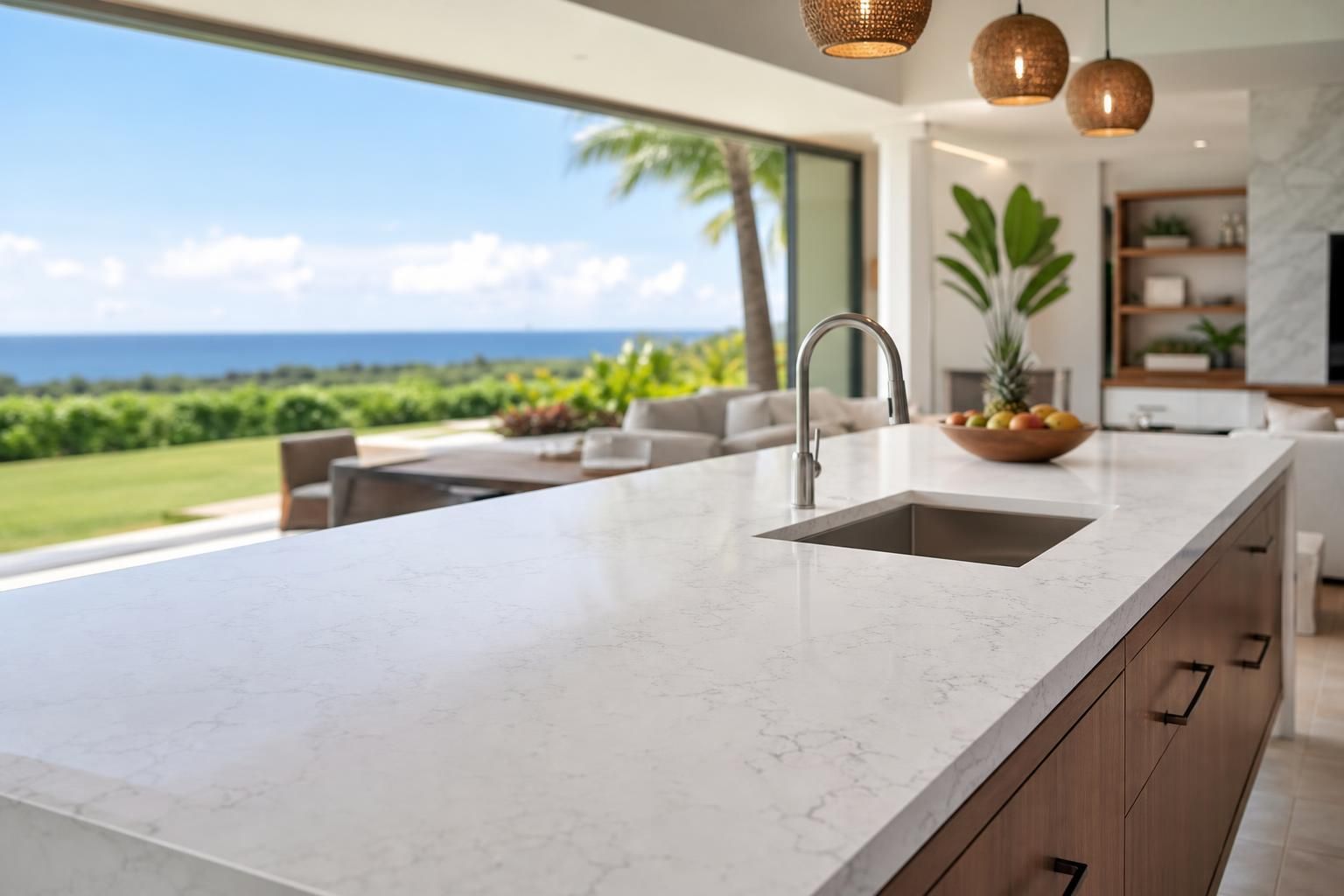
Quartz, porcelain slab, laminate, and butcher block are the most practical affordable alternatives to granite countertops, each trading off differently on cost, maintenance, and heat or moisture resistance. For most Oahu kitchens, engineered quartz delivers the closest look to granite at a lower long-term maintenance burden, while laminate and butcher block offer the lowest upfront cost for condo flips and rental units. The right pick depends on how much daily wear, humidity, and salt air the surface needs to shrug off.
Key takeaways
- Engineered quartz needs no sealing and resists the humidity swings common in Oahu kitchens, unlike natural granite.
- Laminate and butcher block cost less upfront but wear faster in high-use rental or condo kitchens near the coast.
- Porcelain slab handles heat and UV exposure well, making it a strong pick for lanai-adjacent or indoor-outdoor kitchens.
Why Homeowners Look Beyond Granite
Granite is a natural stone, which means every slab varies in color, veining, and porosity — some slabs need resealing more often than others depending on the specific quarry and finish. In a humid climate, an under-sealed granite surface can absorb moisture and stain faster than it would in a drier mainland kitchen, which is one reason Oahu homeowners increasingly compare it against engineered options before committing. Shipping costs also apply to granite the same way they apply to every imported material in Hawaii, so "cheaper" stone isn't automatically cheaper once it's landed and installed here.
Quartz: The Closest Match to Granite's Look
Engineered quartz is made from crushed stone bound with resin, which gives it a non-porous surface that never needs sealing — a real maintenance advantage over natural granite in a damp climate. Because the color and pattern are manufactured rather than mined, quartz slabs are far more consistent from one edge to the other, which matters for buyers trying to match an island countertop to perimeter runs. The Environmental Protection Agency notes that engineered stone products can off-gas low levels of volatile organic compounds during curing, so proper ventilation during installation is worth asking your installer about regardless of which slab material you choose. For a side-by-side on performance and price tier, this comparison of laminate and quartz breaks down where each one fits in an Oahu remodel budget.
Porcelain Slab: Built for Heat and Sun
Porcelain slab countertops are fired at very high temperatures, which makes them highly resistant to scorching, UV fading, and scratching — a genuine advantage for open-concept kitchens that get direct afternoon sun through sliding doors, a common layout in Oahu homes. Porcelain is also one of the few countertop materials rated for some exterior and lanai applications, since it won't absorb water or degrade from salt-laden air the way certain woods and composites can. The tradeoff is that porcelain fabrication requires specialized cutting tools, so not every local fabricator stocks a wide color range, and lead times can run longer than quartz.
Laminate: The Lowest-Cost Entry Point
Laminate countertops are built from layers of resin-saturated paper fused under pressure onto a particleboard or MDF substrate, which keeps material and fabrication costs well below any slab product. This makes laminate a common choice for vacation-rental turnovers and condo flips where the goal is a clean, updated look on a tight timeline rather than a forty-year surface. The main weakness is heat and impact resistance — a hot pan set directly on laminate can scorch the surface, and a sharp edge impact can chip the laminate layer away from the substrate. Reviewing a direct laminate versus quartz breakdown before you commit can help you decide whether the savings are worth the shorter lifespan in a rental unit with frequent guest turnover.
Butcher Block and Other Natural Options
Butcher block countertops bring warmth that fits well with the shaker and slab cabinet styles common in island kitchens, and they can be sanded and refinished multiple times over their life, which resets scratches and stains that would be permanent on a sealed stone surface. Wood is more vulnerable to water damage around sinks and in high-humidity bathrooms, though, so it tends to work best on islands and secondary prep areas rather than full wet-zone counters. A detailed look at butcher block against quartz walks through where each holds up best in a Hawaii kitchen. Soapstone is another natural-stone alternative worth knowing about — it's non-porous enough to skip sealing in many cases, and this soapstone-versus-quartz comparison covers how it compares on durability and look.
What Actually Drives the Cost Difference
Material cost is only part of the equation — fabrication complexity, edge profile, seam placement, and the sink cutout all add labor hours regardless of which surface you choose. In Hawaii, every one of these materials costs more than the national averages quoted in mainland articles, because slabs, resin, and specialty tooling all have to be shipped in, and skilled fabrication labor is priced accordingly. Rather than rely on a generic price table, it's worth requesting a local quote so you're comparing real numbers for your kitchen's layout and material choice rather than a mainland estimate that won't hold up once shipping and local labor are factored in.
Choosing the Right Alternative for Your Kitchen
Start with how the space is actually used: a rental unit with high guest turnover benefits from a tougher, lower-maintenance surface even if it costs more upfront, while a secondary condo kitchen with light use can justify a budget laminate. If you're also replacing the sink as part of the project, matching the countertop material to the right mounting style matters — this guide to picking a sink for quartz countertops covers undermount versus drop-in considerations that apply to several of these slab materials. Homeowners weighing all four options side by side often end up requesting samples in natural island light, since color read can shift noticeably between a showroom's fluorescent lighting and a kitchen with ocean-facing windows.
Frequently Asked Questions
Q: What is the most durable affordable alternative to granite?
Engineered quartz is generally the most durable affordable alternative, since its non-porous resin-and-stone composition resists staining, scratching, and humidity without needing periodic sealing.
Q: Is laminate a good long-term choice for a Hawaii kitchen?
Laminate works well for shorter-term ownership or rental turnovers, but it's more vulnerable to heat and impact damage than quartz, porcelain, or sealed natural stone, so it's a better fit for budget-focused projects than a forever kitchen.
Q: Does humidity affect countertop material choice on Oahu?
Yes — porous or under-sealed natural materials can absorb moisture faster in consistently humid conditions, which is part of why non-porous options like quartz and porcelain have become popular alternatives to granite in island kitchens.
Q: Can porcelain countertops be used outdoors on a lanai?
Many porcelain slab products are rated for some exterior use because they resist UV fading and water absorption, though installation details and edge support should be confirmed with your fabricator for an outdoor application.
Q: How do I compare real costs for my kitchen instead of general estimates?
Because shipping and labor costs in Hawaii run above mainland figures, the most accurate way to compare materials is to request a local quote or consultation based on your actual layout, square footage, and chosen edge profile.