How to Prevent Water Rings on Quartz Countertops
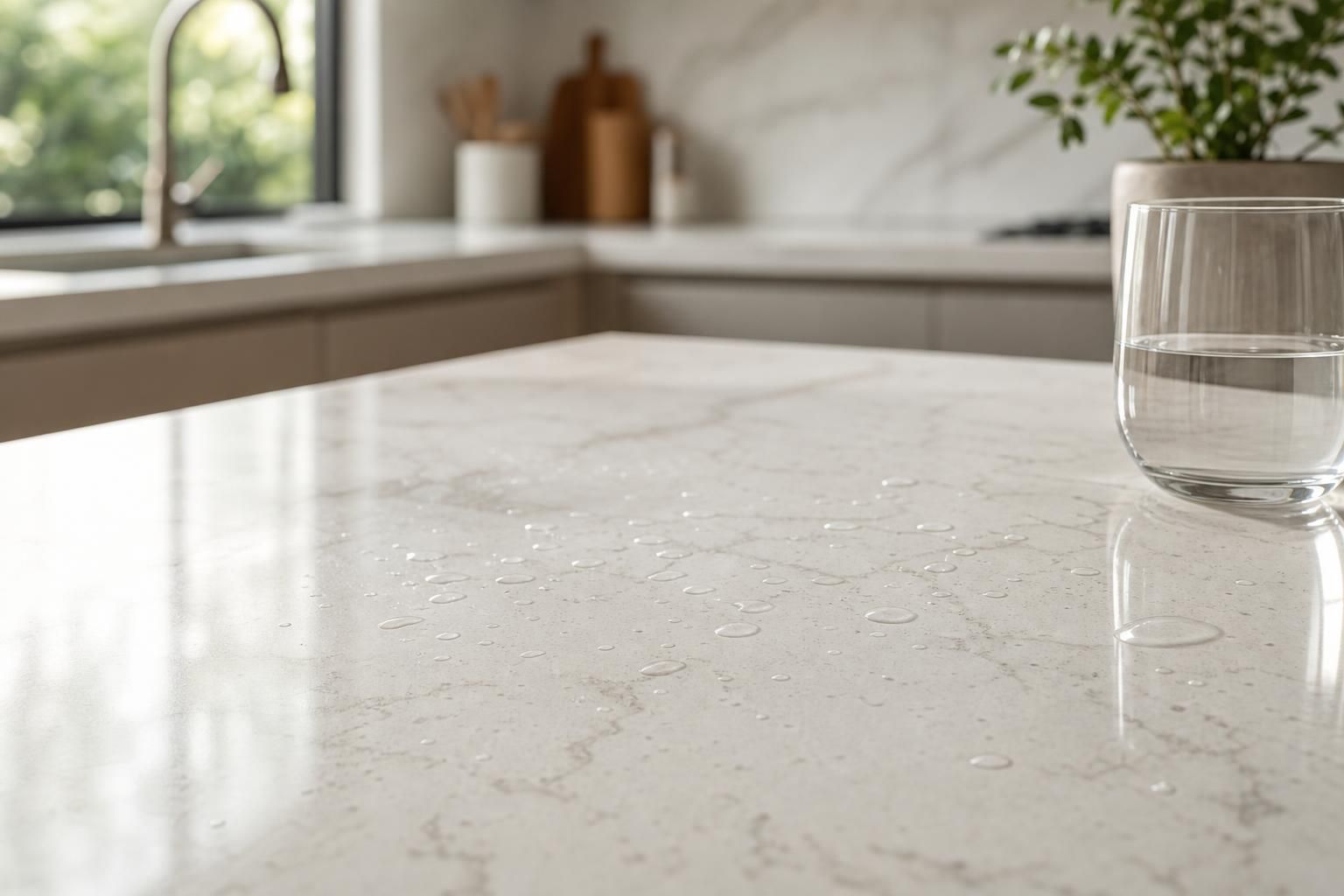
Key takeaway
You prevent water rings on quartz by wiping up standing water before it evaporates, using coasters or trivets under wet glasses and hot items, and cleaning with a pH-neutral soap instead of bleach or vinegar. Quartz itself is non-porous, so plain water doesn't soak in or stain the stone — the marks you see are almost always mineral deposits left behind after water dries, or a subtle dulling of the surface resin from heat or harsh chemicals. Catching spills quickly and sticking to gentle cleaners stops both problems before they start.
Key takeaways
- Wipe up water within a few minutes, especially around sinks and glasses — rings form from mineral residue left after evaporation, not from the water itself.
- Skip bleach, vinegar, and abrasive powders; a mild dish soap and soft cloth are enough for quartz's resin-bound surface.
- Always use a trivet for anything hot straight from the stove, oven, or dishwasher — heat combined with moisture is what actually damages the finish.
Why Water Can Still Mark a Non-Porous Surface
Quartz countertops are engineered from crushed natural quartz bound together with polyester resin, which fills in the microscopic gaps that make natural stone like granite porous. That's why quartz doesn't need sealing the way granite or marble does. But "non-porous" doesn't mean "immune to marks" — what you're usually seeing after a glass sits too long isn't a stain in the stone, it's a thin film of dissolved minerals (calcium, magnesium, silica) that stayed behind on the surface once the water evaporated. On a glossy quartz finish, that residue catches light differently than the surrounding counter and shows up as a cloudy ring.
Hard Water and Hawaii's Water Supply
How noticeable mineral rings become depends partly on local water hardness. Water hardness varies by source and neighborhood across Oahu, and homeowners on well-fed or older plumbing systems sometimes notice heavier mineral buildup on fixtures and countertops than those on newer municipal lines. The U.S. Environmental Protection Agency notes that hard water minerals are harmless to drink but commonly leave visible deposits on glass, metal, and polished surfaces as they evaporate — which is exactly the mechanism behind most quartz "water rings." If you're renovating a kitchen near the sink area where this is most common, it's worth factoring in a faucet or soap dish placement that limits standing puddles.
Daily Habits That Stop Rings Before They Start
A few simple routines handle most of the problem:
- Wipe counters dry after dishes or cooking, rather than letting water air-dry on the surface.
- Use a drain mat or small tray near the sink to catch drips from wet dishes and cups.
- Keep a dedicated microfiber cloth at the counter edge so wiping up a spill takes five seconds, not a trip across the kitchen.
- Use coasters for cold and sweating glasses, since condensation rings are really just another form of the same mineral-residue issue.
- Towel-dry around the stovetop and faucet base, two spots that collect splashes most often.
None of this requires special products — it's really about not letting water sit long enough to evaporate on its own.
Cleaning Products That Help (and Ones That Hurt)
The resin in quartz is durable but not indestructible, and some common cleaners do more harm than the water they're meant to remove. Bleach, ammonia-based glass cleaners, and acidic products like vinegar or citrus-based sprays can gradually dull the resin's sheen or discolor grout-like seams between slab sections with repeated use. Most quartz manufacturers, including Caesarstone, recommend a soft cloth with warm water and a mild dish soap for everyday cleaning, reserving a non-abrasive stone cleaner for tougher spots. If you do develop a cloudy ring from hard water, a damp cloth with a small amount of dish soap, followed by a thorough dry-off, usually clears it without needing anything stronger.
Heat, Humidity, and Why Hawaii Kitchens Need Extra Care
Island kitchens deal with more ambient humidity than most mainland homes, which can slow how quickly water evaporates off a counter and give mineral deposits more time to settle into a visible ring. Pair that with the habit of setting a hot pan straight off the stove onto the counter, and you get a double stress on the surface: moisture plus heat. The Natural Stone Institute advises always using a trivet or hot pad for cookware, since sudden temperature changes can stress the resin binder in engineered stone even when the surface looks fine on the outside. This is the same climate logic that applies to keeping cabinet doors from swelling in humid conditions — moisture management matters for every surface in an island kitchen, not just the counters.
Choosing a Finish That Hides Minor Marks
Not all quartz looks the same under a water spot. High-gloss, solid-color slabs tend to show mineral film and fingerprints more readily than matte or heavily veined finishes, simply because there's less visual texture to camouflage a faint ring. If water rings are a concern for a busy family kitchen or a vacation rental with frequent turnover, a textured or patterned quartz can be a practical choice over a stark white gloss slab. It's one of several durability trade-offs worth weighing when comparing quartz against other countertop materials for an Oahu kitchen or bath remodel.
Frequently Asked Questions
Q: Do water rings mean my quartz countertop is damaged?
Not usually. Most water rings are surface-level mineral deposits from evaporated water, not actual stains inside the stone, and they typically wipe away with mild soap and a damp cloth.
Q: Can vinegar remove water rings from quartz?
It's best avoided. Vinegar is acidic and can dull the resin finish over time with repeated use, so a mild dish soap and warm water is the safer choice for both removing rings and routine cleaning.
Q: Does quartz need to be sealed to prevent water marks?
No. Quartz is engineered with resin that makes it non-porous, so it doesn't require sealing the way granite or marble does — the marks you see come from mineral residue on the surface, not water soaking into the stone.
Q: Why do I get more water rings in my Oahu kitchen than I did on the mainland?
Higher ambient humidity common in island homes can slow evaporation, giving mineral deposits more time to settle visibly on the surface before the water fully dries.
Q: Is it safe to put a hot pan directly on quartz to dry it quickly?
No — sudden heat can stress the resin binder in quartz, so a trivet or hot pad should always be used, even briefly, rather than relying on heat to evaporate a spill.