Pairing Quartz Countertops With Shaker Cabinets
Key takeaway
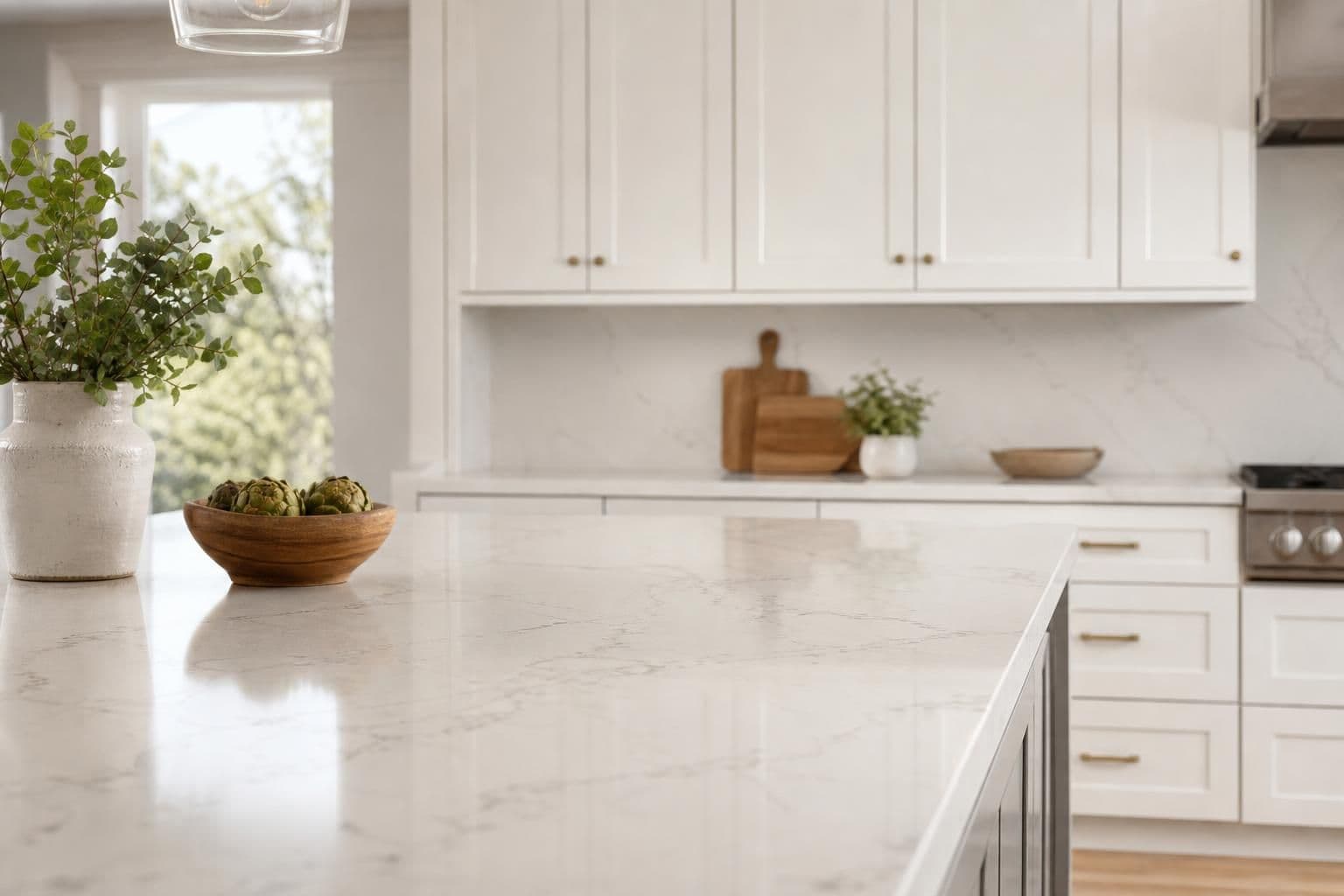
Pairing quartz countertops with shaker cabinets works for a tropical look because the cabinet's simple, recessed-panel frame keeps the eye calm while a light, veined or soft-toned quartz slab adds movement without visual clutter. Choose warm whites, sandy beiges, or pale greige quartz against a shaker door in white, driftwood, or a muted island-inspired blue or green, and finish with brushed brass or matte black hardware for contrast. This combination reads as clean, breezy, and coastal rather than heavy or formal — well suited to Hawaii's light-filled kitchens and open-plan living.
Key takeaways
- Stick to quartz with soft veining or subtle flecking rather than bold dark veining, so the countertop reads as calm and beach-inspired rather than dramatic.
- Choose shaker doors in warm white, sand, driftwood gray, or a muted seafoam/blue for a tropical-modern palette that still feels timeless.
- Pick quartz over natural stone for high-humidity, salt-air kitchens and vacation rentals, since it needs no sealing and resists staining better than porous stone.
Why Shaker Cabinets Suit a Tropical Aesthetic
Shaker cabinets have a flat center panel framed by a simple rail and stile, with no ornate molding or carving. That plainness is exactly what makes them flexible for island design — the door style stays quiet so the countertop, backsplash, and natural light can carry the visual interest. A busy raised-panel or ornate door style tends to fight with the organic movement in quartz, while a shaker profile lets a slab with soft veining or sandy flecking read as a design feature rather than noise.
If you're deciding between a fully custom shaker layout and a stock option, it helps to understand the differences between custom and stock cabinets before settling on a door style, since custom shaker fronts let you match reveal sizes and finish tone more precisely to a specific quartz slab.
Choosing the Right Quartz Tone
For a tropical feel, lean toward quartz colors that read like sand, coral, sea glass, or driftwood rather than the heavy black-and-gold veining common in more formal, mainland-style kitchens. Good options include:
- Soft white or cream quartz with fine gray veining, which mimics the look of beach sand and coral without the upkeep of natural marble.
- Warm greige or taupe quartz, which pairs well with driftwood-toned shaker cabinets and warm wood flooring.
- Pale blue-gray or seafoam-flecked quartz for kitchens that want a subtler nod to ocean color without going full color-block.
Quartz is engineered from crushed natural stone bound with resin, which is why it holds a consistent pattern and color across a whole slab — useful when you're trying to match an island top to perimeter counters in an open kitchen. If you want a deeper walk-through of slab options, this guide to quartz countertops in Honolulu breaks down the styles most popular with local homeowners.
Cabinet Color and Finish Combinations
Shaker cabinets in a tropical kitchen tend to work best in one of a few directions:
- All-white shaker with a veined quartz top — the most versatile combination, and it keeps a small condo kitchen feeling open and bright.
- Driftwood or warm oak-toned shaker with a cream or sand quartz top — leans more organic and works well with natural-fiber lighting and woven textures.
- Two-tone shaker — a muted blue, green, or charcoal on the lower cabinets with white uppers, topped in a light quartz that ties the two tones together.
Matte or satin cabinet finishes generally hold up better than high-gloss in humid, salt-air environments, since gloss surfaces show fingerprints and moisture spotting more readily. If you're weighing material for the cabinet boxes themselves, the difference between engineered and solid wood cabinets is worth reading, since moisture-resistant engineered options often perform better on Oahu than solid wood in kitchens near the coast.
Hardware, Backsplash, and Lighting Choices
Hardware is where a tropical-modern kitchen either commits to the look or falls back into something generic. Brushed brass, aged brass, and matte black all pair well with shaker doors and light quartz, and each pulls the eye in a slightly different direction — brass warms up an all-white kitchen, while matte black adds contrast against sand-toned cabinets. A simple subway tile or a natural-stone-look backsplash keeps the palette cohesive, and larger windows or skylights let the quartz slab show its natural light-catching qualities rather than relying on artificial lighting alone.
Durability Considerations for Hawaii's Climate
Quartz's resin binder makes it non-porous, so it doesn't need periodic sealing the way granite or marble does, and it resists staining from acidic foods, oils, and moisture — a real advantage in Hawaii's humidity and in vacation rentals with frequent guest turnover. High indoor humidity can encourage mold and mildew growth on porous surfaces and around poorly sealed joints, which is one reason the EPA's indoor air quality guidance recommends controlling moisture at the source rather than relying on surface cleaning alone. Pairing a non-porous quartz top with a well-sealed cabinet box and good kitchen ventilation reduces that risk significantly.
Shaker cabinets built from moisture-resistant engineered wood or properly finished solid wood also hold up better against Oahu's rainy-season humidity swings and coastal air than cabinets with exposed particleboard edges. For cabinet boxes specifically, look for finishes rated for kitchen and bath use, and confirm edge-banding is sealed on all sides, not just the visible face.
Maintenance That Keeps the Look Sharp
A light-toned quartz countertop shows dust and crumbs more than a dark slab, but it's easier to keep spotless day to day because spills wipe away without staining. Routine care is simple: warm water, a mild dish soap, and a soft cloth handle most daily messes, and cleaning quartz in Hawaii's humidity covers the specific products to avoid so the surface doesn't dull over time. Cabinets need less frequent attention — a damp microfiber cloth on doors and a dry cloth on hardware keeps a shaker kitchen looking fresh for years.
Because materials for both quartz and quality cabinet boxes are shipped to Oahu and labor rates run higher than the mainland average, costs for a full quartz-and-shaker kitchen here typically land above what you'd see in national pricing guides — a local in-home consultation is the most reliable way to get an accurate number for your specific layout.
Frequently Asked Questions
Q: What quartz color looks best with white shaker cabinets for a tropical style?
Soft white or cream quartz with fine gray veining or subtle sandy flecking tends to look the most tropical, since it reads like sand or coral rather than heavy stone veining. Pale blue-gray or seafoam-toned quartz is a good alternative if you want a subtler nod to ocean color.
Q: Are shaker cabinets a good fit for a small condo kitchen?
Yes — the flat, unadorned panel keeps a small space visually calm, and light cabinet colors paired with a light quartz top help a compact kitchen feel larger and brighter. This combination is common in Oahu condo remodels where every square foot of counter and cabinet space matters.
Q: Does quartz need sealing like granite or marble in Hawaii's humidity?
No. Quartz is non-porous because of its resin binder, so it doesn't require periodic sealing and resists staining and moisture absorption better than porous natural stone, which is useful in Hawaii's humid, salt-air climate.
Q: What cabinet finish holds up best against salt air and humidity?
Matte or satin finishes on moisture-resistant engineered wood generally perform better near the coast than high-gloss finishes or solid wood with exposed, unsealed edges, since gloss shows moisture spotting and solid wood can expand or contract with humidity swings.
Q: Can I mix two cabinet colors with one quartz countertop?
Yes, a two-tone layout — such as a muted color on lower cabinets with white uppers — is a popular way to add depth to a shaker kitchen while a single light quartz slab ties the tones together across the whole space.