The Best Beds for Senior Dogs with Arthritis
Key takeaway
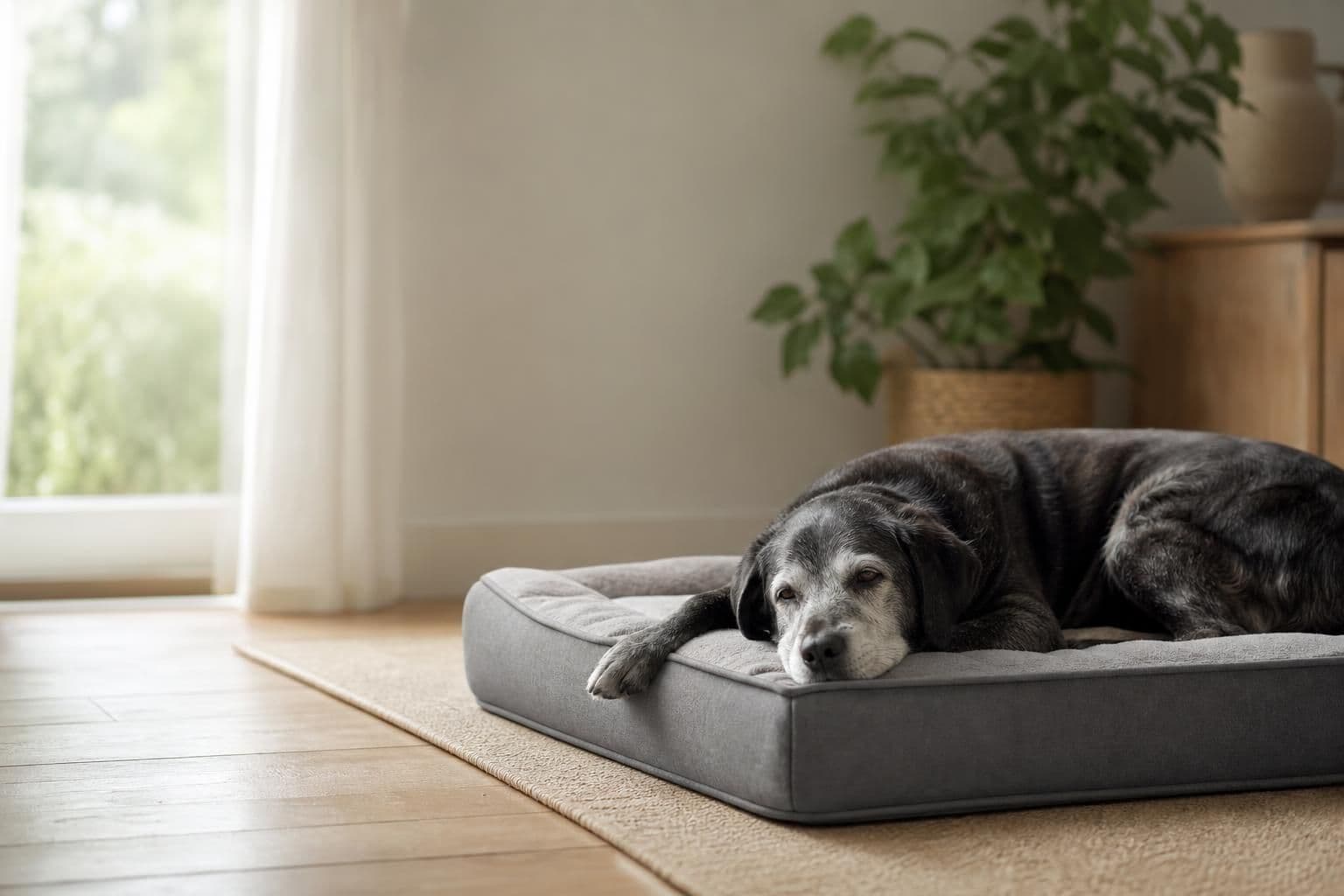
The best bed for a senior dog with arthritis is a supportive orthopedic memory foam bed at least 3-4 inches thick, sized so the dog can fully stretch out without hanging off the edges, with a removable, washable cover and low sides for easy entry and exit. Standard fiberfill or thin cushion beds compress under weight within weeks and stop cushioning pressure points on hips, elbows, and shoulders. Getting the foam density and bed size right matters more than any added feature like heating or bolsters.
Key takeaways
- Choose orthopedic-grade memory foam at least 3 inches thick (4+ inches for dogs over 50 lbs) rather than fiberfill or standard poly-foam.
- Measure your dog nose-to-tail while lying stretched out, then add 6-8 inches so joints aren't curled to fit the bed.
- Low entry height (under 4 inches) matters as much as cushioning for dogs who struggle to step up or climb in.
Why Regular Beds Fail Arthritic Joints
Fiberfill and basic foam beds flatten out under repeated pressure, especially at the hips and shoulders where a senior dog carries most of its weight while lying down. Once that cushioning compresses, the dog is effectively lying on a firm floor with a thin cover over it, which increases pressure on already inflamed joints. Osteoarthritis affects a large share of aging dogs, and the American Veterinary Medical Association notes that degenerative joint changes are among the most common chronic conditions veterinarians manage in older pets. A bed that keeps its loft under sustained weight helps distribute that pressure instead of concentrating it on bone.
What "Orthopedic" Actually Means in a Bed
Not every bed labeled "orthopedic" uses the same materials. The distinction that matters is foam density and recovery time — high-density memory foam should slowly spring back into shape after your dog gets up, rather than staying dented. A bed that never returns to its original shape has already lost the support it's supposed to provide. When Ziva Paws' resident testers Ai and Dudu try out bedding samples, the ones that hold their shape after repeated naps are consistently the ones that keep cushioning evenly instead of forming a permanent hollow in the middle.
Comparing Bed Types for Arthritic Dogs
| Bed Type | Support Level | Best For | Watch Out For |
|---|---|---|---|
| Orthopedic memory foam (3-4"+) | High, even pressure distribution | Moderate to severe arthritis, larger breeds | Higher price than basic cushions |
| Bolstered foam bed | Moderate, adds head/neck support | Dogs who like to lean or rest their head | Bolster edges can be a barrier for stiff hips |
| Heated orthopedic bed | High support + warmth | Cold climates, dogs with stiffness that worsens in winter | Needs an accessible outlet and safety-rated cord |
| Elevated/cot-style bed | Low-moderate, no compression over time | Warm climates, dogs who overheat easily | Less cushioning for bony pressure points |
| Standard fiberfill bed | Low, compresses quickly | Healthy adult dogs without joint issues | Not recommended for arthritic dogs |
Getting the Size Right
An undersized bed forces a dog to curl tightly, which works against stiff joints that need to stretch out. Measure your dog lying on their side from nose to the base of the tail, then add roughly 6 to 8 inches of extra length so the legs and neck aren't cramped. This same "measure the actual dog, not the breed label" approach is why sizing by inches rather than generic S/M/L works better for pet clothing sizing too — a bed or coat sized off breed averages alone often doesn't match the individual dog in front of you.
Entry Height and Mobility
Cushioning is only half the equation. A senior dog with sore hips may avoid a bed entirely if getting in requires stepping over a high rim or climbing onto a raised platform. Look for a low-profile design, or add a ramp if the bed sits elevated. Bolstered sides are fine for head support but shouldn't create a wall the dog has to climb over to lie down.
Placement and Supporting Habits
Where the bed sits in the house affects how much a dog actually uses it. Hard floors like tile or hardwood transfer cold and can make a dog reluctant to settle nearby, so placing the bed on carpet or adding a non-slip mat underneath helps. Dogs anxious about being isolated from the family also tend to rest better in a bed placed in a well-used room rather than a back bedroom — a pattern covered in more detail in this guide to choosing a cozy bed for anxious dogs, since comfort and emotional security often reinforce each other in senior dogs.
Washability and Everyday Maintenance
Senior dogs with joint pain often have more accidents or excess shedding, so a removable, machine-washable cover isn't a luxury feature — it's what keeps the bed sanitary long-term. Beds with a separate waterproof liner under the cover protect the foam core from moisture that would otherwise degrade its support over time. The Cornell University College of Veterinary Medicine points out that maintaining clean, dry bedding is part of basic supportive care for dogs with mobility limitations, since damp or soiled bedding can contribute to skin irritation on top of existing joint discomfort.
Signs the Current Bed Isn't Working
- The dog chooses to lie on bare floor or tile instead of the bed.
- Visible flattened, hollowed-out spots where the dog usually rests.
- Difficulty or hesitation getting in and out compared to a few months ago.
- Stiffness appears worse after long naps rather than improving with rest.
Any of these signs is a reasonable trigger to reassess bed thickness, size, or entry height rather than assuming the issue is only medical.
A Note on Complementary Care
A supportive bed helps manage daily comfort, but it isn't a substitute for veterinary evaluation of arthritis pain. The American College of Veterinary Surgeons recommends that dogs showing signs of joint stiffness, reluctance to jump, or reduced activity be assessed by a veterinarian, since pain management plans often combine environmental changes like bedding with other treatment.
Frequently Asked Questions
Q: How thick should a dog bed be for arthritis?
Most orthopedic beds for arthritic dogs should be at least 3 inches of high-density memory foam, and 4 inches or more for dogs over 50 pounds, since thinner foam compresses too quickly to keep protecting joints.
Q: Are heated beds good for dogs with arthritis?
Warmth can ease stiffness for many dogs, especially in cold weather, but a heating element should never replace adequate foam support — look for a bed that combines both rather than warmth alone.
Q: How often should I replace an orthopedic dog bed?
Replace it once the foam stops springing back into shape after your dog gets up, since a permanently flattened core no longer distributes weight evenly, regardless of how new the cover looks.
Q: Do elevated cot beds work for arthritic dogs?
Elevated cot-style beds can suit dogs prone to overheating, but they offer less cushioning than foam beds and may not be ideal for dogs with pronounced hip or elbow pain who need pressure relief.
Q: Should the bed have raised sides or bolsters?
Bolsters can help dogs who like head and neck support, but avoid high rims that require climbing, since a senior dog with sore joints needs low, easy entry more than enclosed sides.