Calming Bed for Cats with Anxiety: What Actually Helps
Key takeaway
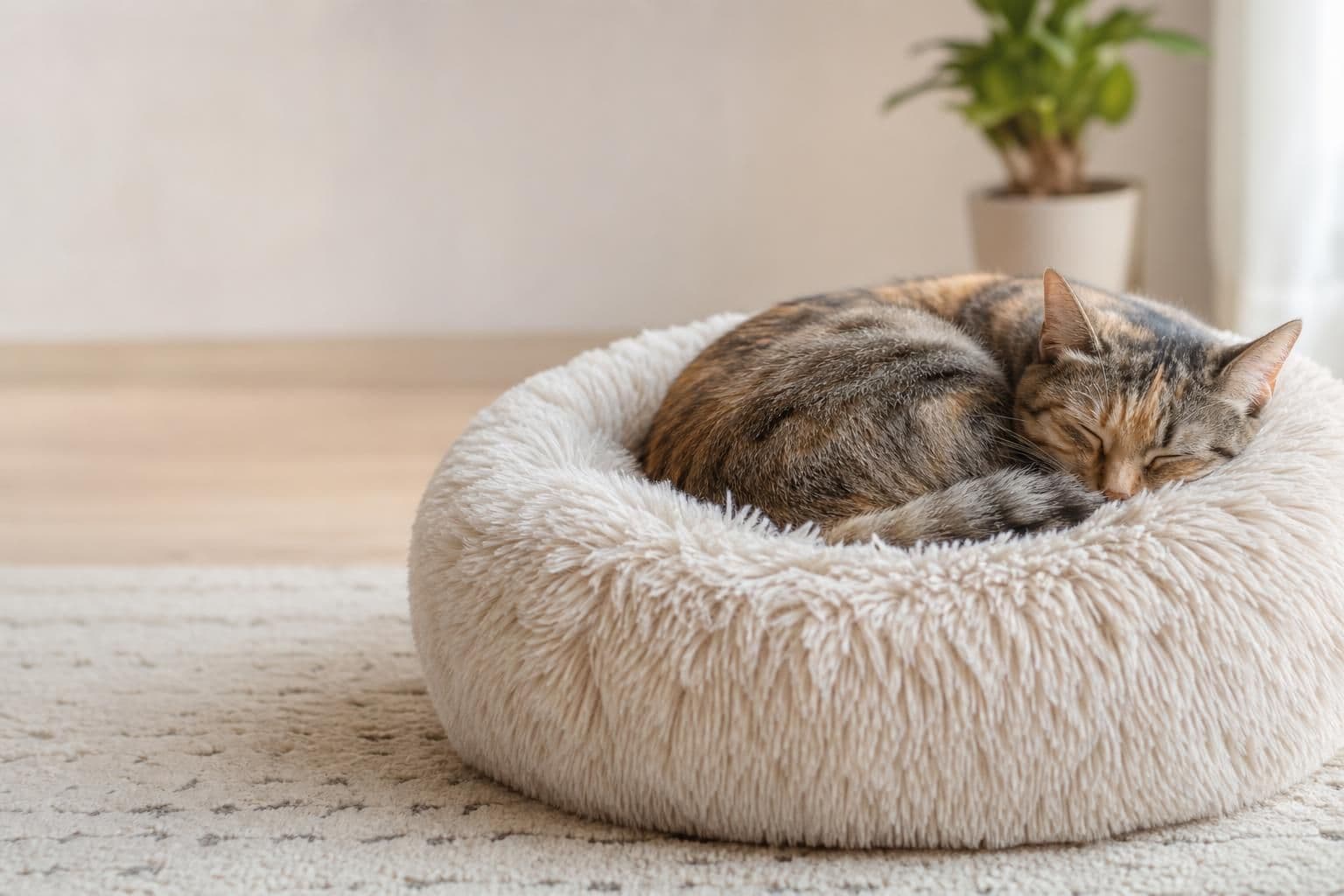
A calming bed for cats with anxiety works by combining a raised or enclosed rim that presses gently against the cat's body (mimicking the feeling of being held), soft plush or faux-fur fabric, and a size small enough that the cat has to curl up rather than sprawl out. The pressure and enclosure trigger a sense of security similar to swaddling, which can lower a stressed cat's heart rate and reduce pacing or hiding behavior. No bed cures anxiety on its own, but the right shape and placement make a real difference for many cats.
Key takeaways
- Look for a donut, nest, or hooded shape with raised sides — flat pillow beds don't offer the same pressure-and-security effect.
- Place the bed in a quiet, low-traffic corner the cat already retreats to, not a busy hallway or near loud appliances.
- Pair the bed with one consistent routine (same spot, same blanket scent) since cats calm faster with predictability than novelty.
Why Shape and Enclosure Matter More Than Softness
Cats seek out small, enclosed spaces when they're stressed because tight spaces limit exposure and reduce the number of directions a threat could come from. This is the same instinct that makes a cat squeeze into a box or under a bed during a thunderstorm. A calming bed replicates that instinct with raised walls, a hood, or a donut shape that a cat can back into. According to the Cornell Feline Health Center, providing hiding places and vertical or enclosed resting spots is a recommended way to reduce environmental stress in cats. Softness helps with comfort, but without the enclosed shape, a plush bed is just a pillow — it won't produce the same settling effect.
Signs Your Cat's Stress Is Bed-Related
Not every anxious behavior is solved by a bed, so it helps to know what a bed can and can't fix.
- Bed-solvable signs: sleeping in closets, under furniture, or in laundry piles instead of open areas; restless pacing at night; reluctance to settle in a shared room.
- Not bed-solvable alone: sudden litter box avoidance, excessive grooming to the point of bald patches, or aggression — these warrant a vet visit, since they can point to pain or a medical issue rather than pure environmental stress. The American Veterinary Medical Association notes that behavior changes in cats often have an underlying medical component that should be ruled out first.
If your cat already has a preferred hiding spot, that location — not the middle of the living room — is usually the right place for the new bed.
Material and Size Details Worth Checking
Because sizing on pet beds is often vague, it's worth checking actual measurements rather than trusting a generic "small/medium" label — the same problem shows up with pet clothing, which is why Ziva Paws lists clothing in inches for chest, neck, and back length instead of guessing sizes. For a cat bed specifically, look for:
- An inner diameter close to your cat's curled-up size, not their stretched-out length — too much extra room defeats the enclosed feel.
- Machine-washable covers, since anxious cats may have accidents or shed heavily under stress.
- A low, sturdy base so the bed doesn't tip or slide on hard floors, which can startle a cat further.
Our cats Ai and Dudu — who test products before they're listed — consistently gravitate toward the hooded and rimmed styles over flat cushions, which lines up with the enclosure preference described above.
Placement and Routine Matter as Much as the Bed Itself
A calming bed placed in the wrong spot won't get used. Cats prefer resting areas that are elevated or tucked against a wall, away from foot traffic, vents, and other pets' feeding areas. If you're unsure whether your cat's stress is bed-related or box-related, it's worth reviewing whether cats actually need a dedicated bed at all, since some cats are perfectly content with a blanket-lined box in the right location. Once you've picked a spot, keep it consistent — moving the bed around defeats the purpose, since predictability is part of what reduces stress in the first place.
What to Try Alongside the Bed
A bed is one piece of a broader anxiety-reduction routine, not a standalone fix. Other supports that commonly help:
- Vertical space or a scratching post nearby, since climbing and scratching are natural stress outlets — see how to choose a cat scratching post for what to look for in height and stability.
- Consistent feeding times, since unpredictable meals can add to overall stress load.
- Reducing sudden loud noises near the resting area, including vacuum cleaners and doorbells.
If you also have an anxious dog in the house, the same enclosure-and-consistency principle applies — our guide to a cozy bed for anxious dogs covers the dog-specific version of this same idea.
When to Loop In a Vet
If a new bed and calmer environment don't change your cat's hiding or pacing within a couple of weeks, or if you notice appetite changes, over-grooming, or litter box issues alongside the anxiety, a veterinary visit is the next step. The ASPCA recommends ruling out pain or illness before assuming a behavior is purely stress-related, since cats are known for masking discomfort.
Frequently Asked Questions
Q: What shape of cat bed is best for anxiety?
Donut-shaped, hooded, or nest-style beds with raised rims work best because they let a cat press against enclosed walls, which mimics the pressure and security of a tight hiding spot.
Q: Should a calming cat bed be warm?
Warmth can help but isn't the main mechanism — enclosure and pressure matter more. A washable plush cover that retains a little body heat is a reasonable bonus, not the deciding factor.
Q: Where should I put a calming bed for an anxious cat?
Place it in a quiet, low-traffic spot the cat already retreats to, such as a corner, closet edge, or elevated shelf, rather than an open central room.
Q: Can a bed alone fix a cat's anxiety?
No — a bed can reduce environmental stress, but sudden behavior changes like litter box avoidance or over-grooming need a veterinary check to rule out a medical cause.
Q: How do I know if my cat actually needs a bed versus a box?
Watch where your cat already chooses to rest; if it's consistently a small, enclosed space, a bed with similar dimensions will likely get used, while an oversized or overly open bed often gets ignored.