Can Cats Wear Dog Sweaters? What to Know Before You Try
Key takeaway
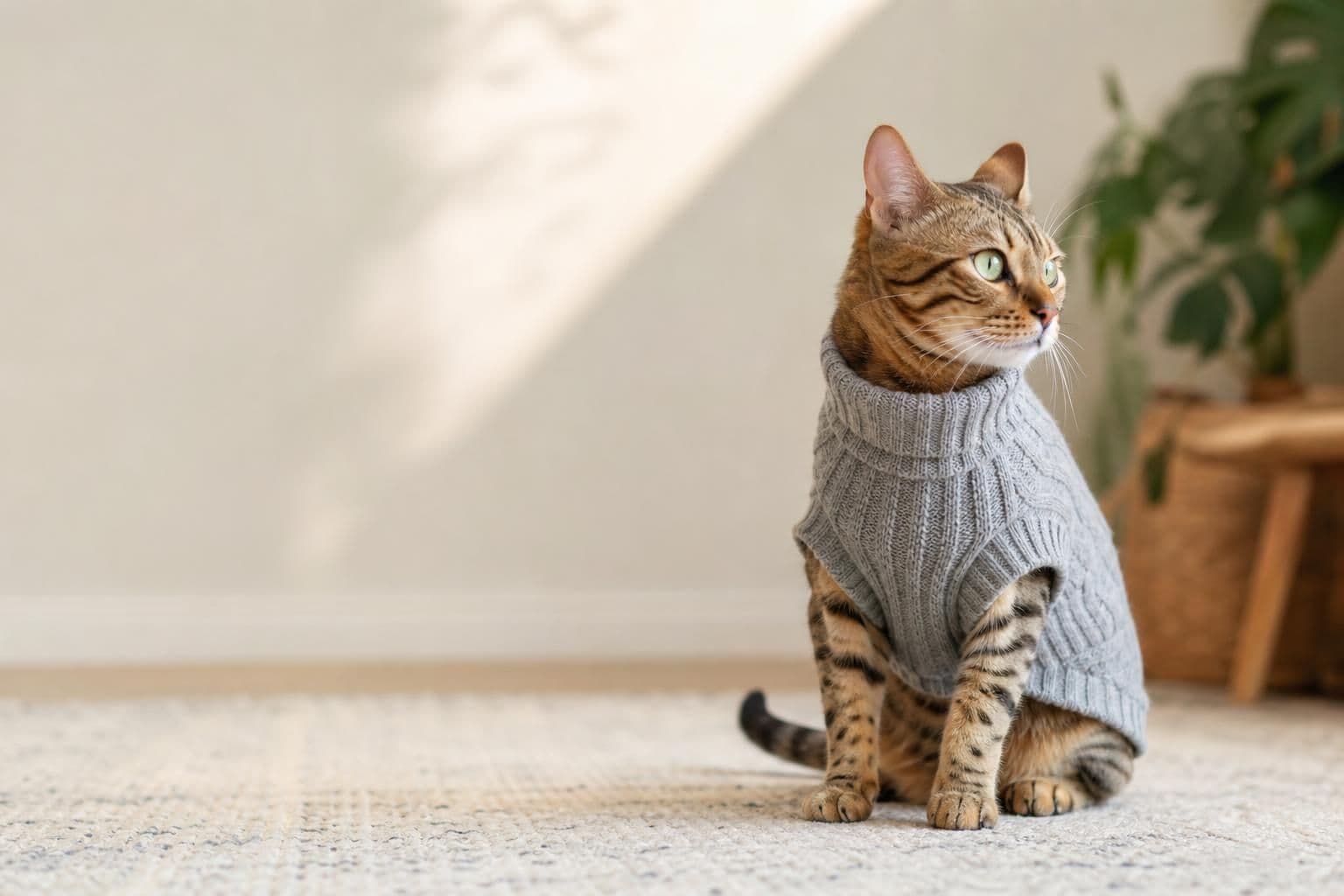
Cats can technically wear some dog sweaters, but most dog garments are cut for a longer back and narrower chest-to-neck ratio than cats have, so the fit is usually off around the neck, legs, and belly. A dog sweater made for a small breed can sometimes work in a pinch, but a garment sized specifically for cats will fit the shoulders and hips more accurately and is less likely to restrict movement or rub the armpits.
Key takeaways
- Cat and small-dog bodies differ enough in proportion that a "one size fits both" sweater rarely fits either animal well.
- Check chest girth, neck girth, and back length in inches rather than relying on an S/M/L tag, since those labels vary wildly between brands.
- Watch your cat's behavior for the first 10-15 minutes in any new garment — freezing in place, excessive scratching at it, or falling over are signs it doesn't fit or isn't tolerated.
Why Cat and Dog Bodies Fit Differently
A cat's chest is proportionally narrower relative to its length than most dog breeds, and cats also have a more flexible spine and a lower stance when they crouch or stalk. A sweater built for a small dog's barrel-shaped ribcage often gaps at a cat's chest while pulling tight across the shoulders, which can restrict the front legs' range of motion. Dog sweaters also tend to be cut longer in the back to cover a dog's typical stance, which on a cat can bunch up near the tail or drag on the ground when they crouch to eat or use the litter box.
Leg openings are another mismatch. Many dog sweaters have wider armholes set further back, matching a dog's shoulder placement, while a cat's front legs sit closer together and more forward. That difference is often what causes a cat to walk stiffly or refuse to move at all in a dog garment, even one that looks like the right size on a tag.
What Actually Matters: Measurements, Not Labels
Skip the size label entirely and go by three measurements: neck circumference, chest girth (the widest part behind the front legs), and back length (base of neck to base of tail). These numbers matter more than whether a garment is marketed for cats or small dogs, because a size "S" from one brand can be two inches smaller than a size "S" from another.
If you're comparing a dog garment against your cat's measurements, check:
- Neck girth — should allow two fingers to slide under comfortably, not just fit over the head.
- Chest girth — measured at the widest point behind the front legs, not the narrower rib area further back.
- Back length — too long and it drags or bunches when the cat crouches; too short and it rides up over the belly.
This is the same reason zivapaws.com/collections/clothing lists every piece in actual inches for chest, neck, and back length instead of just S/M/L — a cat and a small dog can both be labeled "small" and still need different numbers. If you're weighing whether dressing a cat is a good idea in the first place, our guide on what vets and owners actually think about dressing up cats covers the welfare side in more depth.
Signs a Sweater Doesn't Fit, Even If the Tag Says It Should
A garment can look correct on the hanger and still be wrong on the animal. Watch for:
- The "frozen cat" stance — standing still, low to the ground, and refusing to walk. This usually means the shoulders or chest are too tight.
- Excessive backward scratching at the neckline, which often signals the collar opening is too small or the seam is rubbing.
- Visible skin folds or bunching at the armpits, which means the chest girth is too generous and the fabric is shifting.
- Cold, damp fabric against the skin after just a few minutes — some knit blends absorb moisture rather than wicking it, which can chill a cat faster than going without.
Our cats Ai and Dudu react to ill-fitting garments almost immediately — one of them will stop mid-step and just sit down until it's off. That reaction is a useful cue for any owner: a cat that stalls out instead of walking normally is telling you something about the fit, not just being fussy.
When a Cat-Specific Garment Makes More Sense
Short-haired cats, senior cats, and cats recovering from shaving (common after a vet dental cleaning or surgery) often benefit from a lightweight layer in a cooler home, but the garment needs armholes set for a cat's narrower stance and a back length that won't drag when they crouch. A dog sweater borrowed from a small-breed dog can work temporarily if the measurements happen to line up, but it's worth double-checking chest girth and armhole placement rather than assuming "small dog" and "cat" are interchangeable sizes.
Fabric choice matters too. The ASPCA notes that cats regulate temperature differently than dogs and can overheat in heavier fabrics faster, so a thin knit or fleece is generally a safer starting point than a padded or insulated dog coat. If your household also has a dog that needs cold- or wet-weather gear, our large dog raincoat guide and winter coat with hood guide cover fit considerations specific to dogs, which is a useful contrast if you're trying to see just how different the two sizing needs really are.
A Quick Fit Check Before Buying Anything
Before ordering any garment, dog or cat brand, measure your cat while they're standing normally (not stretched or curled), and compare those numbers directly to the size chart in inches. If a listing only offers S/M/L with no measurements, that's a sign to look elsewhere or contact the seller for exact numbers. The American Veterinary Medical Association recommends supervising any newly dressed pet for the first outing to make sure the garment doesn't interfere with normal movement, eating, or grooming — advice that applies just as much to a sweater as to a harness or coat.
Frequently Asked Questions
Q: Can cats safely wear dog sweaters?
Some can, if the measurements happen to match, but most dog sweaters are cut with a longer back and different armhole placement than cats need. Checking chest girth, neck girth, and back length against the garment's actual measurements matters more than whether it's labeled for cats or dogs.
Q: What's the biggest fit problem when putting a dog sweater on a cat?
Armhole placement is usually the issue — dog sweaters set the leg openings further back and wider to match a dog's shoulder structure, which can restrict a cat's front legs and cause a stiff, reluctant walk.
Q: How do I know if a sweater is too tight on my cat?
Watch for a "frozen" stance where the cat stands still and won't walk, visible bunching at the armpits, or repeated scratching at the neckline. Any of these suggest the chest, shoulders, or collar opening is too small.
Q: Do all cats need sweaters in cold weather?
No — most cats with a full coat regulate temperature fine indoors. Sweaters are more useful for short-haired breeds, senior cats, or cats recovering from shaving, and only in genuinely cool rooms or drafts.
Q: Why do sizing charts matter more than S/M/L labels?
Because S/M/L isn't standardized across brands — one company's "small" can be a couple of inches off from another's. Measuring chest girth, neck girth, and back length in inches and comparing them directly to the product's chart gives a far more reliable fit.