Can Indoor Cats Wear Clothes? What Owners Should Know
Key takeaway
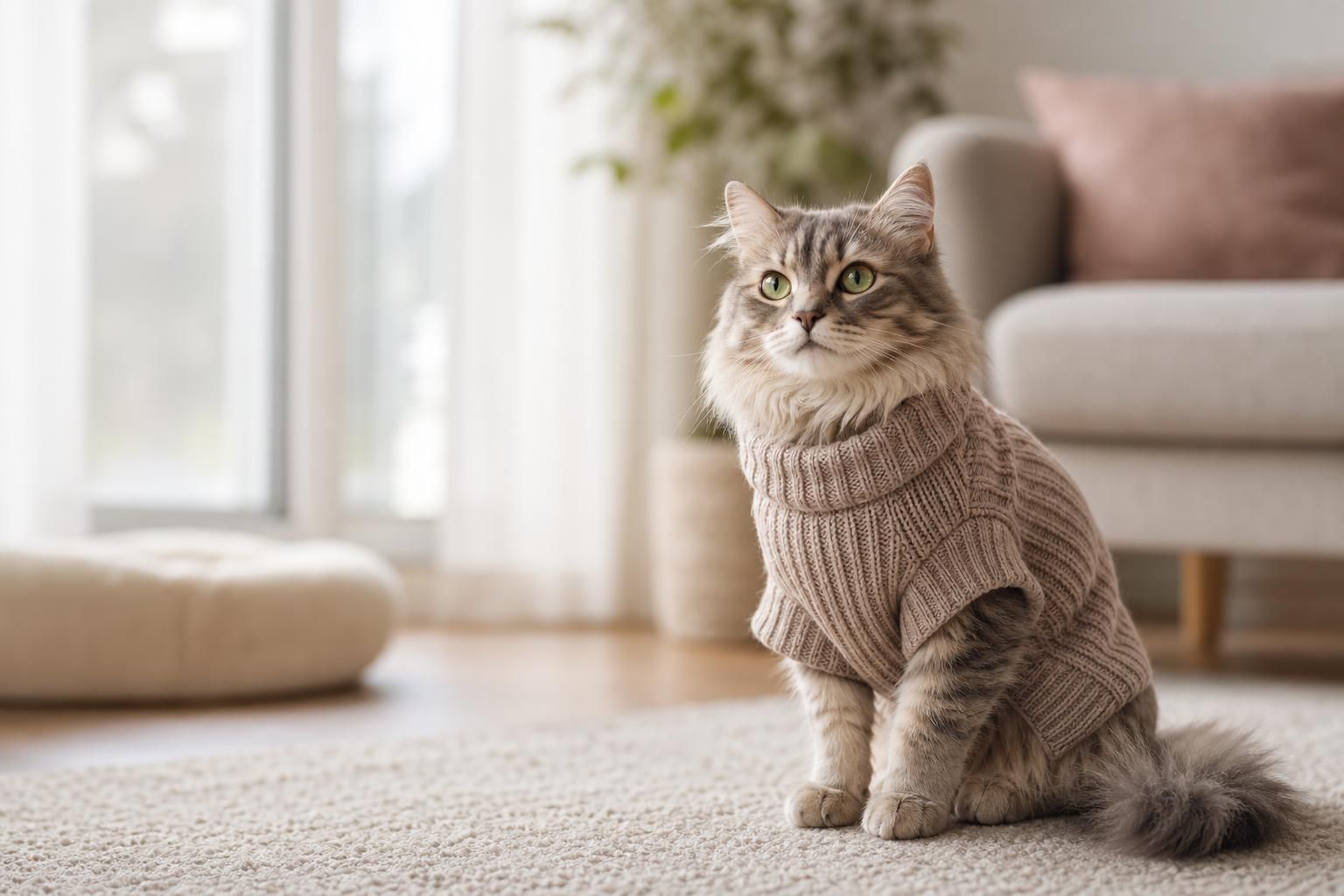
Yes, indoor cats can wear clothes, and many tolerate light sweaters, soft harness vests, or post-surgery garments without issue, as long as the fit is correct and the cat is introduced to it gradually. Clothing is never a requirement for a healthy indoor cat's comfort, but it can help thin-coated breeds, senior cats, or recovering cats feel warmer and protected. The bigger risk isn't the clothing itself — it's a bad fit or forcing it on a cat that's clearly distressed.
Key takeaways
- Most indoor cats don't need clothes for warmth, but thin-coated or senior cats may benefit from a light layer in a cold house.
- Fit matters more than style: a garment that restricts shoulder movement or breathing is more likely to cause stress than help.
- Introduce clothing in short, calm sessions and stop immediately if the cat freezes, falls over, or tries to claw it off repeatedly.
When clothing actually makes sense for an indoor cat
Indoor cats regulate body temperature well on their own, so a cat with a full, healthy coat rarely needs a sweater just to stay warm in a heated home. Clothing becomes genuinely useful in a few specific situations: hairless or short-coated breeds like Sphynx cats, kittens and senior cats with less effective thermoregulation, and cats recovering from surgery who need a barrier over stitches instead of a hard plastic cone. The Cornell Feline Health Center notes that cats' tolerance for handling and novel objects varies widely by individual temperament, which is why the same sweater that one cat ignores completely can send another cat into a defensive crouch.
If you have a Sphynx or another low-fur breed, our guide to choosing clothes for Sphynx cats covers coat-specific fit details that apply even if you're shopping for a different thin-coated breed.
The fit problem nobody talks about
A garment sized by generic "small/medium/large" labels is one of the most common reasons cats reject clothing. Cat body shapes vary enormously even within the same weight range — a long-bodied cat and a stocky cat of the same weight can need completely different back lengths and chest girths. The fix is measuring in inches: chest girth (the widest part behind the front legs), neck circumference, and back length from collar to base of tail. Ziva Paws lists every clothing item with inch-based measurements instead of S/M/L for exactly this reason, since a sweater that pinches at the shoulders or droops past the hind legs is far more likely to cause the frantic "stuck in clothes" reaction owners dread. The clothing collection at https://zivapaws.com/collections/clothing shows the measurement points for each item so you can match it to your own cat's numbers rather than guessing from a size label.
Signs a cat is tolerating clothing vs. signs of real distress
Not every odd movement means the cat hates it. Here's how to tell the difference:
- Normal adjustment behavior: walking stiffly or in a "duck waddle" for the first few minutes, pausing to sit and assess, mild shaking of a paw.
- Signs to stop immediately: rolling onto the side and staying frozen, excessive drooling, rapid panting, repeated attempts to bite or claw at the fabric near the neck or armpits, or hiding and refusing to move at all.
If you see the second list, remove the garment calmly rather than coaxing the cat to "get used to it." Repeated forced exposure tends to build a negative association rather than tolerance.
How to introduce clothing without a fight
Cats generally accept new objects better when the object is introduced slowly and paired with something positive. A practical sequence:
- Let the cat sniff and walk over the unworn garment for a day or two.
- Drape it loosely over the back for 10–15 seconds, then remove it and offer a treat.
- Fasten it fully for just a minute or two the first time, in a quiet room with no other pets watching.
- Gradually extend wearing time over several short sessions rather than one long one.
Our own cats, Ai and Dudu, test clothing fit as part of our product review process, and the pattern holds true with them as well: a slow introduction with a treat afterward gets far better results than putting a garment on and expecting instant acceptance.
What to avoid when dressing an indoor cat
- Tight neck or leg openings that restrict movement or could catch a claw.
- Zippers, buttons, or small decorative parts a cat could chew off and swallow.
- Leaving clothing on unsupervised for long stretches, especially overnight, since you can't monitor for overheating or tangling.
- Dressing a cat that's already stressed by a vet visit, new pet, or loud household event — timing matters as much as fit.
The American Veterinary Medical Association emphasizes that cats show stress primarily through subtle body language — flattened ears, a low tail, or stillness — rather than obvious vocalizing, so it's worth watching posture closely during the first few wears rather than assuming silence means comfort.
Clothing isn't the only comfort tool
If your actual goal is a warmer, cozier indoor cat rather than specifically "clothes," a heated or enclosed bed often solves the same problem with zero handling stress. Many cats that resist sweaters happily burrow into a covered bed on their own schedule — our piece on why cats gravitate toward enclosed beds explains the instinct behind that preference. For cats who do enjoy a bed but also like having a warm layer nearby, pairing a plush bed from the home and bedding collection with occasional light clothing covers both the "wants warmth" and "wants control over when to be covered" instincts.
Frequently Asked Questions
Q: Do indoor cats need clothes to stay warm?
Most indoor cats with a full coat regulate their own body temperature fine in a normally heated home and don't need clothing for warmth. Thin-coated breeds, kittens, seniors, or cats recovering from illness are the main groups that may genuinely benefit from a light layer.
Q: How do I know if a cat sweater fits correctly?
Measure chest girth, neck circumference, and back length in inches and compare to the garment's actual measurements rather than a size label. A correct fit allows full shoulder movement and doesn't pinch at the armpits or drag on the ground.
Q: Is it cruel to put clothes on a cat?
It isn't inherently cruel if the garment fits well, is introduced gradually, and the cat shows normal adjustment behavior rather than signs of distress like freezing or excessive drooling. It becomes a welfare problem only when the fit is wrong or the cat is forced to wear it while clearly panicking.
Q: What should I do if my cat tries to claw off its clothes?
Remove the garment calmly rather than holding the cat still to "wait it out," then check the fit at the neck, armpits, and leg openings for pinching. Reintroduce later in much shorter sessions paired with a treat, and stop altogether if the reaction repeats.
Q: Can clothing help a cat after surgery?
A soft, well-fitted garment can sometimes serve as a gentler alternative to a hard cone collar by covering an incision site, though you should follow your veterinarian's specific recovery instructions first. Always confirm with your vet before substituting clothing for prescribed recovery equipment.