Best Cat Clothes for Sphynx Cats: A Buyer's Guide
Key takeaway
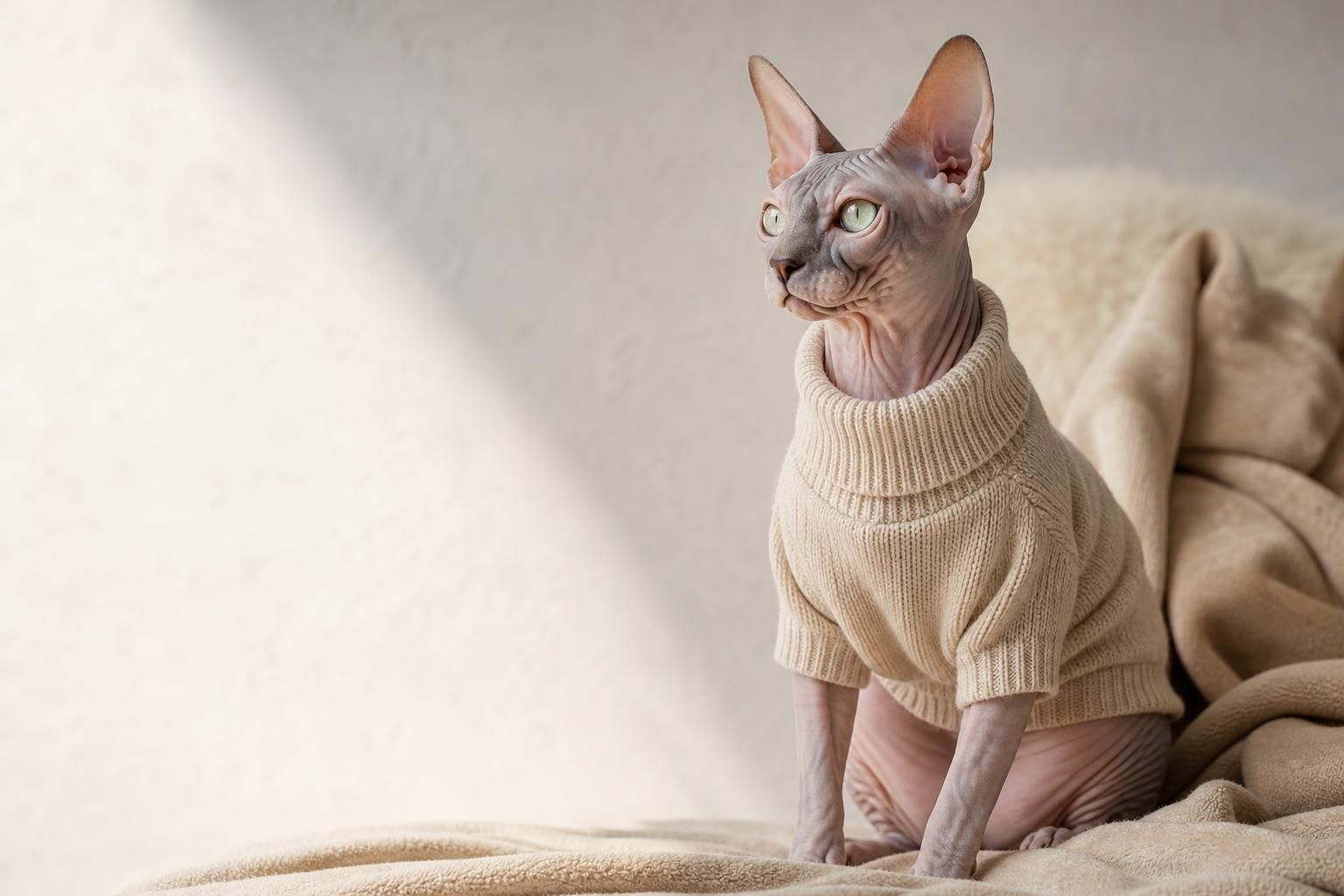
The best cat clothes for sphynx cats are soft, stretchy, seamless-at-the-belly garments sized by actual chest and back-length measurements rather than generic S/M/L labels, since sphynx cats have no coat to buffer rough seams or bad fit. Look for breathable knits for everyday wear and slightly heavier fleece or thermal layers for sleeping and cold rooms, with a snug but non-restrictive fit around the chest and shoulders. Avoid anything with exposed zippers, tight elastic cuffs, or fabric that traps heat without airflow.
Key takeaways
- Measure chest girth, neck, and back length in inches before buying — sphynx cats vary enough in build that S/M/L alone often misfits them.
- Prioritize soft, seamless, breathable fabric over decoration; skin irritation is the main risk, not style.
- Rotate at least two weights of clothing (light cotton/knit and fleece) since sphynx cats regulate body heat differently than coated cats.
Why Sphynx Cats Need Clothing More Than Other Breeds
Sphynx cats lack the insulating undercoat that regulates body temperature in most cats, so they lose heat faster in cool rooms and sunburn more easily in direct sunlight. The Cornell Feline Health Center notes that hairless breeds have higher calorie needs and reduced temperature tolerance compared to haired cats, which is part of why owners often keep a sweater or light layer on them indoors even when the home feels comfortable to a person. Clothing for a sphynx isn't a costume — it's doing a job the fur would otherwise do.
Because their skin is directly exposed, fabric choice matters more than it would for a cat with a full coat. Rough seams, tags, or synthetic blends that don't breathe can cause rubbing or overheating within an hour of wear, especially around the armpits and belly where sphynx skin folds.
What Fabric Actually Works
- Cotton-blend knits: breathable for daytime wear in a climate-controlled home; good first layer.
- Fleece or microfleece: better for sleeping or drafty rooms, but check for overheating on warm days.
- Avoid stiff synthetics or vinyl-trimmed pieces: they don't flex with the cat's movement and can chafe bare skin.
- Seamless or flat-seam construction: reduces friction points, particularly under the front legs.
If you're unsure how a fabric will perform, the same logic used for choosing the right fabric for dog pajamas largely applies here — breathability and seam placement matter more than thickness.
Getting the Size Right
Generic small/medium/large labels are a common reason sphynx owners end up with clothing that bunches at the shoulders or chokes at the neck. A size label doesn't account for the fact that sphynx cats often have a barrel-shaped chest and longer back relative to their height compared to shorthaired breeds of similar weight. Measuring three points solves this:
- Neck: around the base, where a collar would sit, with two fingers of slack.
- Chest girth: the widest point behind the front legs.
- Back length: base of neck to base of tail, following the spine.
Ziva Paws lists clothing sizes by these inch measurements instead of S/M/L for exactly this reason — a sphynx cat's chest-to-back ratio doesn't map cleanly onto generic size charts. For a full walkthrough of taking these measurements at home, see how to measure a cat for a sweater.
Comparing Common Sphynx Clothing Options
| Clothing type | Best for | Watch out for |
|---|---|---|
| Cotton knit sweater | Everyday indoor wear, mild chill | Can sag if chest measurement is off |
| Fleece hoodie | Cold rooms, early morning/evening | Overheating in heated homes |
| Pajama-style onesie | Overnight, post-grooming, post-vet-visit | Needs easy belly access for bathroom breaks |
| Stretch dress (light fabric) | Short-haired warm-weather wear, photos | Decorative trims can irritate skin if rough |
| Trench coat / rain layer | Short outdoor trips, balconies | Not a substitute for a daily indoor layer |
When to Dress Them vs. Leave Skin Bare
Not every moment calls for clothing. Short supervised time in a warm, draft-free room is usually fine without a layer, and constant dressing can sometimes mask skin issues that are easier to spot on bare skin — redness, flaking, or acne along the chin and tail base are easier for an owner to catch without fabric in the way. A reasonable approach is one light layer during normal indoor hours, a heavier layer at night or in cooler rooms, and bare skin during grooming or bath time so you can actually check the skin.
Fit and Comfort Checks Before You Buy
Before committing to a size, check for a few physical cues once the garment is on:
- Two fingers should slide under the neckline without strain.
- The chest band shouldn't leave a visible pressure line after ten minutes.
- Front leg openings shouldn't pull the garment sideways when the cat walks.
- The cat should be able to sit down and turn around without the fabric binding at the shoulders.
Ai and Dudu, the two cats who test products at Ziva Paws before they're listed, are shorthaired rather than hairless, but the same fit checks apply across coat types — a garment that pulls at the shoulders or binds at the chest on a haired cat will be worse, not better, on bare sphynx skin.
Seasonal Considerations
Sphynx owners often need a rotation rather than a single "right" garment. A lighter knit for daytime, a fleece layer for overnight or winter, and a breathable dress or light cotton piece for warmer months covers most of the year. For households in colder climates, the same layering logic used for layering dog clothes in extreme cold translates to cats — thin base layer first, heavier layer added on top only when the room temperature actually calls for it, not by default.
Frequently Asked Questions
Q: Do sphynx cats need to wear clothes all the time?
No. Sphynx cats benefit from a layer during cooler hours or in draft-prone rooms, but regular bare-skin time helps owners monitor for irritation and lets the skin breathe.
Q: What size should I buy if my sphynx is between standard sizes?
Measure chest girth, neck, and back length in inches and match to the closest individual measurement rather than rounding up to a generic size label, since sphynx proportions often don't fit evenly into S/M/L tiers.
Q: Can sphynx cats get sunburned, and does clothing help?
Yes — hairless skin is more exposed to UV than a coated cat's skin, and a light breathable garment can reduce direct sun exposure during short periods near windows or on a supervised balcony.
Q: How many outfits does a sphynx cat actually need?
Most owners get by with two or three: one light everyday layer, one heavier layer for cold rooms or overnight, and one spare for wash rotation.
Q: Are bows, trims, or embellishments safe on sphynx clothing?
Soft trims are generally fine, but stiff or rough embellishments against bare skin can cause rubbing; smooth, flat-seam designs are the safer default for hairless cats.