Best Dog Hoodie for Cold Weather: A Buyer's Guide
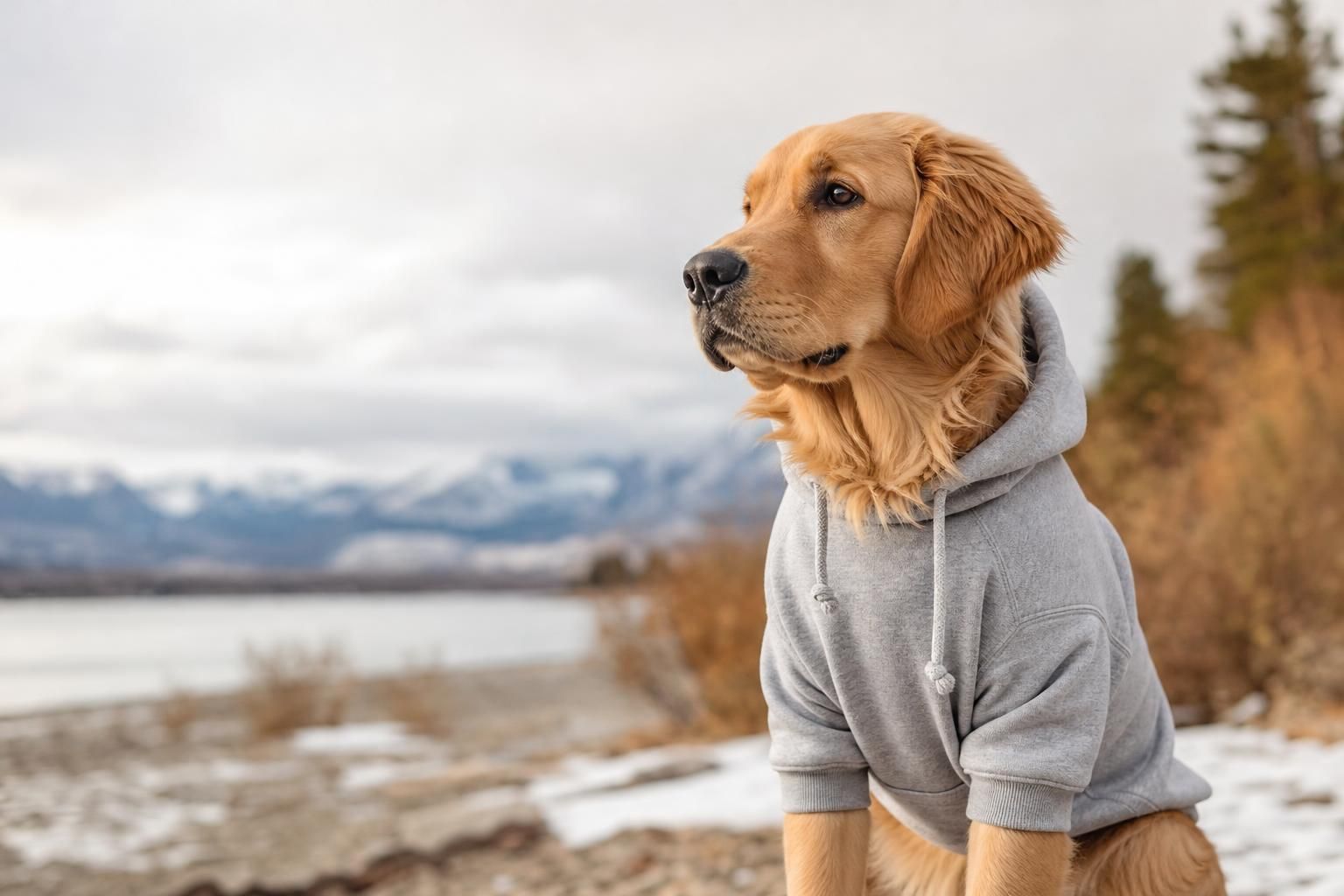
Key takeaway
The best dog hoodie for cold weather is a fleece-lined or double-knit hoodie that covers the chest and back to the base of the tail, fits snugly around the neck without restricting movement, and is sized by actual chest and back-length measurements rather than generic S/M/L labels. For short-haired breeds or temperatures near or below freezing, pair it with a base layer or waterproof outer shell rather than relying on the hoodie alone. Fit matters more than fabric thickness — a loose hoodie lets cold air in no matter how warm the material is.
Key takeaways
- Measure chest girth, neck, and back length in inches before buying — a hoodie that gaps at the chest loses most of its insulating value.
- Fleece-lined cotton-blend hoodies handle mild-to-moderate cold (35–50°F); for sustained sub-30°F weather, layer with a wind- or water-resistant topcoat.
- Short-coated and toy breeds need hoodies year-round at lower temperatures than double-coated breeds, which may overheat in the same garment.
What Actually Keeps a Dog Warm in a Hoodie
Warmth comes from three things working together: insulation, coverage, and fit. A fleece or brushed-fleece lining traps a layer of warm air against the skin, which is why fleece-lined hoodies outperform single-layer cotton ones in anything below about 45°F. Coverage matters because heat loss is highest at the chest, belly, and base of the tail — a hoodie that rides up when a dog walks or sits isn't doing its job. Fit is the part most owners get wrong: a hoodie sized off a generic chart can be too loose through the chest (letting cold air in) or too tight around the neck (restricting movement and circulation).
This is also where sizing charts fail owners. A "medium" from one brand can differ by two or three inches in chest girth from another brand's medium, because there's no industry standard behind the label. Measuring chest girth (the widest part, usually just behind the front legs), neck circumference, and back length (base of neck to base of tail) in inches removes that guesswork. Clothing sized this way is listed by those three measurements rather than a letter size, which is the same approach covered in our sweater fit guide for small breeds.
Hoodie Types Compared
Not every hoodie is built for the same conditions. Here's how the common types stack up for cold-weather use:
| Hoodie type | Best for | Approximate comfortable range | Limitations |
|---|---|---|---|
| Cotton-blend hoodie (no lining) | Mild chill, indoor-outdoor transitions | 50–65°F | Minimal insulation, soaks up rain |
| Fleece-lined hoodie | Daily walks in cold weather | 35–50°F | Not wind- or waterproof |
| Hoodie with water-resistant shell | Wet, windy, cold conditions | 25–40°F | Bulkier, needs more sizing room underneath |
| Hoodie + base layer combo | Sub-freezing temps, short-coated breeds | Below 30°F | Requires two garments, more careful fit |
For context on regional cold, the National Weather Service publishes wind chill charts that are a useful reference point for deciding when a dog needs more than a single layer — wind chill affects dogs' exposed skin and ears much the same way it affects ours.
Getting the Fit Right
A hoodie that fits well should let you slide two fingers flat under the neckline and under any leg openings. Anything tighter restricts movement and can chafe; anything looser slips sideways and exposes the belly. Measure your dog standing, not sitting, since chest girth changes slightly with posture.
Steps for an accurate fit:
- Wrap a soft tape measure around the chest, just behind the front legs, and note the number in inches.
- Measure the neck where a collar would normally sit.
- Measure from the base of the neck to the base of the tail for back length.
- Compare all three numbers against the garment's inch-based size chart — not just the letter size — and size up if your dog is between two measurements.
If your dog is a breed with a long back relative to chest size (dachshunds, corgis), back length is usually the number that determines fit, not chest girth. Our dog scarf buying guide covers a similar measuring approach for neck accessories, which is useful if you're building out a full cold-weather wardrobe rather than buying a hoodie alone.
When a Hoodie Isn't Enough
A single hoodie, even a well-fitted fleece-lined one, has limits. Once temperatures drop into the 20s°F or lower, or when wind and precipitation are involved, most dogs — especially short-coated, toy, or senior breeds — need an additional layer. The American Veterinary Medical Association notes that cold-weather risk depends heavily on coat type, body fat, age, and health status, which is why there's no single temperature cutoff that applies to every dog.
Practical layering looks like:
- A thin, snug base layer (like a pajama-weight garment) against the skin
- The hoodie over that for insulation
- A wind- or water-resistant shell on top for walks in wet or windy conditions
For a full breakdown of how to combine layers without restricting movement, see our guide to layering dog clothes for extreme cold. The same logic that applies to hoodies — snug but not tight, full coverage, breathable fabric closest to the skin — carries over to any layered cold-weather setup.
Breed and Coat Considerations
Double-coated breeds (huskies, malamutes, many retrievers) generate their own insulation and can overheat in a heavy hoodie during moderate cold or active play. Single-coated and short-haired breeds (greyhounds, chihuahuas, French bulldogs) and senior dogs with less muscle mass typically need a hoodie at temperatures where a husky would be comfortable bare. The American Kennel Club points out that signs of a dog getting too cold include shivering, lifting paws off the ground, and reluctance to walk — useful cues for deciding whether a hoodie or an additional layer is needed, regardless of breed.
At Ziva Paws, new apparel is checked by resident testers Ai and Dudu for loose threads, zipper safety, and overall build quality before it's listed — not because cats wear hoodies, but because a garment with a weak seam or an exposed zipper tab is a safety issue no matter which pet wears it.
Frequently Asked Questions
Q: What temperature should a dog wear a hoodie?
Most short-coated, toy, and senior dogs benefit from a hoodie once temperatures drop below 45–50°F, especially during walks. Double-coated breeds often don't need one until temperatures are noticeably lower, if at all.
Q: How do I know if a dog hoodie fits correctly?
You should be able to slide two fingers flat under the neckline and any leg openings without it feeling tight, and the hoodie shouldn't gap or slide sideways when the dog walks. Measuring chest girth, neck, and back length in inches before buying is more reliable than choosing by letter size.
Q: Is a fleece-lined hoodie warm enough for winter?
A fleece-lined hoodie is generally enough for mild-to-moderate cold, roughly 35–50°F. For sustained freezing temperatures or wet, windy conditions, add a water-resistant shell or a base layer underneath.
Q: Can a hoodie replace a full dog coat?
For moderate cold and short walks, a well-fitted hoodie often performs similarly to a light coat. Once wind, rain, or sub-freezing temperatures are involved, a hoodie alone usually isn't sufficient and should be layered with additional protection.
Q: Do small and short-haired dogs need hoodies more than large dogs?
Yes, generally — smaller and short-coated dogs lose body heat faster relative to their size and typically need insulating layers at higher temperatures than large, double-coated breeds.