What Fabric Is Best for Dog Pajamas?
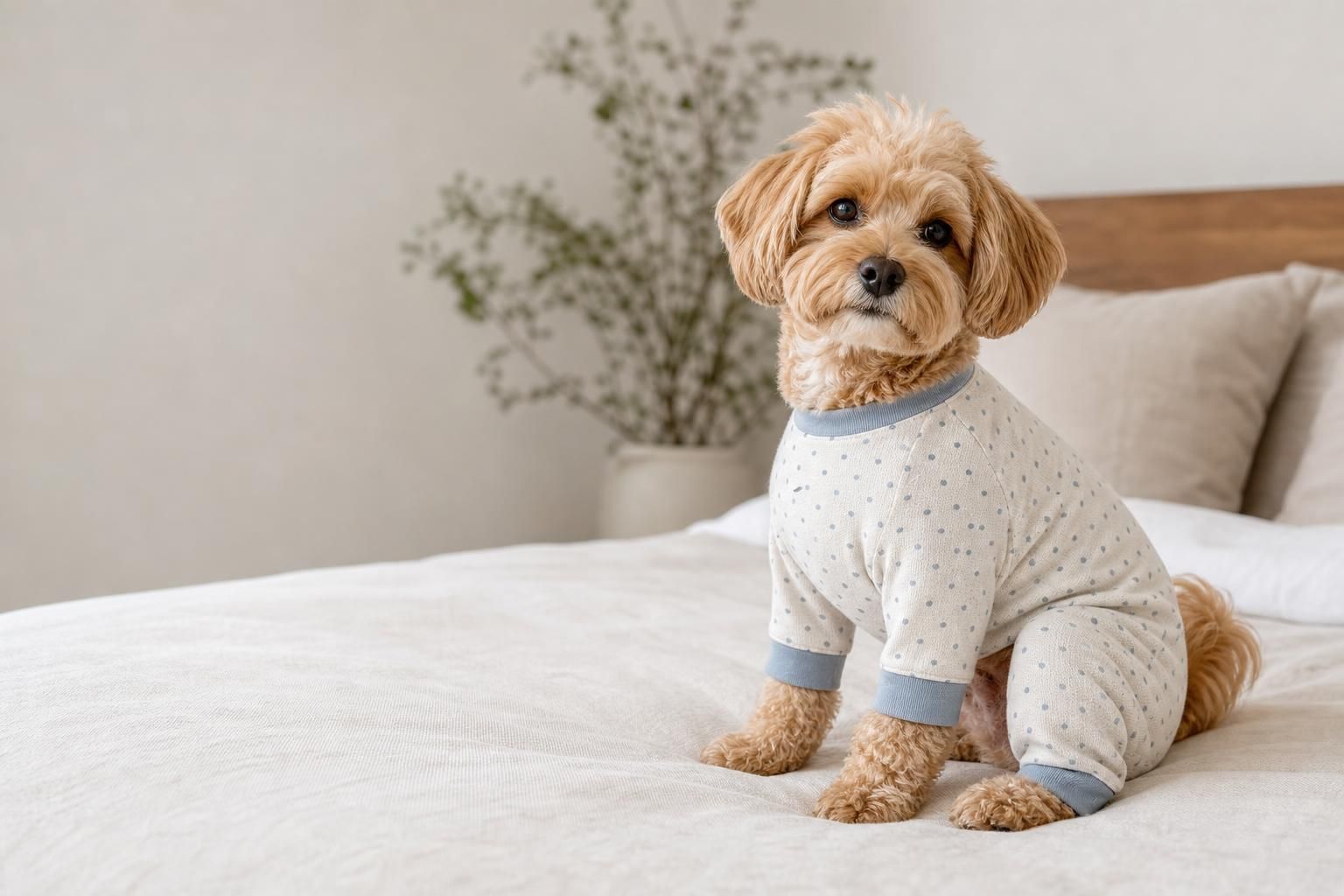
Key takeaway
For most dogs, breathable 100% cotton or a cotton-poly blend is the best pajama fabric because it's soft against skin, machine-washable, and doesn't trap heat the way fleece or heavy flannel can. Fleece is a better pick only for short-haired dogs in cold, drafty homes, while flannel suits dogs who need a bit more warmth without overheating. The right choice always depends on your dog's coat type, your indoor temperature, and how often the pajamas need washing.
Key takeaways
- Cotton or cotton-poly blends work for nearly every dog and every season; they're breathable and easy to wash.
- Fleece traps more heat, so it's best for short-haired dogs in cold rooms, not for double-coated breeds indoors.
- Check the care label and seams before buying — flat-felled seams and machine-washable tags prevent chafing and shrinkage.
Why Fabric Choice Matters More Than It Seems
Dog skin is thinner than human skin and more sensitive to friction, trapped moisture, and heat. A fabric that feels cozy to you might make a dog overheat within an hour, especially breeds with dense double coats like Huskies or Corgis. According to the American Kennel Club, dogs regulate body temperature mostly through panting rather than sweating through skin, which means fabric that blocks airflow can make it harder for them to cool down even indoors. That's why breathability, not just softness, should be the first thing you check on a pajama label.
Comparing Common Pajama Fabrics
Here's how the most common options stack up for everyday wear:
| Fabric | Best For | Warmth Level | Washability | Watch Out For |
|---|---|---|---|---|
| Cotton | Most dogs, year-round | Low–Medium | Machine wash, holds up well | Can wrinkle, less insulating alone |
| Cotton-poly blend | Active dogs, frequent washing | Medium | Very durable, resists pilling | Less breathable than pure cotton |
| Fleece | Short-haired dogs, cold rooms | High | Machine wash, may pill over time | Can overheat double-coated breeds |
| Flannel | Seniors or thin-coated dogs | Medium–High | Machine wash, softens with use | Heavier, slower to dry |
| Jersey knit | Puppies, sensitive skin | Low | Gentle wash recommended | Less structure, can stretch out |
Matching Fabric to Coat Type
A dog's existing coat does most of the insulating work, so pajama fabric should complement it rather than compete with it.
- Short-haired or hairless dogs (Chihuahuas, French Bulldogs, Italian Greyhounds) benefit from fleece or flannel for extra warmth, especially in homes that get cold overnight.
- Double-coated breeds (Huskies, Corgis, Shiba Inus) rarely need pajamas at all, but if they wear them post-grooming or post-surgery, lightweight cotton prevents overheating. If your dog already has a thick undercoat, it's worth reading about whether a sweater even makes sense over long hair before adding more layers.
- Puppies and senior dogs often do best in soft jersey knit, which stretches with movement and doesn't pull on joints or incision sites.
Sizing Matters as Much as Fabric
Even the softest fabric will irritate skin if the pajamas are too tight across the chest or loose enough to bunch under the legs. Ziva Paws lists every clothing item by actual chest, neck, and back-length measurements in inches rather than generic S/M/L tags, because breed-standard sizing varies too much to be useful — a "medium" from one brand can be a "small" from another. Measuring your dog's chest girth and back length before ordering avoids the most common return reason: pajamas that fit the label but not the dog.
Signs a Fabric Isn't Working
Watch for these within the first few wears:
- Red or irritated skin around the neck, armpits, or waistband — usually a sign the fabric is too rough or the seams are rubbing.
- Excessive panting or restlessness shortly after dressing, which can indicate the fabric is too warm for the room.
- Pilling or thinning after one or two washes, meaning the blend won't hold up to regular use.
- Static cling or visible shedding transfer, more common with synthetic fleece on shorter coats.
Ai and Dudu, the two cats who test products before they're listed, have made clear that stiff seams and scratchy tags are dealbreakers even in soft-looking fabric — if a seam catches on their fur during testing, it's flagged before it ever reaches a customer listing.
Seasonal Considerations
Fabric needs shift with the seasons more than most owners expect. In colder months, a cotton pajama layered under a coat can replace a bulkier sweater for dogs who dislike heavy fabric; for guidance on combining layers safely, see this breakdown of layering dog clothing in extreme cold. In warmer months, a lightweight cotton or jersey pajama mainly serves to prevent licking at stitches or allergies rather than for warmth.
Washing and Durability Tips
Fabric performance depends heavily on care. The U.S. Consumer Product Safety Commission notes that frequent high-heat drying breaks down synthetic fibers faster than natural ones, which is one reason cotton often outlasts fleece in households that wash pet clothing weekly. To extend fabric life:
- Wash in cold or warm water, not hot, to reduce shrinkage and pilling.
- Air dry or use low heat — high heat degrades elastic and seams fastest.
- Turn pajamas inside out before washing to protect printed designs and reduce fabric friction in the machine.
Frequently Asked Questions
Q: Is cotton or fleece better for dog pajamas?
Cotton is better for most dogs because it's breathable and washable without trapping excess heat. Fleece works only for short-haired dogs in cold rooms, since it insulates more heavily and can cause overheating on double-coated breeds.
Q: Can dog pajama fabric cause skin irritation?
Yes — rough seams, synthetic blends, or non-breathable fabric can cause redness or chafing, especially around the neck, armpits, and waistband. Choosing flat-felled seams and natural fibers like cotton reduces this risk.
Q: How often should dog pajamas be washed?
Washing after every 2-3 wears is a reasonable baseline for most households, though dogs with skin conditions or frequent accidents may need more frequent washing. Cold or warm water with low-heat drying keeps fabric from breaking down quickly.
Q: Do puppies need different pajama fabric than adult dogs?
Puppies generally do best in soft, stretchy jersey knit because it moves with their growth spurts and doesn't restrict motion. Stiffer fabrics like flannel or heavy cotton twill can feel restrictive on a growing puppy's frame.
Q: What fabric works best for dogs recovering from surgery?
Soft, seamless jersey or lightweight cotton is usually recommended because it won't rub against incision sites or stitches. Avoid textured fabrics like fleece or terry cloth directly over healing skin, since fibers can catch on sutures.