Can You Put a Sweater on a Dog With Long Hair?
Key takeaway
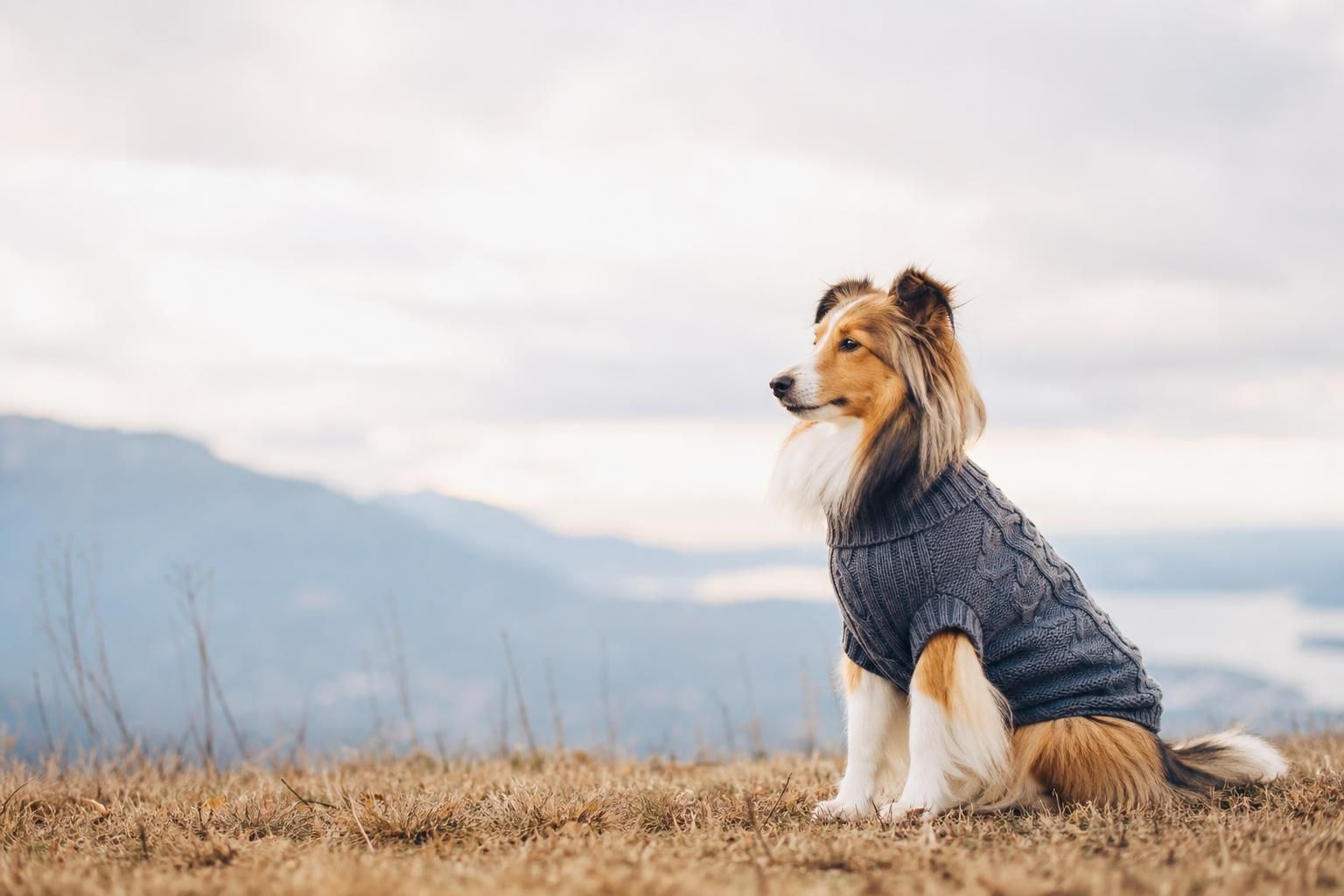
Yes, dogs with long hair can wear sweaters, and many benefit from one during cold or wet weather, after a fresh grooming trim, or during recovery from an illness when body heat regulation is harder. The key is choosing a lightweight, breathable knit cut wide enough at the neck and legs that it doesn't flatten or tangle the coat, and removing it for brushing sessions so hair underneath doesn't mat.
Key takeaways
- Pick a loose-knit or smooth-lined sweater, not a tight ribbed one, to avoid friction that causes matting under the fabric.
- Measure chest girth, neck, and back length in inches rather than relying on S/M/L, since long coats add bulk that generic sizing doesn't account for.
- Remove the sweater daily to brush and air out the coat, especially around the armpits and collar line where mats form fastest.
Why Long Hair Changes the Sweater Equation
Long-haired breeds — Pomeranians, Shih Tzus, Yorkies, Collies — often have a double coat or a single long coat that traps moisture and debris differently than short fur does. A sweater that's fine on a smooth-coated dog can press long hair flat against the skin, and if that hair stays damp or compressed for hours, it starts to felt into mats. The American Kennel Club notes that double-coated breeds use their undercoat for insulation and their outer guard hairs for weather resistance, which means a sweater's job is less about adding warmth from scratch and more about supplementing what the coat already does — useful for thin-coated or senior long-haired dogs, less necessary for a healthy, well-insulated double coat.
This doesn't mean long-haired dogs can't or shouldn't wear sweaters. It means the garment needs to work with the coat instead of against it.
What to Look For in a Sweater for a Long-Haired Dog
A few construction details matter more for long coats than for short ones:
- Smooth or loose interior knit — nothing with a tight waffle or ribbed texture against the skin, since that's what grabs and twists hair.
- Wide neck and leg openings — tight cuffs compress hair and can cause chafing where fur gets caught.
- Breathable natural fibers — cotton or wool blends let moisture escape; fully synthetic fleece can trap humidity against a thick coat.
- No underlying harness or buckle pressing on hair — hardware that sits directly on the coat tends to twist strands into knots within a single wear.
If you're shopping for a small, high-coat-density breed, a fit guide built around that body type — like this sweater and warmth guide for Chihuahuas — can help you see what proportions to expect even if your dog isn't the same breed, since many small long-haired dogs share similar chest-to-neck ratios.
Getting the Size Right
Sizing is where most long-haired-dog sweater problems start. A coat adds visual bulk, so owners often size up out of caution and end up with a garment that bags at the chest and drags at the belly — both of which invite tangling as the dog moves. The more reliable method is a tape measure in inches, not a glance at the dog's "look":
- Measure around the widest part of the chest, just behind the front legs.
- Measure around the base of the neck where a collar normally sits.
- Measure from the base of the neck to the base of the tail for back length.
Ziva Paws lists every clothing item with these three inch-based measurements instead of generic S/M/L labels, specifically because coat thickness and body shape vary so much between breeds that a label alone can't predict fit. The same three-point measuring approach is described in more detail in this step-by-step sizing walkthrough, and it translates directly to dogs — the measuring points don't change with species, only the numbers do.
Matting, Moisture, and Skin Checks
The biggest real risk with sweaters on long-haired dogs isn't the sweater itself — it's what happens underneath if it's left on too long. Hair compressed under fabric for extended periods, especially if the dog has been outside in rain or snow, can mat close to the skin and eventually pull or irritate it. A simple routine prevents most of this:
- Take the sweater off indoors and brush through the chest, armpits, and collar area before putting it back on.
- Skip the sweater entirely on bath or grooming days until the coat is fully dry.
- Check skin at the neck and leg openings weekly for redness or thinning fur, which can signal the garment is rubbing.
At Ziva Paws, house cats Ai and Dudu test clothing items before they're listed, and one thing that consistently separates a good fit from a bad one is how easily hair pulls back out from under the hem after a few hours — garments with smoother linings leave the coat looking the same as before it went on.
When a Sweater Isn't the Right Layer
Not every long-haired dog needs a full sweater. Breeds with thick double coats built for cold climates — Huskies, Malamutes, Bernese Mountain Dogs — regulate temperature well on their own and can overheat if layered unnecessarily. The American Veterinary Medical Association advises watching for excessive panting, drooling, or lethargy as early signs of heat stress in dogs, which can happen indoors just as easily as outside if a dog is overdressed. For dogs that need light neck and chest coverage without covering the whole torso, a scarf is sometimes a better middle ground — see this guide to choosing a winter dog scarf for when that's the more practical option than a full sweater.
Putting the Sweater on Without Fighting the Coat
Technique matters as much as fit. Lay the sweater flat, guide the front legs through first one at a time, then pull the body over the back rather than dragging it forward over the head and neck — this reduces the chance of hair catching in the neck seam. For dogs anxious about dressing, a slow introduction with treats over a few short sessions works better than forcing a full dress in one go, and it reduces the squirming that tends to twist hair under the fabric in the first place.
Frequently Asked Questions
Q: Can a dog with a thick double coat overheat in a sweater?
Yes, double-coated dogs already have built-in insulation, and adding a sweater indoors or during mild weather can push them toward overheating. Watch for heavy panting or lethargy and remove the sweater if either appears.
Q: How often should a long-haired dog's sweater be washed?
Wash it whenever it's visibly dirty, damp, or starts smelling, since trapped moisture against long hair can lead to skin irritation faster than with short coats. Follow the care label, as wool and cotton blends often need a gentle, cool cycle to avoid shrinking.
Q: Will a sweater cause matting in a long-haired dog's coat?
A poorly fitted or tight-knit sweater can contribute to matting, especially at the armpits and collar, but a smooth-lined, properly sized garment removed daily for brushing generally won't cause problems.
Q: What size sweater does a long-haired dog need compared to a short-haired one?
Long-haired dogs often need the same chest and neck measurements as short-haired dogs of similar build, since the measurement is taken at the body, not the hair tips. Sizing up "to account for the fur" usually just creates excess fabric that bunches and tangles.
Q: Is it better to use a sweater or a coat for a long-haired dog in winter?
A sweater adds light warmth and works well indoors or for short outings, while a weatherproof coat is better for wet or windy conditions since it protects the coat from moisture that can mat under a knit sweater. Many owners use both depending on the weather.