Is It Cruel to Dress Up Cats? What Vets and Owners Say
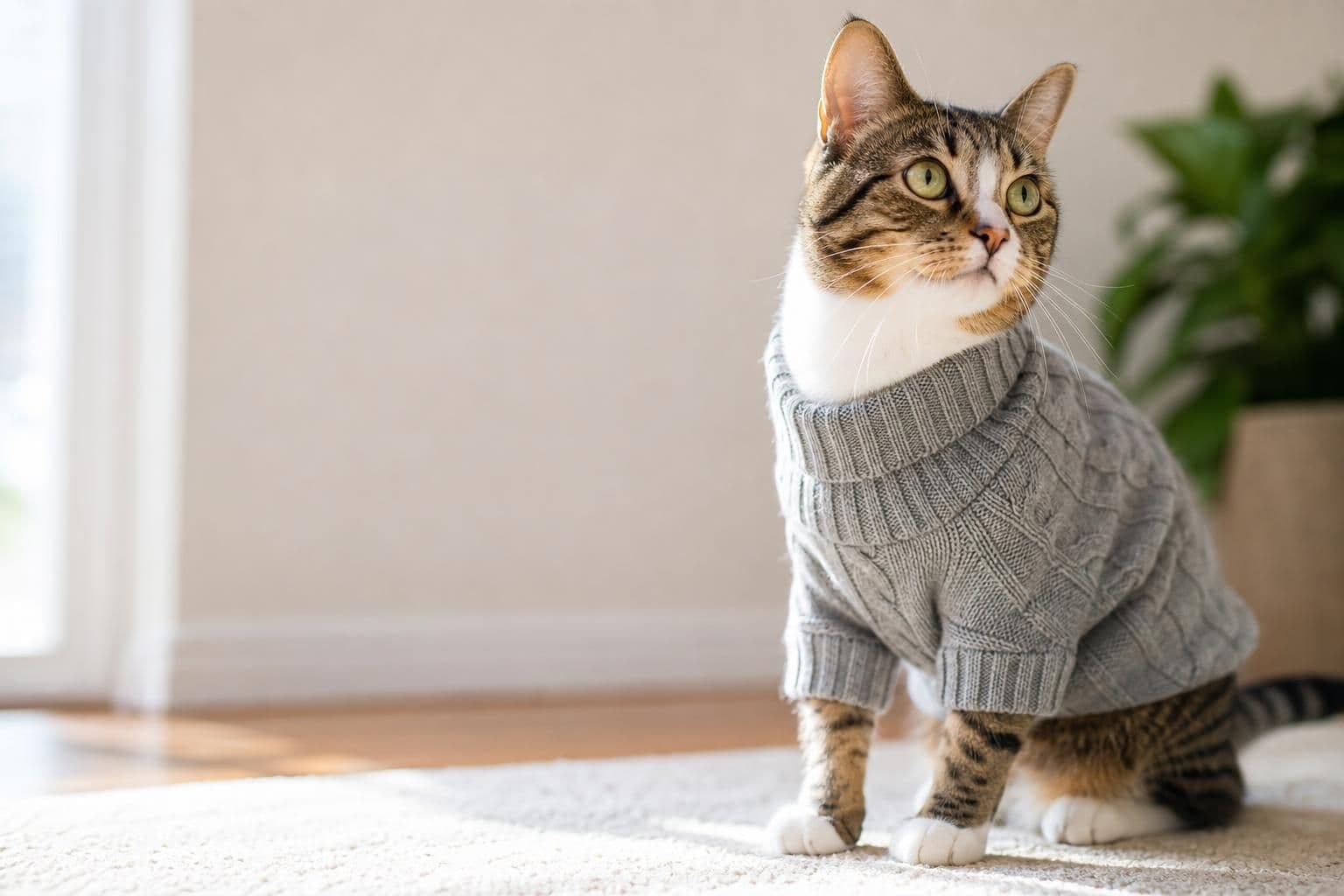
Key takeaway
Dressing up a cat is not inherently cruel, but it can become stressful or harmful if the cat is forced into it, the clothing restricts movement or breathing, or it's left on unsupervised for long periods. The key factor isn't the clothing itself — it's whether the individual cat tolerates it calmly and whether the garment fits and functions safely. Some cats genuinely don't mind a well-fitted sweater in a cold room; others find any fabric on their body distressing, and forcing the issue is where harm happens.
Key takeaways
- Watch behavior, not aesthetics: freezing, flattened ears, or frantic rolling means take it off immediately.
- Fit matters more than the outfit — clothing should never restrict the shoulders, neck, or breathing.
- Short, supervised sessions with treats work better than leaving a cat dressed and unattended for hours.
Why This Question Comes Up So Often
Cats are not dogs. Most dogs adapt to jackets and sweaters within a few short sessions because they're used to leashes, collars, and handling from an early age. Cats, as obligate ambush predators, rely heavily on unrestricted body movement and grooming access, so anything that limits either can trigger a stronger stress response. The ASPCA notes that cats show stress through subtle body language — a low crouch, tucked tail, or dilated pupils — long before they show overt aggression, which is why owners can miss the early warning signs when they first try clothing.
Signs a Cat Is Distressed, Not Just Adjusting
A cat exploring an unfamiliar sensation will often walk stiffly or shake a paw once or twice — that's normal adjustment. Genuine distress looks different:
- Freezing in place for more than a minute without attempting to move
- Repeated rolling or scratching at the garment
- Flattened ears held back, not just to the side
- Excessive drooling or rapid, shallow breathing
- Hiding immediately after the item goes on
If you see two or more of these together, remove the item and try again another day, or not at all. A cat that never relaxes into wearing something after several calm, short attempts is telling you it's not for them — and that's fine.
When Clothing Is a Reasonable Choice
There are practical situations where cat clothing solves a real problem rather than serving decoration alone:
- Post-surgery or injury recovery: some vets recommend soft body suits instead of a hard cone, since they let the cat move and rest more naturally.
- Senior or short-haired cats in cold homes: breeds like Sphynx or Devon Rex have little insulating fur and can benefit from a light sweater in a chilly room.
- Medical skin conditions: a thin layer can prevent scratching at a healing spot, under a vet's guidance.
Outside of these cases, dressing a cat is mostly for the owner's enjoyment or seasonal photos — which isn't automatically cruel, but it does mean the cat's comfort should be the deciding factor, not the occasion.
Fit Is Where Most Problems Start
A garment that's too tight across the chest or neck can restrict breathing and normal movement; one that's too loose can slip and cause the cat to panic trying to escape it. This is the same reasoning behind proper collar fit — sizing by feel and measurement, not by guessing a "small" or "medium" label. Generic S/M/L sizing varies wildly between brands, which is why measuring a cat's chest girth, neck, and back length in inches before buying gives a far more reliable fit than a size chart based on breed averages. Ziva Paws lists clothing this way — chest, neck, and back length in inches — specifically because cats' body shapes vary too much for a single "medium" to mean anything consistent.
How to Introduce Clothing Without Forcing It
- Let the cat sniff and paw at the garment first, unworn, for a day or two.
- Drape it loosely over the back for a few seconds during a calm moment, then remove it and give a treat.
- Gradually increase wear time only if the cat stays relaxed — eating, grooming, or walking normally.
- Never leave a dressed cat unsupervised, especially around furniture, stairs, or other pets.
- Stop entirely if the cat shows the distress signs listed above across multiple attempts.
Ziva Paws' own cats, Ai and Dudu, are used to test new clothing items before they're listed, and even they show clear preferences — one tolerates soft knit sweaters without issue, while the other tends to freeze up with anything covering the legs. That kind of individual variation is normal and worth expecting in any cat.
What About Collars, Costumes, and Photo Props?
Costumes with tight elastic, dangling parts, or covered eyes carry more risk than a simple sweater, since they can catch on furniture or obstruct vision and hearing — both important for a cat's sense of safety. If the goal is a festive touch rather than a full costume, a well-fitted collar with a bell or a soft crochet collar is a lower-stress alternative that still adds personality without covering the body. For cats who dislike wearing anything at all, a cozy, familiar hideaway can serve the same seasonal comfort purpose — see whether cats actually need a dedicated bed for warmth instead of relying on clothing.
The Bottom Line on Ethics
Veterinary and animal welfare organizations generally frame this as a welfare-based question rather than a blanket rule. The American Veterinary Medical Association emphasizes recognizing individual animal stress responses as central to humane care — the same lens applies here. Dressing a calm, cooperative cat in a breathable, well-fitted garment for a short period isn't cruelty. Forcing a stressed, struggling cat into an outfit for a photo, or leaving any cat dressed and unattended for hours, crosses into avoidable harm.
Frequently Asked Questions
Q: Is it cruel to dress up cats for photos or holidays?
Not inherently — a brief, supervised session with a calm cat in comfortable clothing is generally fine. It becomes a welfare concern only if the cat is stressed, restrained against its will, or left dressed unattended.
Q: How can I tell if my cat hates wearing clothes?
Watch for freezing in place, flattened ears, repeated rolling or scratching at the fabric, and hiding immediately after dressing. Two or more of these signs together mean it's time to stop.
Q: Do all cats need clothing in winter?
No — most cats with a full coat regulate their own body temperature fine indoors. Short-haired or hairless breeds and senior cats in cold rooms are the main exceptions where a light sweater can genuinely help.
Q: What's the safest way to size cat clothing?
Measure chest girth, neck circumference, and back length in inches rather than relying on generic S/M/L labels, which vary between brands and don't account for individual body shape.
Q: Are costumes riskier than simple sweaters for cats?
Yes — costumes with tight elastic, hanging parts, or anything covering the eyes or ears can obstruct vision, hearing, or movement, increasing both stress and physical risk compared to a simple, well-fitted sweater.